Division of Translational Cancer Research, Department of Laboratory Medicine, Lund University, Lund, Sweden.
Lund Stem Cell Center, Department of Laboratory Medicine, Lund University, Lund, Sweden.
Signal Transduct Target Ther. 2021 Dec 13;6(1):412. doi: 10.1038/s41392-021-00823-w.
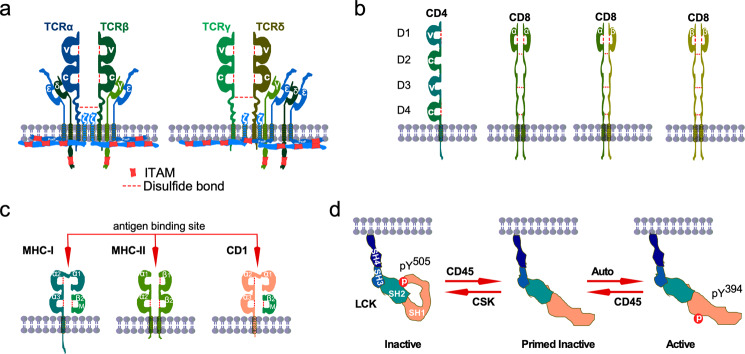
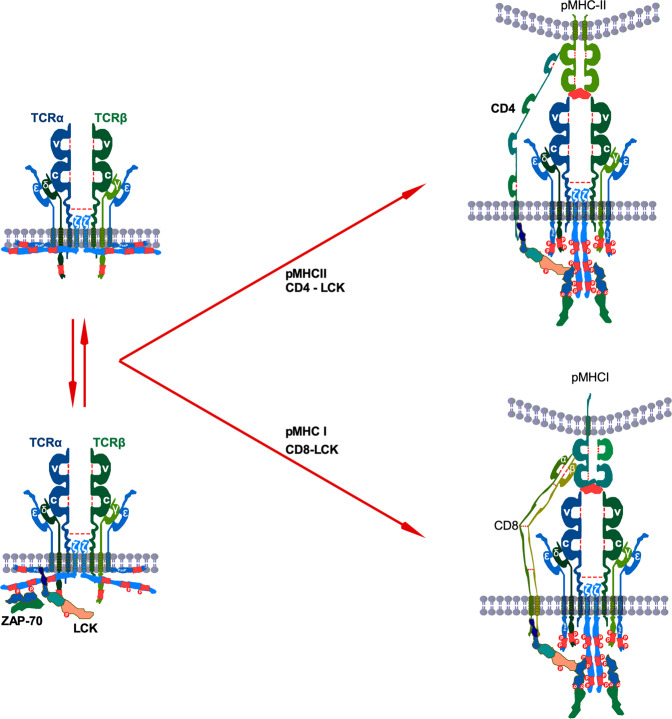
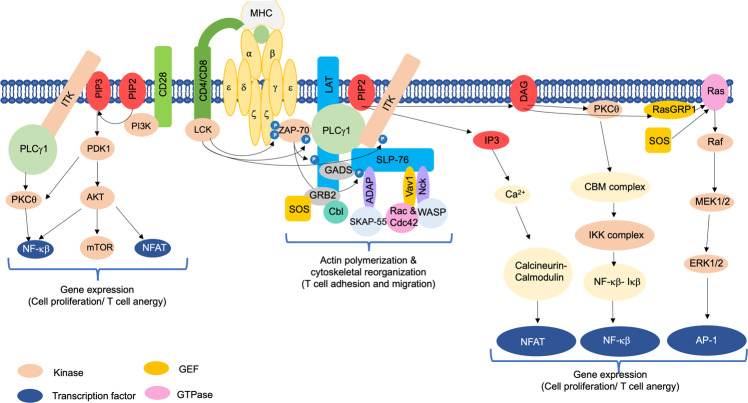
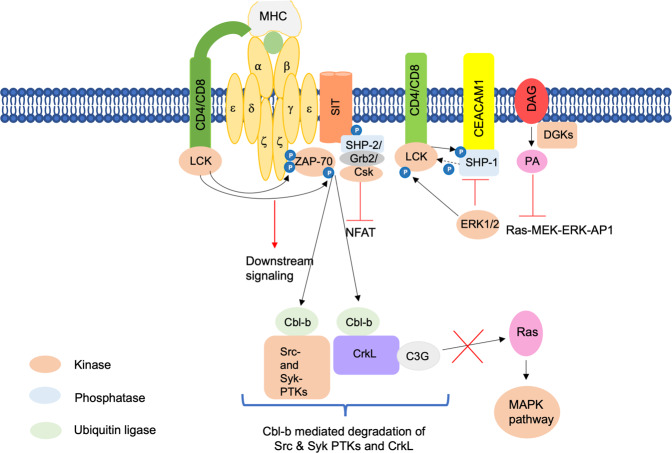
Interaction of the T cell receptor (TCR) with an MHC-antigenic peptide complex results in changes at the molecular and cellular levels in T cells. The outside environmental cues are translated into various signal transduction pathways within the cell, which mediate the activation of various genes with the help of specific transcription factors. These signaling networks propagate with the help of various effector enzymes, such as kinases, phosphatases, and phospholipases. Integration of these disparate signal transduction pathways is done with the help of adaptor proteins that are non-enzymatic in function and that serve as a scaffold for various protein-protein interactions. This process aids in connecting the proximal to distal signaling pathways, thereby contributing to the full activation of T cells. This review provides a comprehensive snapshot of the various molecules involved in regulating T cell receptor signaling, covering both enzymes and adaptors, and will discuss their role in human disease.
T 细胞受体 (TCR) 与 MHC-抗原肽复合物的相互作用导致 T 细胞在分子和细胞水平上发生变化。外部环境线索在细胞内被转化为各种信号转导途径,这些途径在特定转录因子的帮助下介导各种基因的激活。这些信号网络在各种效应酶(如激酶、磷酸酶和磷脂酶)的帮助下传播。不同的信号转导途径的整合是通过非酶功能的衔接蛋白完成的,这些衔接蛋白作为各种蛋白-蛋白相互作用的支架。这个过程有助于连接近端到远端的信号通路,从而促进 T 细胞的完全激活。这篇综述提供了一个全面的快照,介绍了参与调节 T 细胞受体信号的各种分子,包括酶和衔接蛋白,并讨论了它们在人类疾病中的作用。