Luo Haowen, Duan Meiyang, Kong Leilei, He Longxin, Chen Yulin, Wang Zhimin, Tang Xiangru
State Key Laboratory for Conservation and Utilization of Subtropical Agricultural Bioresources, South China Agricultural University, Guangzhou, China.
Scientific Observing and Experimental Station of Crop Cultivation in South China, Ministry of Agriculture, Guangzhou, China.
Front Plant Sci. 2021 Nov 26;12:772728. doi: 10.3389/fpls.2021.772728. eCollection 2021.
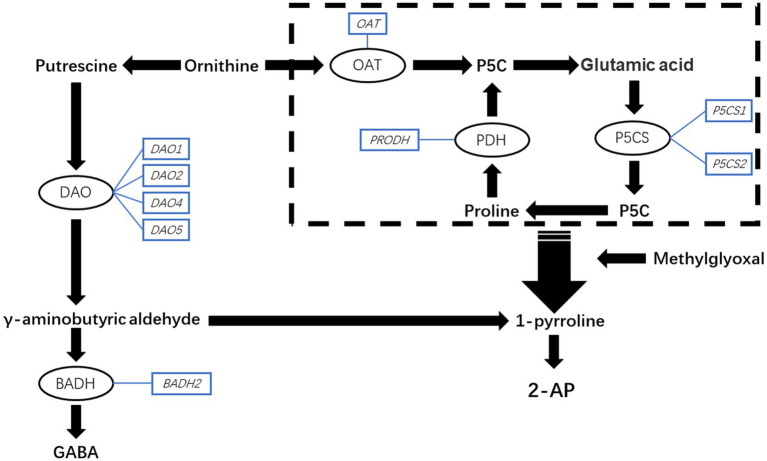
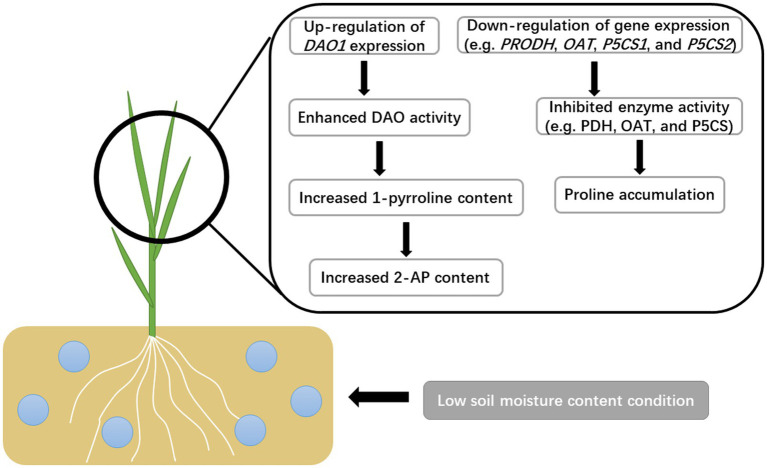
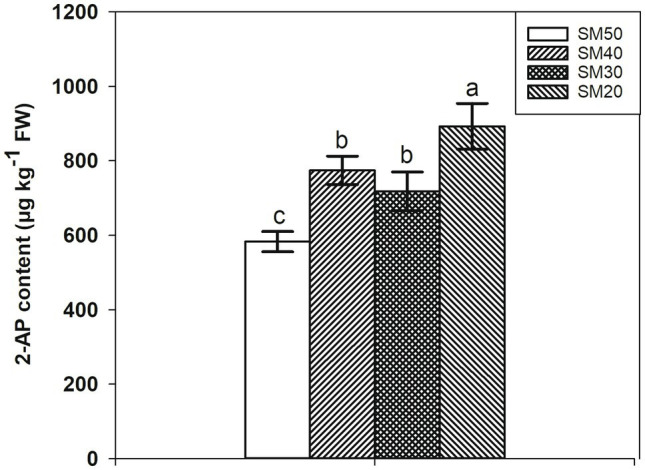
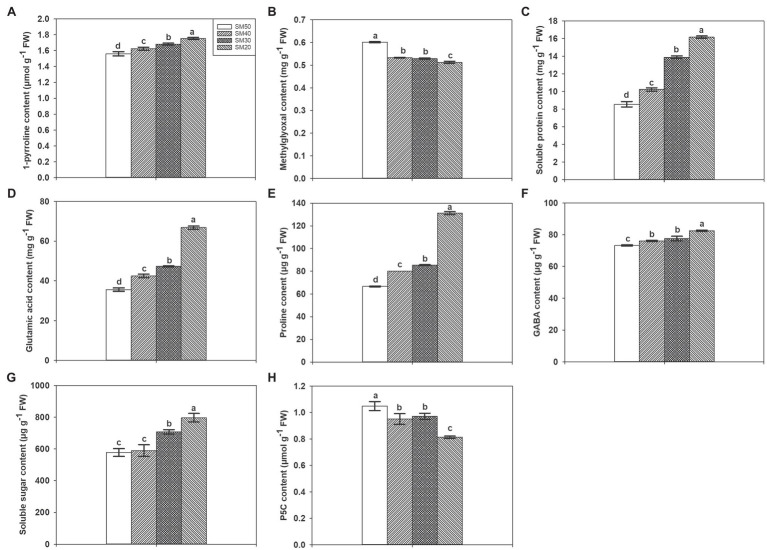
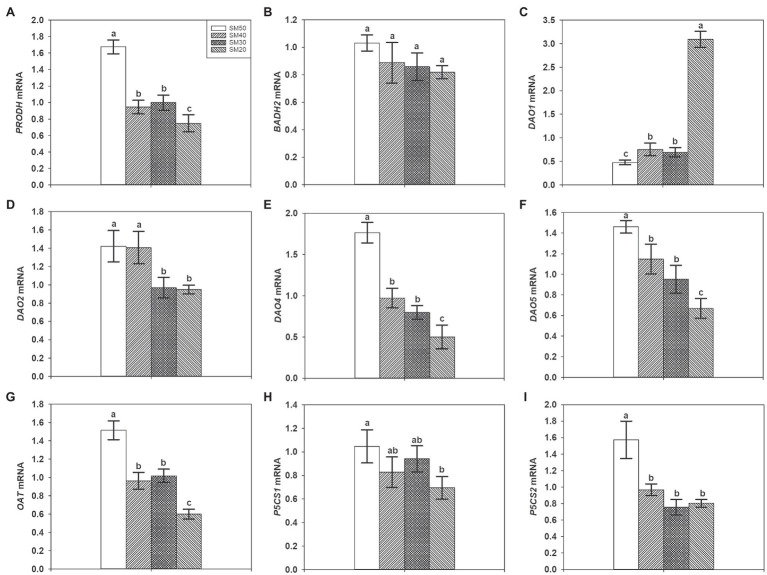
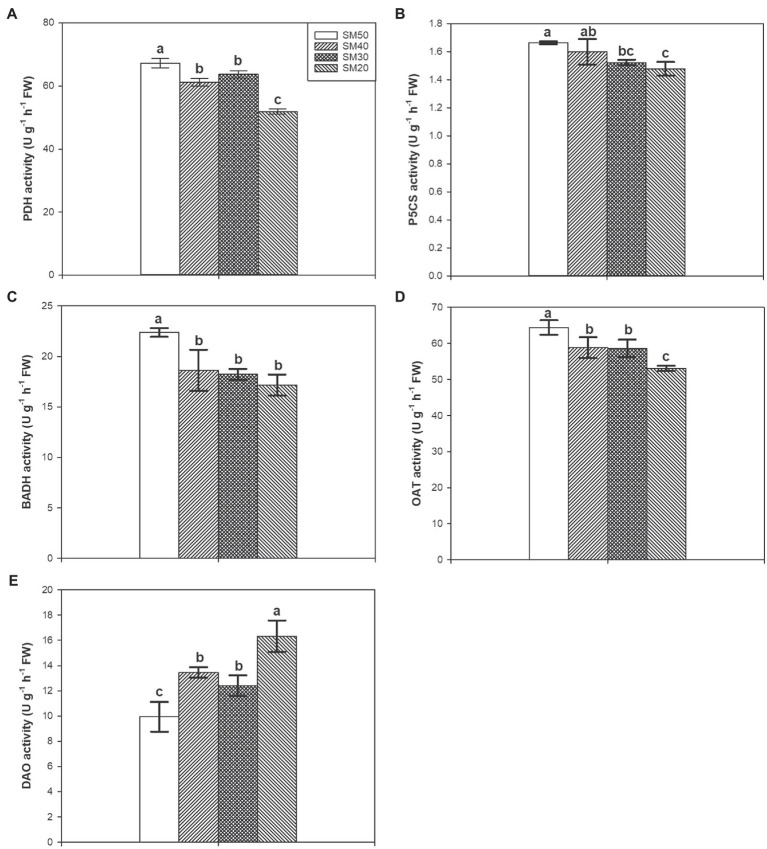
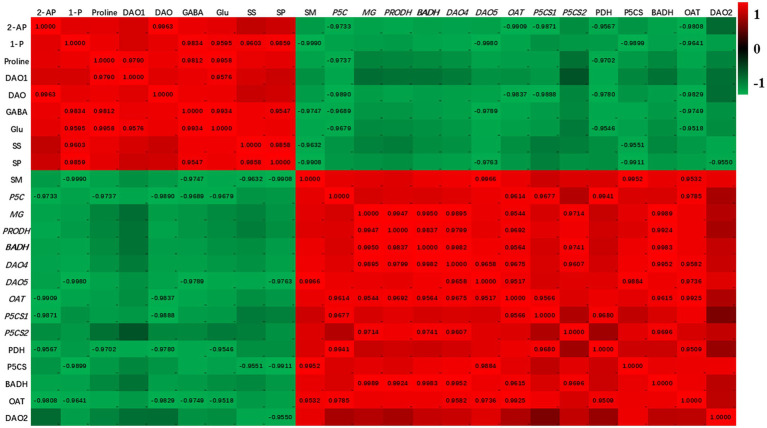
2-acetyl-1-pyrroline (2-AP) is the key compound of rice aroma. However, the responses of 2-AP biosynthesis in fragrant rice under different soil moisture and the corresponding mechanism are little known. The present study evaluated the effects of different soil moisture on 2-AP biosynthesis through a pot experiment. Four soil moisture contents, that is, 50% (SM50), 40% (SM40), 30% (SM30), and 20% (SM20), were adopted, and SM50 treatment was taken as control. The pots were weighed and watered to maintain the corresponding soil moisture content. The results showed no significant difference in growth parameters (plant height, stem diameter, and plant dry weight) among all treatments. Compared with SM50, SM40, SM30, and SM20 treatments significantly (<0.05) increased 2-AP content by 32.81, 23.18, and 53.12%, respectively. Between 20 to 90% higher proline content was observed in SM40, SM30, and SM20 treatments than in SM50. Enzymes including proline dehydrogenase, ornithine transaminase, and 1-pyrroline-5-carboxylate synthetase exhibited lower activities with soil moisture declined. Higher diamine oxidase activity was observed in SM40, SM30, and SM20 treatments compared with SM50, and real-time PCR analyses showed that transcript level of was greatly increased under low soil moisture treatments, especially in SM20 treatment. Transcript levels of , , , , , , and decreased or maintained in SM40, SM30, and SM20 treatments compared with SM50. We deduced that low soil moisture content enhanced 2-AP biosynthesis mainly by upregulating the expression of to promote the conversion from putrescine to 2-AP.
2-乙酰基-1-吡咯啉(2-AP)是水稻香气的关键化合物。然而,不同土壤湿度条件下香稻中2-AP生物合成的响应及其相应机制鲜为人知。本研究通过盆栽试验评估了不同土壤湿度对2-AP生物合成的影响。采用了四种土壤湿度水平,即50%(SM50)、40%(SM40)、30%(SM30)和20%(SM20),并将SM50处理作为对照。通过称量花盆重量并浇水以维持相应的土壤湿度水平。结果表明,所有处理之间的生长参数(株高、茎直径和植株干重)没有显著差异。与SM50相比,SM40、SM30和SM20处理显著(<0.05)提高了2-AP含量,分别提高了32.81%、23.18%和53.12%。在SM40、SM30和SM20处理中观察到脯氨酸含量比SM50高20%至90%。随着土壤湿度下降,脯氨酸脱氢酶、鸟氨酸转氨酶和1-吡咯啉-5-羧酸合成酶等酶的活性降低。与SM50相比,在SM40、SM30和SM20处理中观察到更高的二胺氧化酶活性,实时PCR分析表明,在低土壤湿度处理下,尤其是在SM20处理中,[此处原文缺失基因名称]的转录水平大幅增加。与SM50相比,在SM40、SM30和SM20处理中,[此处原文缺失多个基因名称]的转录水平下降或保持不变。我们推断,低土壤湿度含量主要通过上调[此处原文缺失基因名称]的表达来促进腐胺向2-AP的转化,从而增强2-AP的生物合成。