Department of Pediatrics, The First Affiliated Hospital of Guangxi Medical University, 6 Shuangyong Road, Qingxiu District, Nanning, China.
Guangzhou Sagene Biotech Co., Ltd., Guangzhou, China.
BMC Infect Dis. 2021 Dec 14;21(1):1251. doi: 10.1186/s12879-021-06932-9.
Primary amoebic meningoencephalitis (PAM) is a rare, acute and fatal disease of the central nervous system caused by infection with Naegleria fowleri (Heggie, in Travel Med Infect Dis 8:201-6, 2010). Presently, the majority of reported cases in the literature have been diagnosed through pathogen detection pathogens in the cerebrospinal fluid (CSF). This report highlights the first case of pediatric PAM diagnosed with amoeba infiltration within CSF and bloodstream of an 8-year-old male child, validated through meta-genomic next-generation sequencing (mNGS).
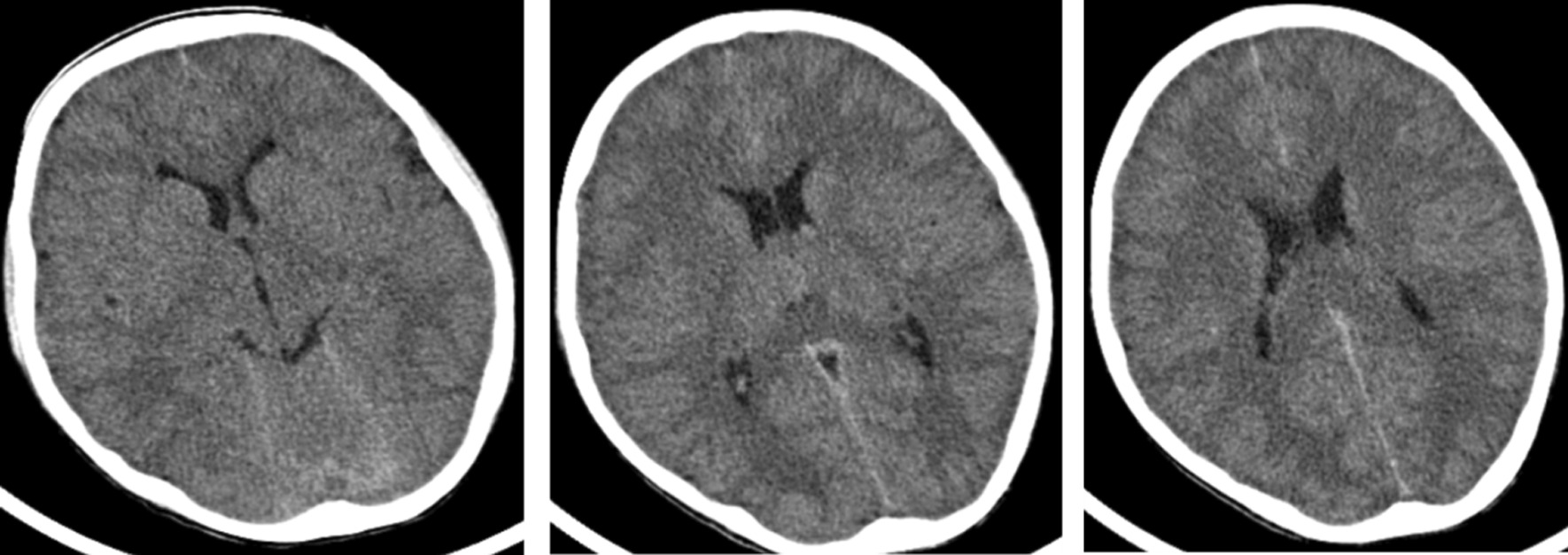
An 8-year-old male child was admitted to hospital following 24 h of fever, headache and vomiting and rapidly entered into a coma. CSF examination was consistent with typical bacterial meningitis. However, since targeted treatment for this condition proved to be futile, the patient rapidly progressed to brain death. Finally, the patient was referred to our hospital where he was confirmed with brain death. CSF and blood samples were consequently analyzed through mNGS. N. fowleri was detected in both samples, although the sequence copy number in the blood was lower than for CSF. The pathogen diagnosis was further verified by PCR and Sanger sequencing.
This is the first reported case of pediatric PAM found in mainland China. The results indicate that N. fowleri may spread outside the central nervous system through a damaged blood-brain barrier.
原发性阿米巴脑膜脑炎(PAM)是一种罕见的、急性的、致命的中枢神经系统疾病,由福氏耐格里阿米巴(Heggie,在 Travel Med Infect Dis 8:201-6, 2010)感染引起。目前,文献中报道的大多数病例是通过检测脑脊液(CSF)中的病原体来诊断的。本报告强调了首例通过宏基因组下一代测序(mNGS)在 CSF 和血流中发现阿米巴浸润而诊断为小儿 PAM 的病例。
一名 8 岁男性在发热、头痛和呕吐 24 小时后入院,迅速进入昏迷状态。CSF 检查与典型细菌性脑膜炎一致。然而,由于针对这种情况的靶向治疗无效,患者迅速发展为脑死亡。最终,患者被转至我院,被确诊为脑死亡。随后对 CSF 和血液样本进行了 mNGS 分析。在两个样本中均检测到福氏耐格里阿米巴,但血液中的序列拷贝数低于 CSF。通过 PCR 和 Sanger 测序进一步验证了病原体诊断。
这是中国大陆首例报告的小儿 PAM 病例。结果表明,福氏耐格里阿米巴可能通过受损的血脑屏障扩散到中枢神经系统以外。