Negeri Sembilan State Health Department, Jalan Rasah, Seremban 70300, Malaysia.
Department of Psychiatry, Hospital Canselor Tuanku Muhriz, Faculty of Medicine, National University of Malaysia Jalan Yaacob Latif, Bandar Tun Razak, Cheras, Kuala Lumpur 56000, Malaysia.
Int J Environ Res Public Health. 2023 Feb 9;20(4):3021. doi: 10.3390/ijerph20043021.
Primary amoebic meningoencephalitis (PAM) is a rare but lethal infection of the brain caused by a eukaryote called (). The aim of this review is to consolidate the recently published case reports of infection by describing its epidemiology and clinical features with the goal of ultimately disseminating this information to healthcare personnel.
A comprehensive literature search was carried out using PubMed, Web of Science, Scopus, and OVID databases until 31 December 2022 by two independent reviewers. All studies from the year 2013 were extracted, and quality assessments were carried out meticulously prior to their inclusion in the final analysis.
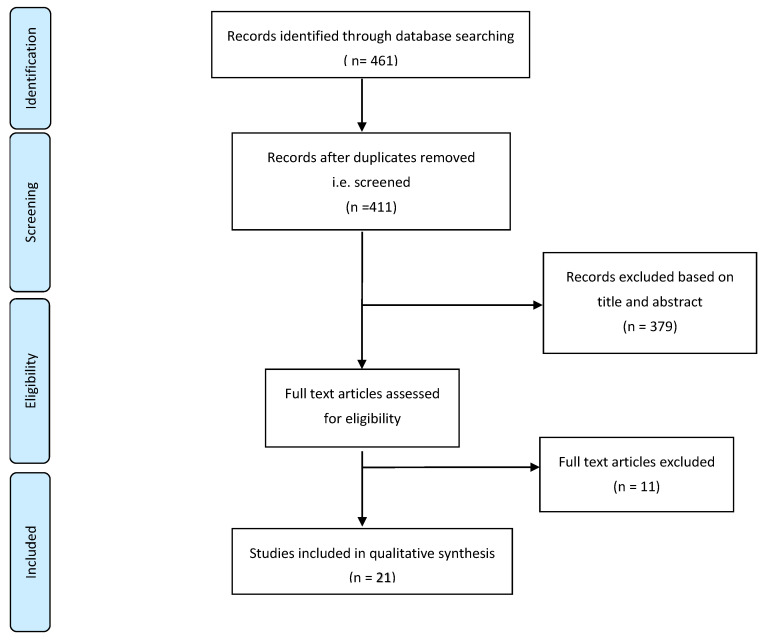
A total of 21 studies were selected for qualitative analyses out of the 461 studies extracted. The cases were distributed globally, and 72.7% of the cases succumbed to mortality. The youngest case was an 11-day-old boy, while the eldest was a 75-year-old. Significant exposure to freshwater either from recreational activities or from a habit of irrigating the nostrils preceded onset. The symptoms at early presentation included fever, headache, and vomiting, while late sequalae showed neurological manifestation. An accurate diagnosis remains a challenge, as the symptoms mimic bacterial meningitis. Confirmatory tests include the direct visualisation of the amoeba or the use of the polymerase chain reaction method.
infection is rare but leads to PAM. Its occurrence is worldwide with a significant risk of fatality. The suggested probable case definition based on the findings is the acute onset of fever, headache, and vomiting with meningeal symptoms following exposure to freshwater within the previous 14 days. Continuous health promotion and health education activities for the public can help to improve knowledge and awareness prior to engagement in freshwater activities.
原发性阿米巴脑膜脑炎(PAM)是一种罕见但致命的脑部感染,由一种称为()的真核生物引起。本综述的目的是通过描述其流行病学和临床特征来整合最近发表的感染病例报告,以期最终将这些信息传播给医务人员。
两名独立审查员使用 PubMed、Web of Science、Scopus 和 OVID 数据库进行了全面的文献检索,检索时间截至 2022 年 12 月 31 日。从 2013 年开始提取所有研究,并在纳入最终分析之前进行了细致的质量评估。
从提取的 461 项研究中,共选择了 21 项进行定性分析。病例分布在全球各地,72.7%的病例死亡。最小的病例是一名 11 天大的男孩,最大的是一名 75 岁的老人。发病前有明显的淡水暴露,要么是通过娱乐活动,要么是通过经常用淡水冲洗鼻腔。早期症状包括发热、头痛和呕吐,晚期后遗症则表现为神经系统症状。由于症状与细菌性脑膜炎相似,因此准确诊断仍然具有挑战性。确诊试验包括直接观察阿米巴或使用聚合酶链反应方法。
感染较为罕见,但可导致 PAM。其发生具有全球性,死亡率较高。根据研究结果提出的可能病例定义是,在过去 14 天内,有发热、头痛和呕吐等急性症状,伴有脑膜症状,且在淡水暴露后发生。持续开展公众健康促进和健康教育活动有助于提高公众在从事淡水活动前的知识和意识。