Redd Andrew D, Nardin Alessandra, Kared Hassen, Bloch Evan M, Abel Brian, Pekosz Andrew, Laeyendecker Oliver, Fehlings Michael, Quinn Thomas C, Tobian Aaron Ar
Division of Intramural Research, National Institute of Allergy and Infectious Diseases, National Institutes of Health, Bethesda, MD, USA.
Department of Medicine, Johns Hopkins University School of Medicine, Baltimore, MD, USA.
bioRxiv. 2021 Dec 9:2021.12.06.471446. doi: 10.1101/2021.12.06.471446.
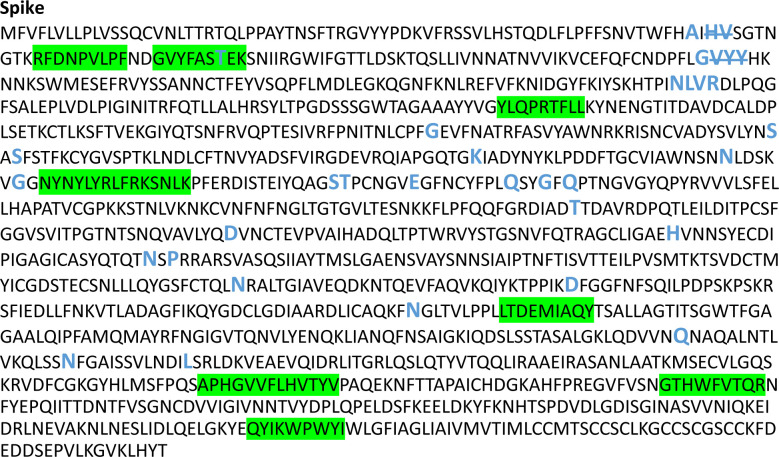
There is a growing concern that ongoing evolution of SARS-CoV-2 could lead to variants of concern (VOC) that are capable of avoiding some or all of the multi-faceted immune response generated by both prior infection or vaccination, with the recently described B.1.1.529 (Omicron) VOC being of particular interest. Peripheral blood mononuclear cell samples from PCR-confirmed, recovered COVID-19 convalescent patients (n=30) infected with SARS-CoV-2 in the United States collected in April and May 2020 who possessed at least one or more of six different HLA haplotypes were selected for examination of their anti-SARS-CoV-2 CD8+ T-cell responses using a multiplexed peptide-MHC tetramer staining approach. This analysis examined if the previously identified viral epitopes targeted by CD8+ T-cells in these individuals (n=52 distinct epitopes) are mutated in the newly described Omicron VOC (n=50 mutations). Within this population, only one low-prevalence epitope from the Spike protein restricted to two HLA alleles and found in 2/30 (7%) individuals contained a single amino acid change associated with the Omicron VOC. These data suggest that virtually all individuals with existing anti-SARS-CoV-2 CD8+ T-cell responses should recognize the Omicron VOC, and that SARS-CoV-2 has not evolved extensive T-cell escape mutations at this time.
The newly identified Omicron variant of concern contains more mutations than any of the previous variants described to date. In addition, many of the mutations associated with the Omicron variant are found in areas that are likely bound by neutralizing antibodies, suggesting that the first line of immunological defense against COVID-19 may be compromised. However, both natural infection and vaccination develop T-cell based responses, in addition to antibodies. This study examined if the parts of the virus, or epitopes, targeted by the CD8+ T-cell response in thirty individuals who recovered from COVID-19 in 2020 were mutated in the Omicron variant. Only one of 52 epitopes identified in this population contained an amino acid that was mutated in Omicron. These data suggest that the T-cell immune response in previously infected, and most likely vaccinated individuals, should still be effective against Omicron.
人们越来越担心,严重急性呼吸综合征冠状病毒2(SARS-CoV-2)的持续进化可能导致值得关注的变异株(VOC),这些变异株能够避开先前感染或接种疫苗所产生的多方面免疫反应中的部分或全部,最近描述的B.1.1.529(奥密克戎)VOC尤其令人关注。选取了2020年4月和5月在美国收集的经PCR确诊的、感染过SARS-CoV-2且已康复的COVID-19恢复期患者(n = 30)的外周血单个核细胞样本,这些患者拥有六种不同HLA单倍型中的至少一种或多种,采用多重肽-MHC四聚体染色方法检测其抗SARS-CoV-2 CD8 + T细胞反应。该分析研究了这些个体(n = 52个不同表位)中先前确定的被CD8 + T细胞靶向的病毒表位在新描述的奥密克戎VOC中是否发生突变(n = 50个突变)。在这个群体中,仅刺突蛋白上一个低频率表位(限于两个HLA等位基因,在2/30(7%)的个体中发现)含有一个与奥密克戎VOC相关的单个氨基酸变化。这些数据表明,几乎所有具有现有抗SARS-CoV-2 CD8 + T细胞反应的个体都应该能够识别奥密克戎VOC,并且此时SARS-CoV-2尚未进化出广泛的T细胞逃逸突变。
新发现的奥密克戎变异株比迄今为止描述的任何先前变异株都含有更多突变。此外,与奥密克戎变异株相关的许多突变位于可能被中和抗体结合的区域,这表明针对COVID-19的第一道免疫防线可能会受到损害。然而,自然感染和接种疫苗除了产生抗体外,还会产生基于T细胞的反应。本研究检测了2020年从COVID-19中康复的30名个体中CD8 + T细胞反应所靶向的病毒部分(即表位)在奥密克戎变异株中是否发生突变。在该群体中鉴定出的52个表位中只有一个含有在奥密克戎中发生突变的氨基酸。这些数据表明,先前感染过且很可能接种过疫苗的个体中的T细胞免疫反应应该仍然对奥密克戎有效。