Mallick Mostafa Kamal, Biser Sarah, Haridas Aathira, Umesh Vaishnavi, Tönsing Olaf, Yari Imrana Abdullahi, Ollenschläger Malte, Heckel Maria, Ostgathe Christoph, Kluge Felix, Eskofier Bjoern, Steigleder Tobias
Machine Learning and Data Analytics Lab, Department Artificial Intelligence in Biomedical Engineering (AIBE), Friedrich-Alexander-Universität Erlangen-Nürnberg (FAU), Erlangen, Germany.
Department of Palliative Medicine, Comprehensive Cancer Center Erlangen-EMN, Friedrich-Alexander-Universität Erlangen-Nürnberg, Erlangen, Germany.
Front Digit Health. 2021 Nov 29;3:765867. doi: 10.3389/fdgth.2021.765867. eCollection 2021.
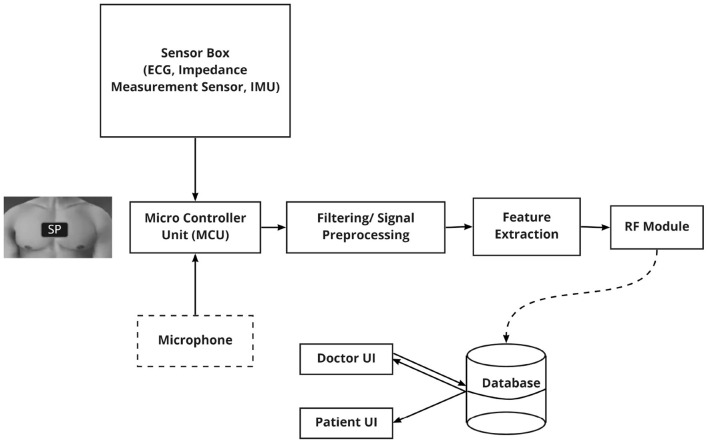
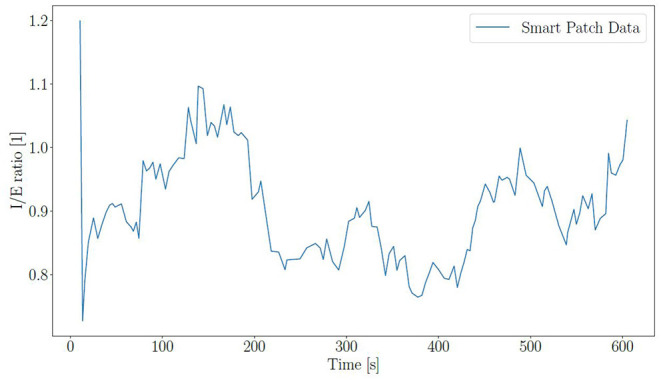
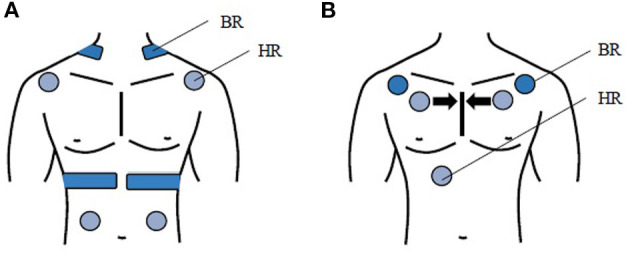
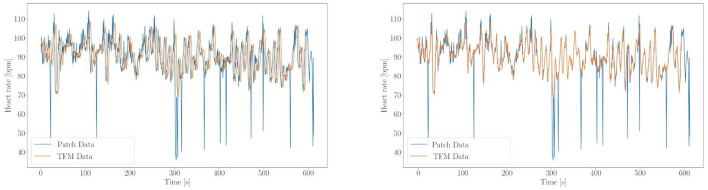
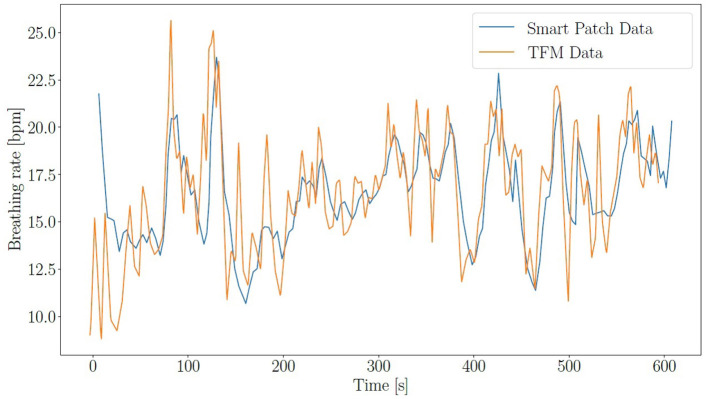
The world of healthcare constantly aims to improve the lives of people while nurturing their health and comfort. Digital health and wearable technologies are aimed at making this possible. However, there are numerous factors that need to be addressed such as aging, disabilities, and health hazards. These factors are intensified in palliative care (PC) patients and limited hospital capacities make it challenging for health care providers (HCP) to handle the crisis. One of the most common symptoms reported by PC patients with severe conditions is dyspnoea. Monitoring devices with sufficient comfort could improve symptom control of patients with dyspnoea in PC. In this article, we discuss the proof-of-concept study to investigate a smart patch (SP), which monitors the pulmonary parameters: (a) breathing rate (BR) and inspiration to expiration ratio (I:E); markers for distress: (b) heart rate (HR) and heart rate variability (HRV), and (c) transmits real-time data securely to an adaptable user interface, primarily geared for palliative HCP but scalable to specific needs. The concept is verified by measuring and analyzing physiological signals from different electrode positions on the chest and comparing the results achieved with the gold standard Task Force Monitor (TFM).
医疗保健领域一直致力于在呵护人们健康与舒适的同时改善他们的生活。数字健康和可穿戴技术旨在实现这一目标。然而,存在诸多需要解决的因素,如老龄化、残疾和健康危害等。这些因素在姑息治疗(PC)患者中更为突出,而医院能力有限使得医疗保健提供者(HCP)应对危机颇具挑战。病情严重的PC患者报告的最常见症状之一是呼吸困难。具备足够舒适度的监测设备可改善PC中呼吸困难患者的症状控制。在本文中,我们讨论了一项概念验证研究,该研究旨在探究一种智能贴片(SP),它能监测以下肺部参数:(a)呼吸频率(BR)和吸气与呼气比率(I:E);痛苦指标:(b)心率(HR)和心率变异性(HRV),以及(c)将实时数据安全传输至一个适应性强的用户界面,该界面主要面向姑息治疗HCP,但可根据特定需求进行扩展。通过测量和分析胸部不同电极位置的生理信号,并将所得结果与金标准工作组监测仪(TFM)进行比较,验证了这一概念。