• 文献检索
  • 文档翻译
  • 深度研究
  • 学术资讯
  • Suppr Zotero 插件Zotero 插件
  • 邀请有礼
  • 套餐&价格
  • 历史记录
应用&插件
Suppr Zotero 插件Zotero 插件浏览器插件Mac 客户端Windows 客户端微信小程序
定价
高级版会员购买积分包购买API积分包
服务
文献检索文档翻译深度研究API 文档MCP 服务
关于我们
关于 Suppr公司介绍联系我们用户协议隐私条款
关注我们

Suppr 超能文献

核心技术专利:CN118964589B侵权必究
粤ICP备2023148730 号-1Suppr @ 2026

文献检索

告别复杂PubMed语法,用中文像聊天一样搜索,搜遍4000万医学文献。AI智能推荐,让科研检索更轻松。

立即免费搜索

文件翻译

保留排版,准确专业,支持PDF/Word/PPT等文件格式,支持 12+语言互译。

免费翻译文档

深度研究

AI帮你快速写综述,25分钟生成高质量综述,智能提取关键信息,辅助科研写作。

立即免费体验

基于雷达的呼吸率自适应谐频选择检测。

Radar-Based Detection of Respiration Rate with Adaptive Harmonic Quefrency Selection.

机构信息

Graduate Program of Biomedical Engineering, Yonsei University, Seoul 03722, Korea.

Department of Medical Engineering, Yonsei University College of Medicine, Seoul 03722, Korea.

出版信息

Sensors (Basel). 2020 Mar 13;20(6):1607. doi: 10.3390/s20061607.

DOI:10.3390/s20061607
PMID:32183139
原文链接:https://pmc.ncbi.nlm.nih.gov/articles/PMC7146735/
Abstract

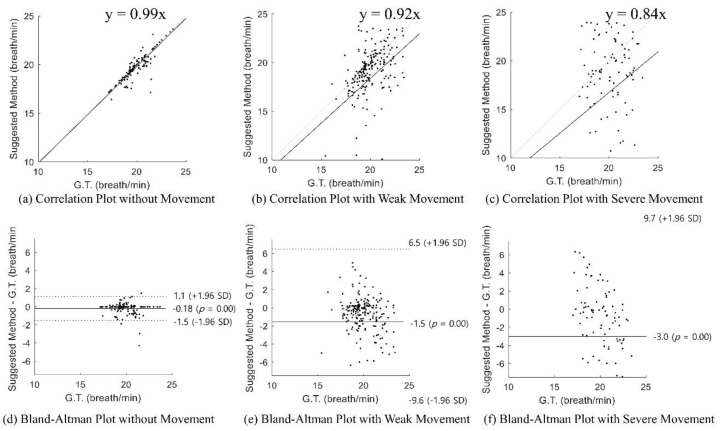
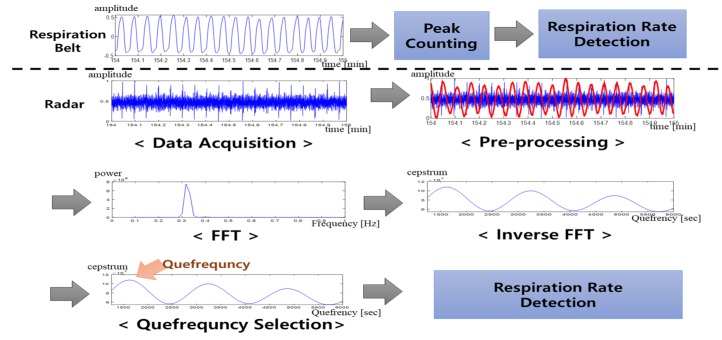
Continuous respiration monitoring is important for predicting a potential disease. Due to respiration measurements using contact sensors, it is difficult to achieve continuous measurement because the sensors are inconvenient to attach. In this study, a radar sensor was used for non-contact respiration measurements. The radar sensor had a high precision and could even be used in the dark. It could also be used continuously regardless of time and place. The radar sensor relied on the periodicity of respiration to detect the respiration rate. A respiration adaptive interval was set and the respiration rate was detected through harmonic quefrency selection. As a result, it was confirmed that there was no difference between the respiratory rate measured using a respiration belt and the respiratory rate detected using a radar sensor. Furthermore, case studies on changes in the radar position and about measurement for long periods confirmed that the radar sensor could detect respiration rate continuously regardless of the position and measurement duration.

摘要

连续呼吸监测对于预测潜在疾病很重要。由于使用接触式传感器进行呼吸测量,因此很难实现连续测量,因为传感器不方便附着。在这项研究中,使用雷达传感器进行非接触式呼吸测量。雷达传感器具有高精度,即使在黑暗中也能使用。它还可以随时随地连续使用。雷达传感器依靠呼吸的周期性来检测呼吸率。设置了呼吸自适应间隔,并通过谐波频率选择检测呼吸率。结果证实,使用呼吸带测量的呼吸率与使用雷达传感器检测到的呼吸率之间没有差异。此外,对雷达位置变化和长时间测量的案例研究证实,无论位置和测量持续时间如何,雷达传感器都可以连续检测呼吸率。
https://cdn.ncbi.nlm.nih.gov/pmc/blobs/6f83/7146735/0e1c75ab5db1/sensors-20-01607-g009.jpg
https://cdn.ncbi.nlm.nih.gov/pmc/blobs/6f83/7146735/d228d4c91d02/sensors-20-01607-g001.jpg
https://cdn.ncbi.nlm.nih.gov/pmc/blobs/6f83/7146735/6f18068df3bc/sensors-20-01607-g002.jpg
https://cdn.ncbi.nlm.nih.gov/pmc/blobs/6f83/7146735/ce0d1cbe0e15/sensors-20-01607-g003.jpg
https://cdn.ncbi.nlm.nih.gov/pmc/blobs/6f83/7146735/2b1ac30078a9/sensors-20-01607-g004.jpg
https://cdn.ncbi.nlm.nih.gov/pmc/blobs/6f83/7146735/6c6074240aa1/sensors-20-01607-g005.jpg
https://cdn.ncbi.nlm.nih.gov/pmc/blobs/6f83/7146735/2ca46c811c06/sensors-20-01607-g006.jpg
https://cdn.ncbi.nlm.nih.gov/pmc/blobs/6f83/7146735/242efd15ce14/sensors-20-01607-g007.jpg
https://cdn.ncbi.nlm.nih.gov/pmc/blobs/6f83/7146735/a58d7f9f4de1/sensors-20-01607-g008.jpg
https://cdn.ncbi.nlm.nih.gov/pmc/blobs/6f83/7146735/0e1c75ab5db1/sensors-20-01607-g009.jpg
https://cdn.ncbi.nlm.nih.gov/pmc/blobs/6f83/7146735/d228d4c91d02/sensors-20-01607-g001.jpg
https://cdn.ncbi.nlm.nih.gov/pmc/blobs/6f83/7146735/6f18068df3bc/sensors-20-01607-g002.jpg
https://cdn.ncbi.nlm.nih.gov/pmc/blobs/6f83/7146735/ce0d1cbe0e15/sensors-20-01607-g003.jpg
https://cdn.ncbi.nlm.nih.gov/pmc/blobs/6f83/7146735/2b1ac30078a9/sensors-20-01607-g004.jpg
https://cdn.ncbi.nlm.nih.gov/pmc/blobs/6f83/7146735/6c6074240aa1/sensors-20-01607-g005.jpg
https://cdn.ncbi.nlm.nih.gov/pmc/blobs/6f83/7146735/2ca46c811c06/sensors-20-01607-g006.jpg
https://cdn.ncbi.nlm.nih.gov/pmc/blobs/6f83/7146735/242efd15ce14/sensors-20-01607-g007.jpg
https://cdn.ncbi.nlm.nih.gov/pmc/blobs/6f83/7146735/a58d7f9f4de1/sensors-20-01607-g008.jpg
https://cdn.ncbi.nlm.nih.gov/pmc/blobs/6f83/7146735/0e1c75ab5db1/sensors-20-01607-g009.jpg

相似文献

1
Radar-Based Detection of Respiration Rate with Adaptive Harmonic Quefrency Selection.基于雷达的呼吸率自适应谐频选择检测。
Sensors (Basel). 2020 Mar 13;20(6):1607. doi: 10.3390/s20061607.
2
Accurate Heart Rate and Respiration Rate Detection Based on a Higher-Order Harmonics Peak Selection Method Using Radar Non-Contact Sensors.基于使用雷达非接触式传感器的高阶谐波峰值选择方法的精确心率和呼吸率检测
Sensors (Basel). 2021 Dec 23;22(1):83. doi: 10.3390/s22010083.
3
Analysis of Spectral Estimation Algorithms for Accurate Heart Rate and Respiration Rate Estimation Using an Ultra-Wideband Radar Sensor.基于超宽带雷达传感器的精确心率和呼吸率估计的频谱估计算法分析。
IEEE Rev Biomed Eng. 2024;17:297-309. doi: 10.1109/RBME.2022.3212695. Epub 2024 Jan 12.
4
An Overview of Signal Processing Techniques for Remote Health Monitoring Using Impulse Radio UWB Transceiver.基于冲激无线电超宽带收发器的远程健康监测的信号处理技术综述。
Sensors (Basel). 2020 Apr 27;20(9):2479. doi: 10.3390/s20092479.
5
Non-contact acquisition of respiration and heart rates using Doppler radar with time domain peak-detection algorithm.使用带时域峰值检测算法的多普勒雷达非接触式获取呼吸率和心率
Annu Int Conf IEEE Eng Med Biol Soc. 2017 Jul;2017:2847-2850. doi: 10.1109/EMBC.2017.8037450.
6
High-Precision Vital Signs Monitoring Method Using a FMCW Millimeter-Wave Sensor.利用 FMCW 毫米波传感器的高精度生命体征监测方法。
Sensors (Basel). 2022 Oct 5;22(19):7543. doi: 10.3390/s22197543.
7
Respiration and Heart Rate Monitoring in Smart Homes: An Angular-Free Approach with an FMCW Radar.智能家居中的呼吸和心率监测:一种基于调频连续波雷达的无角度方法。
Sensors (Basel). 2024 Apr 11;24(8):2448. doi: 10.3390/s24082448.
8
Vital Sign Monitoring Using FMCW Radar in Various Sleeping Scenarios.利用 FMCW 雷达在各种睡眠场景下进行生命体征监测。
Sensors (Basel). 2020 Nov 14;20(22):6505. doi: 10.3390/s20226505.
9
Automated Non-Contact Respiratory Rate Monitoring of Neonates Based on Synchronous Evaluation of a 3D Time-of-Flight Camera and a Microwave Interferometric Radar Sensor.基于 3D 飞行时间摄像机和微波干涉雷达传感器同步评估的新生儿自动非接触式呼吸率监测。
Sensors (Basel). 2021 Apr 23;21(9):2959. doi: 10.3390/s21092959.
10
Vital Sign Monitoring Through the Back Using an UWB Impulse Radar With Body Coupled Antennas.使用带体耦合天线的超宽带脉冲雷达进行背部生命体征监测。
IEEE Trans Biomed Circuits Syst. 2018 Apr;12(2):292-302. doi: 10.1109/TBCAS.2018.2799322.

引用本文的文献

1
Systematic Literature Review Regarding Heart Rate and Respiratory Rate Measurement by Means of Radar Technology.基于雷达技术的心率和呼吸率测量的系统文献回顾。
Sensors (Basel). 2024 Feb 4;24(3):1003. doi: 10.3390/s24031003.
2
Breathing-Associated Facial Region Segmentation for Thermal Camera-Based Indirect Breathing Monitoring.用于基于热成像相机的间接呼吸监测的呼吸相关面部区域分割
IEEE J Transl Eng Health Med. 2023 Jul 17;11:505-514. doi: 10.1109/JTEHM.2023.3295775. eCollection 2023.
3
Contactless Technologies, Sensors, and Systems for Cardiac and Respiratory Measurement during Sleep: A Systematic Review.

本文引用的文献

1
Sleep Monitoring Based on a Tri-Axial Accelerometer and a Pressure Sensor.基于三轴加速度计和压力传感器的睡眠监测
Sensors (Basel). 2016 May 23;16(5):750. doi: 10.3390/s16050750.
2
Cepstral Peak Sensitivity: A Theoretic Analysis and Comparison of Several Implementations.倒谱峰值敏感度:几种实现方式的理论分析与比较
J Voice. 2015 Nov;29(6):670-81. doi: 10.1016/j.jvoice.2014.11.005. Epub 2015 May 2.
3
Respiration rate monitoring methods: a review.呼吸率监测方法:综述。
非接触式技术、传感器以及用于睡眠中心血管和呼吸测量的系统:系统评价。
Sensors (Basel). 2023 May 24;23(11):5038. doi: 10.3390/s23115038.
4
Improving Dyspnoea Symptom Control of Patients in Palliative Care Using a Smart Patch-A Proof of Concept Study.使用智能贴片改善姑息治疗患者的呼吸困难症状控制——一项概念验证研究
Front Digit Health. 2021 Nov 29;3:765867. doi: 10.3389/fdgth.2021.765867. eCollection 2021.
5
Cost-effective vital signs monitoring system for COVID-19 patients in smart hospital.智能医院中用于新冠肺炎患者的高性价比生命体征监测系统。
Health Technol (Berl). 2022;12(1):239-253. doi: 10.1007/s12553-021-00621-y. Epub 2021 Nov 12.
6
A real-time camera-based adaptive breathing monitoring system.基于实时摄像机的自适应呼吸监测系统。
Med Biol Eng Comput. 2021 Jun;59(6):1285-1298. doi: 10.1007/s11517-021-02371-5. Epub 2021 Jun 8.
7
Advancements in Methods and Camera-Based Sensors for the Quantification of Respiration.呼吸定量的方法和基于摄像头传感器的进展。
Sensors (Basel). 2020 Dec 17;20(24):7252. doi: 10.3390/s20247252.
8
Respiration Rate Estimation Based on Independent Component Analysis of Accelerometer Data: Pilot Single-Arm Intervention Study.基于加速度计数据独立分量分析的呼吸率估计:初步单臂干预研究。
JMIR Mhealth Uhealth. 2020 Aug 10;8(8):e17803. doi: 10.2196/17803.
Pediatr Pulmonol. 2011 Jun;46(6):523-9. doi: 10.1002/ppul.21416. Epub 2011 Jan 31.
4
Design, analysis, and interpretation of method-comparison studies.方法比较研究的设计、分析与解读
AACN Adv Crit Care. 2008 Apr-Jun;19(2):223-34. doi: 10.1097/01.AACN.0000318125.41512.a3.
5
Evaluation of the dyspneic patient in the office.在诊室对呼吸困难患者的评估。
Prim Care. 2006 Sep;33(3):643-57. doi: 10.1016/j.pop.2006.06.007.
6
Critical review of non-invasive respiratory monitoring in medical care.医疗中无创呼吸监测的批判性综述。
Med Biol Eng Comput. 2003 Jul;41(4):377-83. doi: 10.1007/BF02348078.
7
Time/frequency mapping of the heart rate, blood pressure and respiratory signals.心率、血压和呼吸信号的时间/频率映射
Med Biol Eng Comput. 1993 Mar;31(2):103-10. doi: 10.1007/BF02446667.
8
Statistical methods for assessing agreement between two methods of clinical measurement.评估两种临床测量方法之间一致性的统计方法。
Lancet. 1986 Feb 8;1(8476):307-10.
9
Chronic dyspnea unexplained by history, physical examination, chest roentgenogram, and spirometry. Analysis of a seven-year experience.经病史、体格检查、胸部X线检查和肺量计检查无法解释的慢性呼吸困难。七年经验分析。
Chest. 1991 Nov;100(5):1293-9. doi: 10.1378/chest.100.5.1293.