• 文献检索
  • 文档翻译
  • 深度研究
  • 学术资讯
  • Suppr Zotero 插件Zotero 插件
  • 邀请有礼
  • 套餐&价格
  • 历史记录
应用&插件
Suppr Zotero 插件Zotero 插件浏览器插件Mac 客户端Windows 客户端微信小程序
定价
高级版会员购买积分包购买API积分包
服务
文献检索文档翻译深度研究API 文档MCP 服务
关于我们
关于 Suppr公司介绍联系我们用户协议隐私条款
关注我们

Suppr 超能文献

核心技术专利:CN118964589B侵权必究
粤ICP备2023148730 号-1Suppr @ 2026

文献检索

告别复杂PubMed语法,用中文像聊天一样搜索,搜遍4000万医学文献。AI智能推荐,让科研检索更轻松。

立即免费搜索

文件翻译

保留排版,准确专业,支持PDF/Word/PPT等文件格式,支持 12+语言互译。

免费翻译文档

深度研究

AI帮你快速写综述,25分钟生成高质量综述,智能提取关键信息,辅助科研写作。

立即免费体验

ACCU3RATE:基于用户评价的移动健康应用评级量表。

ACCU3RATE: A mobile health application rating scale based on user reviews.

机构信息

Computer Science and Engineering, Bangladesh University of Business and Technology, Mirpur, Dhaka, Bangladesh.

Department of Engineering Science, Institute of Biomedical Engineering, University of Oxford, Oxford, United Kingdom.

出版信息

PLoS One. 2021 Dec 16;16(12):e0258050. doi: 10.1371/journal.pone.0258050. eCollection 2021.

DOI:10.1371/journal.pone.0258050
PMID:34914718
原文链接:https://pmc.ncbi.nlm.nih.gov/articles/PMC8675707/
Abstract

BACKGROUND

Over the last decade, mobile health applications (mHealth App) have evolved exponentially to assess and support our health and well-being.

OBJECTIVE

This paper presents an Artificial Intelligence (AI)-enabled mHealth app rating tool, called ACCU3RATE, which takes multidimensional measures such as user star rating, user review and features declared by the developer to generate the rating of an app. However, currently, there is very little conceptual understanding on how user reviews affect app rating from a multi-dimensional perspective. This study applies AI-based text mining technique to develop more comprehensive understanding of user feedback based on several important factors, determining the mHealth app ratings.

METHOD

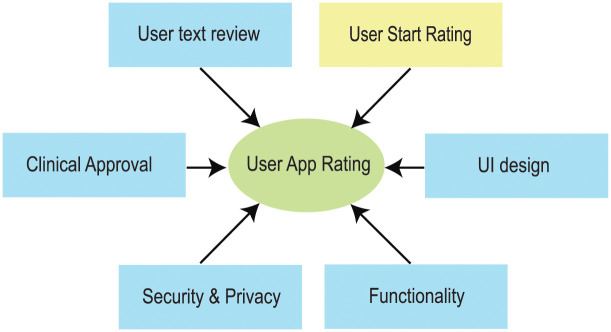
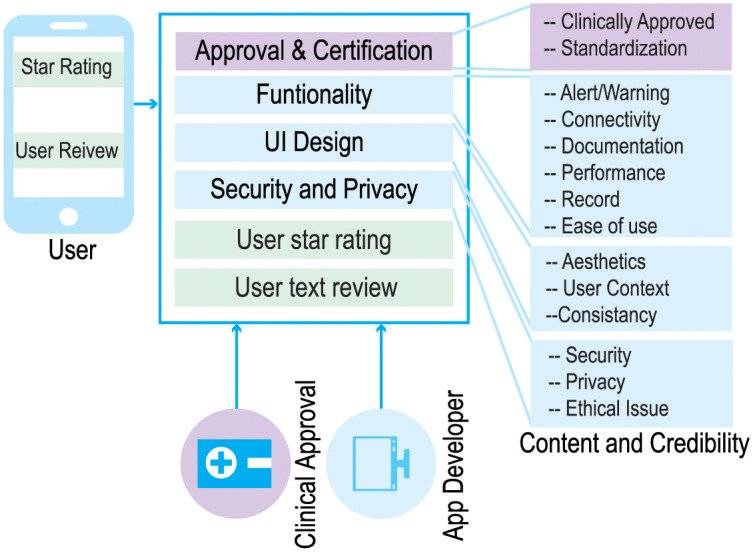
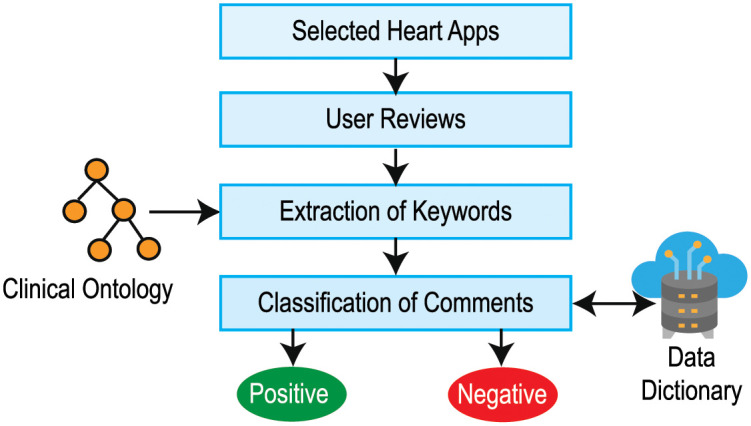
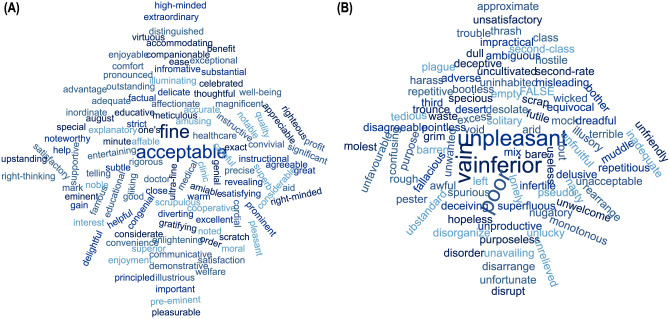
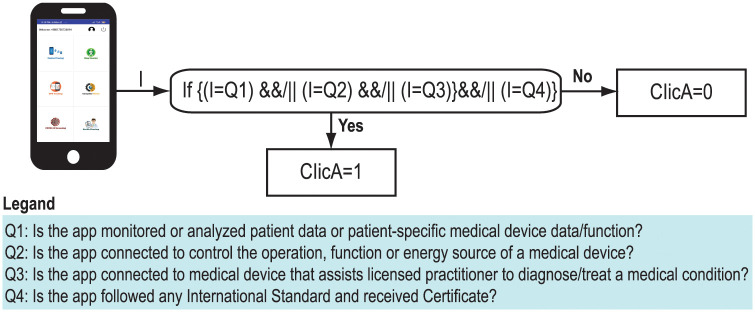
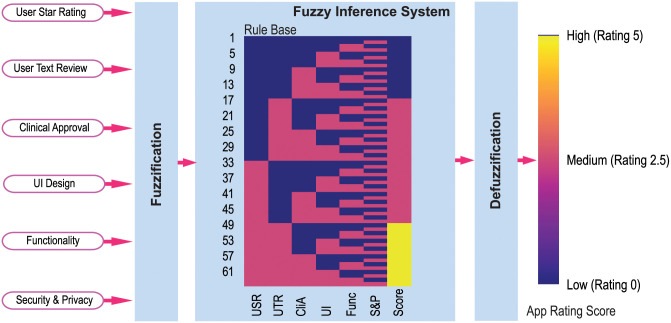
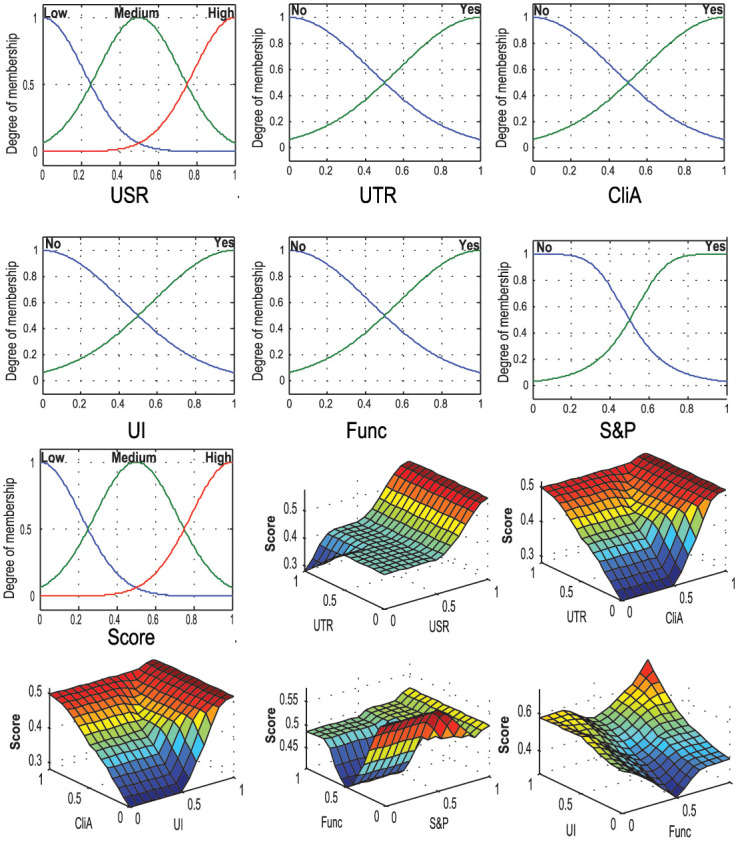
Based on the literature, six variables were identified that influence the mHealth app rating scale. These factors are user star rating, user text review, user interface (UI) design, functionality, security and privacy, and clinical approval. Natural Language Toolkit package is used for interpreting text and to identify the App users' sentiment. Additional considerations were accessibility, protection and privacy, UI design for people living with physical disability. Moreover, the details of clinical approval, if exists, were taken from the developer's statement. Finally, we fused all the inputs using fuzzy logic to calculate the new app rating score.

RESULTS AND CONCLUSIONS

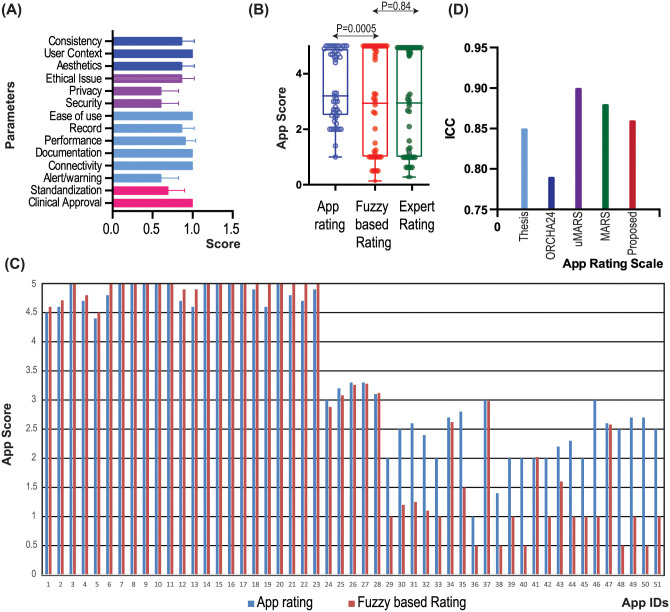
ACCU3RATE concentrates on heart related Apps found in the play store and App gallery. The findings indicate the efficacy of the proposed method as opposed to the current device scale. This study has implications for both App developers and consumers who are using mHealth Apps to monitor and track their health. The performance evaluation shows that the proposed mHealth scale has shown excellent reliability as well as internal consistency of the scale, and high inter-rater reliability index. It has also been noticed that the fuzzy based rating scale, as in ACCU3RATE, matches more closely to the rating performed by experts.

摘要

背景

在过去的十年中,移动健康应用程序(mHealth App)呈指数级发展,用于评估和支持我们的健康和幸福。

目的

本文提出了一种人工智能(AI)支持的 mHealth 应用程序评级工具,称为 ACCU3RATE,它采用多维措施,如用户星级评分、用户评论和开发者声明的功能,生成应用程序的评分。然而,目前,从多维角度来看,用户评论如何影响应用程序评分的概念理解非常有限。本研究应用基于人工智能的文本挖掘技术,基于几个重要因素,开发更全面的用户反馈理解,确定 mHealth 应用程序的评分。

方法

根据文献,确定了六个影响 mHealth 应用程序评分的变量。这些因素是用户星级评分、用户文本评论、用户界面(UI)设计、功能、安全性和隐私以及临床批准。自然语言工具包用于解释文本并识别应用程序用户的情绪。此外,还考虑了身体残疾用户的可访问性、保护和隐私、UI 设计。此外,如果存在临床批准的详细信息,则从开发者声明中获取。最后,我们使用模糊逻辑融合所有输入,以计算新的应用评分。

结果与结论

ACCU3RATE 专注于在 Play 商店和 App 画廊中发现的与心脏相关的应用程序。研究结果表明,与当前设备评分相比,该方法是有效的。本研究对使用 mHealth 应用程序监测和跟踪健康的应用程序开发人员和消费者都具有重要意义。性能评估表明,所提出的 mHealth 量表具有出色的可靠性和量表的内部一致性,以及较高的评分者间可靠性指数。还注意到,基于模糊的评分量表,如 ACCU3RATE,与专家评分更接近。
https://cdn.ncbi.nlm.nih.gov/pmc/blobs/ffe4/8675707/e876eb8940ae/pone.0258050.g011.jpg
https://cdn.ncbi.nlm.nih.gov/pmc/blobs/ffe4/8675707/2d38a277b68b/pone.0258050.g001.jpg
https://cdn.ncbi.nlm.nih.gov/pmc/blobs/ffe4/8675707/06ccfaa7d6d7/pone.0258050.g002.jpg
https://cdn.ncbi.nlm.nih.gov/pmc/blobs/ffe4/8675707/b4ef50561cd2/pone.0258050.g003.jpg
https://cdn.ncbi.nlm.nih.gov/pmc/blobs/ffe4/8675707/7a61073d1283/pone.0258050.g004.jpg
https://cdn.ncbi.nlm.nih.gov/pmc/blobs/ffe4/8675707/ffb35e1fda02/pone.0258050.g005.jpg
https://cdn.ncbi.nlm.nih.gov/pmc/blobs/ffe4/8675707/afd95c53024b/pone.0258050.g006.jpg
https://cdn.ncbi.nlm.nih.gov/pmc/blobs/ffe4/8675707/7cee60d28172/pone.0258050.g007.jpg
https://cdn.ncbi.nlm.nih.gov/pmc/blobs/ffe4/8675707/10dcf53932fa/pone.0258050.g008.jpg
https://cdn.ncbi.nlm.nih.gov/pmc/blobs/ffe4/8675707/8c2f9dac7b2f/pone.0258050.g009.jpg
https://cdn.ncbi.nlm.nih.gov/pmc/blobs/ffe4/8675707/b64850089c87/pone.0258050.g010.jpg
https://cdn.ncbi.nlm.nih.gov/pmc/blobs/ffe4/8675707/e876eb8940ae/pone.0258050.g011.jpg
https://cdn.ncbi.nlm.nih.gov/pmc/blobs/ffe4/8675707/2d38a277b68b/pone.0258050.g001.jpg
https://cdn.ncbi.nlm.nih.gov/pmc/blobs/ffe4/8675707/06ccfaa7d6d7/pone.0258050.g002.jpg
https://cdn.ncbi.nlm.nih.gov/pmc/blobs/ffe4/8675707/b4ef50561cd2/pone.0258050.g003.jpg
https://cdn.ncbi.nlm.nih.gov/pmc/blobs/ffe4/8675707/7a61073d1283/pone.0258050.g004.jpg
https://cdn.ncbi.nlm.nih.gov/pmc/blobs/ffe4/8675707/ffb35e1fda02/pone.0258050.g005.jpg
https://cdn.ncbi.nlm.nih.gov/pmc/blobs/ffe4/8675707/afd95c53024b/pone.0258050.g006.jpg
https://cdn.ncbi.nlm.nih.gov/pmc/blobs/ffe4/8675707/7cee60d28172/pone.0258050.g007.jpg
https://cdn.ncbi.nlm.nih.gov/pmc/blobs/ffe4/8675707/10dcf53932fa/pone.0258050.g008.jpg
https://cdn.ncbi.nlm.nih.gov/pmc/blobs/ffe4/8675707/8c2f9dac7b2f/pone.0258050.g009.jpg
https://cdn.ncbi.nlm.nih.gov/pmc/blobs/ffe4/8675707/b64850089c87/pone.0258050.g010.jpg
https://cdn.ncbi.nlm.nih.gov/pmc/blobs/ffe4/8675707/e876eb8940ae/pone.0258050.g011.jpg

相似文献

1
ACCU3RATE: A mobile health application rating scale based on user reviews.ACCU3RATE:基于用户评价的移动健康应用评级量表。
PLoS One. 2021 Dec 16;16(12):e0258050. doi: 10.1371/journal.pone.0258050. eCollection 2021.
2
A feature-oriented analysis of developers' descriptions and user reviews of top mHealth applications for diabetes and hypertension.面向特征的分析:开发者对糖尿病和高血压顶级移动医疗应用的描述,以及用户对此的评价。
Int J Med Inform. 2021 Dec;156:104598. doi: 10.1016/j.ijmedinf.2021.104598. Epub 2021 Sep 28.
3
The Reviews Are in: A Qualitative Content Analysis of Consumer Perspectives on Apps for Bipolar Disorder.评论如下:关于双相情感障碍应用程序消费者观点的定性内容分析
J Med Internet Res. 2017 Apr 7;19(4):e105. doi: 10.2196/jmir.7273.
4
A large scale analysis of mHealth app user reviews.移动健康应用程序用户评论的大规模分析。
Empir Softw Eng. 2022;27(7):196. doi: 10.1007/s10664-022-10222-6. Epub 2022 Oct 12.
5
Popular Evidence-Based Commercial Mental Health Apps: Analysis of Engagement, Functionality, Aesthetics, and Information Quality.流行的循证商业心理健康应用程序:参与度、功能、美学和信息质量分析。
JMIR Mhealth Uhealth. 2021 Jul 14;9(7):e29689. doi: 10.2196/29689.
6
Challenges With Developing Secure Mobile Health Applications: Systematic Review.开发安全移动医疗应用程序的挑战:系统综述。
JMIR Mhealth Uhealth. 2021 Jun 21;9(6):e15654. doi: 10.2196/15654.
7
Pulse Oximeter App Privacy Policies During COVID-19: Scoping Assessment.脉搏血氧仪应用隐私政策在 COVID-19 期间:范围评估。
JMIR Mhealth Uhealth. 2022 Jan 27;10(1):e30361. doi: 10.2196/30361.
8
User Perspectives of Mood-Monitoring Apps Available to Young People: Qualitative Content Analysis.年轻人可用的情绪监测应用的用户观点:定性内容分析。
JMIR Mhealth Uhealth. 2020 Oct 10;8(10):e18140. doi: 10.2196/18140.
9
The Quality of Indian Obesity-Related mHealth Apps: PRECEDE-PROCEED Model-Based Content Analysis.印度肥胖相关移动健康应用的质量:基于 PRECEDE-PROCEED 模型的内容分析。
JMIR Mhealth Uhealth. 2022 May 11;10(5):e15719. doi: 10.2196/15719.
10
Evaluating Chinese Mobile Health Apps for Ankylosing Spondylitis Management: Systematic App Search.评估用于强直性脊柱炎管理的中文移动医疗应用程序:系统应用搜索。
JMIR Mhealth Uhealth. 2021 Jul 14;9(7):e27234. doi: 10.2196/27234.

引用本文的文献

1
Evaluation of The Utilization of The iPosyandu Application in Enhancing Midwives' Competence in Early Pregnancy Detection Services: Mixed Methods Study.评估iPosyandu应用程序在提高助产士早期妊娠检测服务能力方面的应用:混合方法研究。
Int J Womens Health. 2025 Jul 9;17:1955-1969. doi: 10.2147/IJWH.S508967. eCollection 2025.
2
Influence of next-generation artificial intelligence on headache research, diagnosis and treatment: the junior editorial board members' vision - part 1.下一代人工智能对头痛研究、诊断和治疗的影响:青年编委会成员的愿景 - 第 1 部分。
J Headache Pain. 2024 Sep 13;25(1):151. doi: 10.1186/s10194-024-01847-7.
3

本文引用的文献

1
Forecasting major impacts of COVID-19 pandemic on country-driven sectors: challenges, lessons, and future roadmap.预测新冠疫情对国家主导部门的重大影响:挑战、教训及未来路线图。
Pers Ubiquitous Comput. 2023;27(3):807-830. doi: 10.1007/s00779-021-01530-7. Epub 2021 Mar 26.
2
Automatic Lung Health Screening Using Respiratory Sounds.利用呼吸音进行肺部健康自动筛查。
J Med Syst. 2021 Jan 11;45(2):19. doi: 10.1007/s10916-020-01681-9.
3
Deep Learning in Mining Biological Data.生物数据挖掘中的深度学习
HyEpiSeiD: a hybrid convolutional neural network and gated recurrent unit model for epileptic seizure detection from electroencephalogram signals.
HyEpiSeiD:一种用于从脑电图信号中检测癫痫发作的混合卷积神经网络和门控循环单元模型。
Brain Inform. 2024 Aug 21;11(1):21. doi: 10.1186/s40708-024-00234-x.
4
Patients' Perspectives on the Data Confidentiality, Privacy, and Security of mHealth Apps: Systematic Review.患者对移动医疗应用程序的数据保密性、隐私性和安全性的看法:系统评价。
J Med Internet Res. 2024 May 31;26:e50715. doi: 10.2196/50715.
5
Problems and Barriers Related to the Use of mHealth Apps From the Perspective of Patients: Focus Group and Interview Study.从患者角度看与移动健康应用程序使用相关的问题和障碍:焦点小组与访谈研究
J Med Internet Res. 2024 Apr 23;26:e49982. doi: 10.2196/49982.
6
Interpreting artificial intelligence models: a systematic review on the application of LIME and SHAP in Alzheimer's disease detection.解读人工智能模型:关于局部可解释模型无关性解释(LIME)和SHapley值解释(SHAP)在阿尔茨海默病检测中应用的系统综述
Brain Inform. 2024 Apr 5;11(1):10. doi: 10.1186/s40708-024-00222-1.
7
Developing, implementing, and evaluating the visiting Neighbors' program in rural Appalachia: A quality improvement protocol.发展、实施和评估农村阿巴拉契亚地区的邻里探访计划:一项质量改进方案。
PLoS One. 2024 Jan 2;19(1):e0296438. doi: 10.1371/journal.pone.0296438. eCollection 2024.
8
Enhancing biofeedback-driven self-guided virtual reality exposure therapy through arousal detection from multimodal data using machine learning.通过使用机器学习从多模态数据中进行唤醒检测来增强生物反馈驱动的自我引导式虚拟现实暴露疗法。
Brain Inform. 2023 Jun 21;10(1):14. doi: 10.1186/s40708-023-00193-9.
9
Four-way classification of Alzheimer's disease using deep Siamese convolutional neural network with triplet-loss function.使用具有三元组损失函数的深度连体卷积神经网络对阿尔茨海默病进行四路分类。
Brain Inform. 2023 Feb 17;10(1):5. doi: 10.1186/s40708-023-00184-w.
10
Exploring the factors that affect user experience in mobile-health applications: A text-mining and machine-learning approach.探索影响移动健康应用中用户体验的因素:一种文本挖掘和机器学习方法。
J Bus Res. 2023 Feb;156:113484. doi: 10.1016/j.jbusres.2022.113484. Epub 2022 Dec 2.
Cognit Comput. 2021;13(1):1-33. doi: 10.1007/s12559-020-09773-x. Epub 2021 Jan 5.
4
The Medical Device Regulation of the European Union Intensifies Focus on Clinical Benefits of Devices.欧盟医疗器械法规加强对器械临床获益的关注。
Ther Innov Regul Sci. 2020 May;54(3):613-617. doi: 10.1007/s43441-019-00094-2. Epub 2020 Jan 6.
5
A Systematic Review of Smartphone Applications Available for Corona Virus Disease 2019 (COVID19) and the Assessment of their Quality Using the Mobile Application Rating Scale (MARS).用于 2019 年冠状病毒病 (COVID19) 的智能手机应用程序的系统评价及使用移动应用程序评级量表 (MARS) 对其质量的评估。
J Med Syst. 2020 Aug 10;44(9):164. doi: 10.1007/s10916-020-01633-3.
6
Assessing Apps for Patients with Genitourinary Tumors Using the Mobile Application Rating Scale (MARS): Systematic Search in App Stores and Content Analysis.使用移动应用程序评级量表(MARS)评估泌尿生殖系统肿瘤患者的应用程序:应用程序商店中的系统搜索和内容分析。
JMIR Mhealth Uhealth. 2020 Jul 23;8(7):e17609. doi: 10.2196/17609.
7
Design and testing of a mobile health application rating tool.一款移动健康应用程序评级工具的设计与测试
NPJ Digit Med. 2020 May 21;3:74. doi: 10.1038/s41746-020-0268-9. eCollection 2020.
8
Co-stabilization of pioglitazone HCL nanoparticles prepared by planetary ball milling: and evaluation.通过行星球磨法制备盐酸吡格列酮纳米粒子的共稳定化作用: 及评价。
Pharm Dev Technol. 2020 Sep;25(7):845-854. doi: 10.1080/10837450.2020.1744163. Epub 2020 Mar 23.
9
Factors Related to User Ratings and User Downloads of Mobile Apps for Maternal and Infant Health: Cross-Sectional Study.与母婴健康移动应用程序用户评分和用户下载相关的因素:横断面研究。
JMIR Mhealth Uhealth. 2020 Jan 24;8(1):e15663. doi: 10.2196/15663.
10
Mobile health app usability and quality rating scales: a systematic review.移动健康应用程序可用性和质量评级量表:系统评价。
Disabil Rehabil Assist Technol. 2021 Oct;16(7):712-721. doi: 10.1080/17483107.2019.1701103. Epub 2020 Jan 8.