Huai Luo Chun, Paul Morris C, Sachithanandham Jaiprasath, Amadi Adannaya, Gaston David C, Li Maggie, Swanson Nicholas J, Schwartz Matthew, Klein Eili Y, Pekosz Andrew, Mostafa Heba H
Johns Hopkins School of Medicine, Department of Pathology, Division of Medical Microbiology, Johns Hopkins School of Medicine, Baltimore, Maryland, USA.
National Institute of Allergy and Infectious Disease, National Institutes of Health, Washington D.C., USA.
Clin Infect Dis. 2022 Aug 24;75(1):e715-e725. doi: 10.1093/cid/ciab986.
The severe acute respiratory syndrome coronavirus 2 (SARS-CoV-2) variant of concern (VOC) B.1.617.2 (Delta) displaced B.1.1.7 (Alpha) and is associated with increases in coronavirus disease 2019 (COVID-19) cases, greater transmissibility, and higher viral RNA loads, but data are lacking regarding the infectious virus load and antiviral antibody levels in the nasal tract.
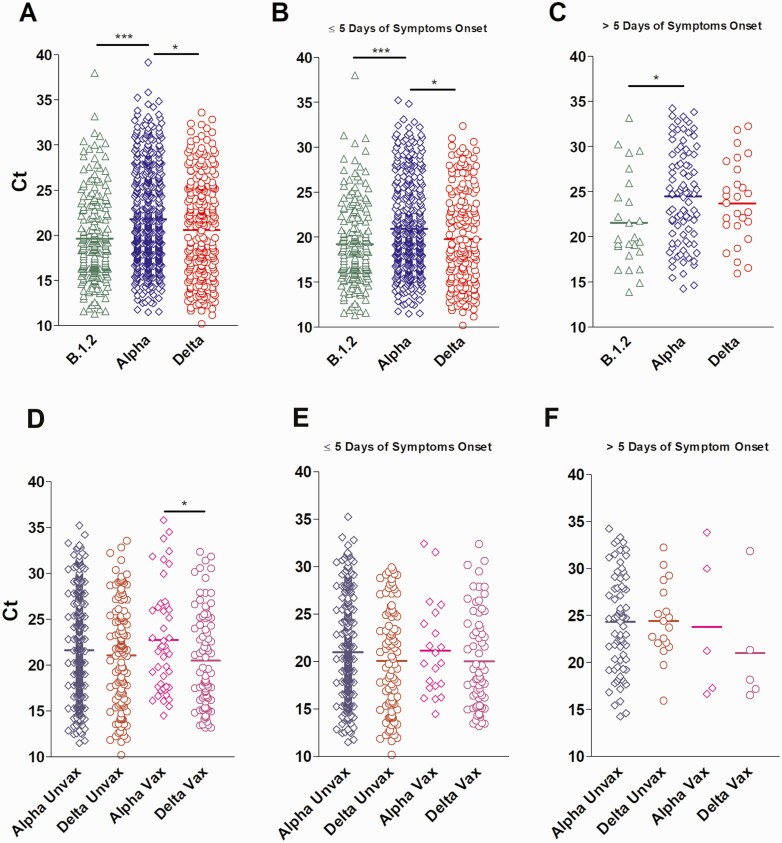
Whole genome sequencing, cycle threshold (Ct) values, infectious virus, anti-SARS-CoV-2 immunoglobulin G (IgG) levels, and clinical chart reviews were combined to characterize SARS-CoV-2 lineages circulating in the National Capital Region between January and September 2021 and differentiate infections in vaccinated and unvaccinated individuals by the Delta, Alpha, and B.1.2 (the predominant lineage prior to Alpha) variants.
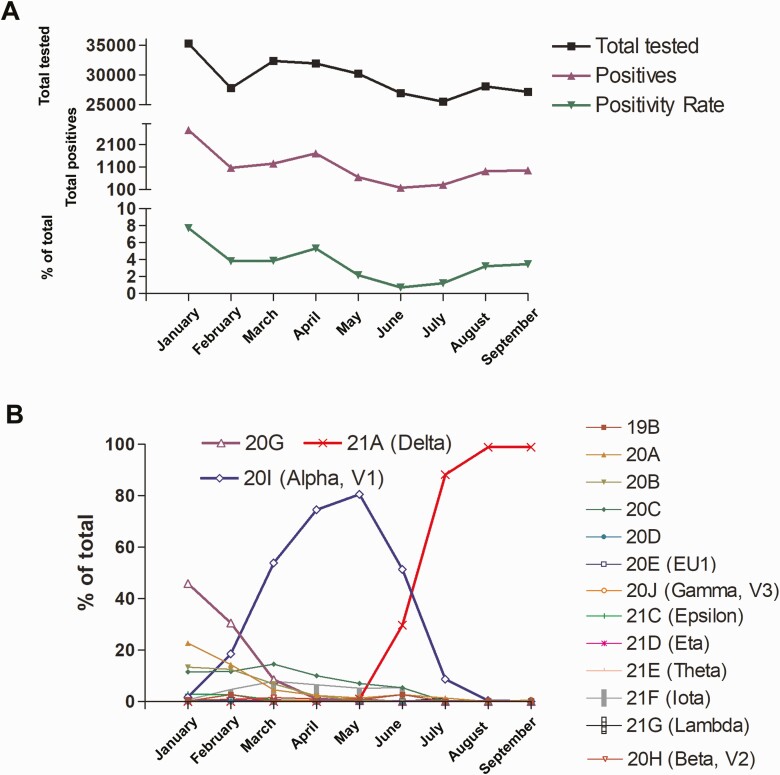
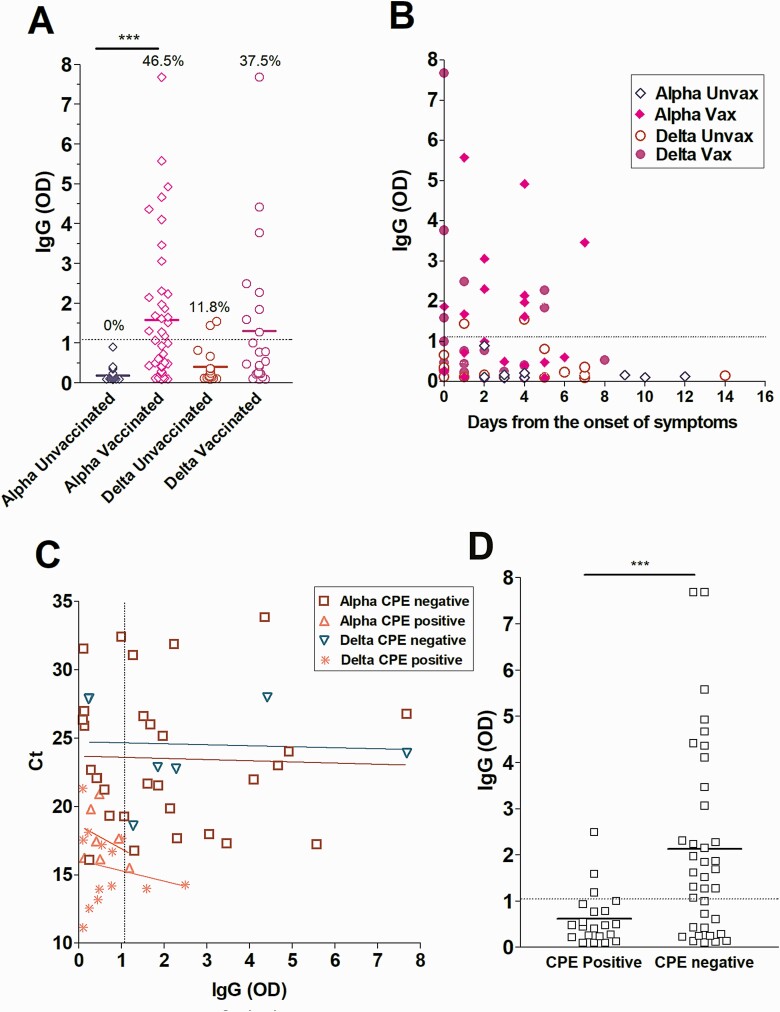
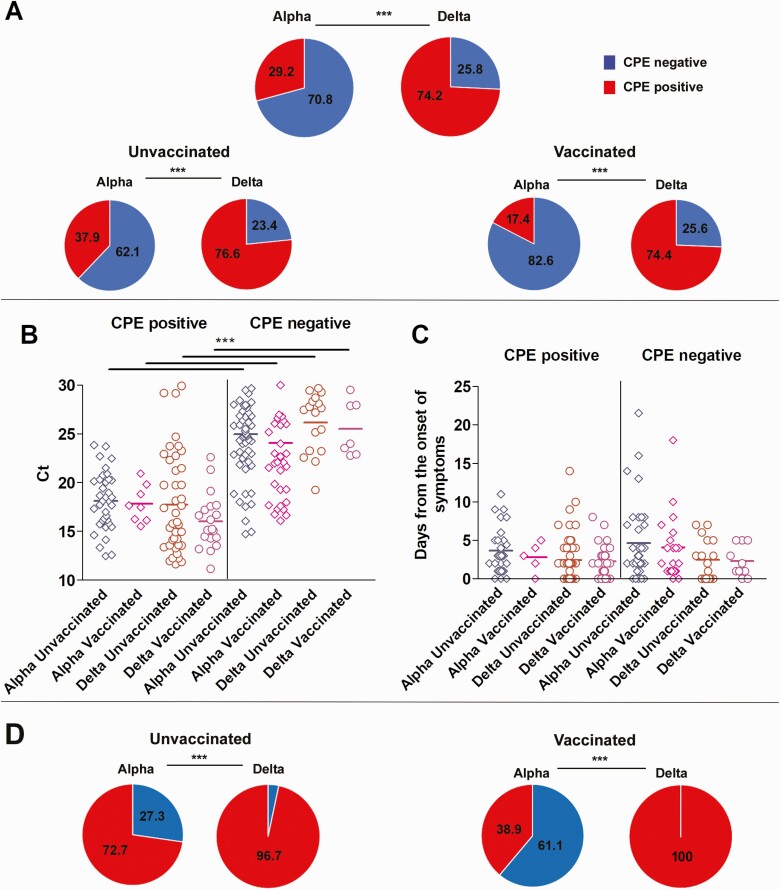
The Delta variant displaced the Alpha variant to constitute 99% of the circulating lineages in the National Capital Region by August 2021. In Delta infections, 28.5% were breakthrough cases in fully vaccinated individuals compared to 4% in the Alpha infected cohort. Breakthrough infections in both cohorts were associated with comorbidities, but only Delta infections were associated with a significant increase in the median days after vaccination. More than 74% of Delta samples had infectious virus compared to <30% from the Alpha cohort. The recovery of infectious virus with both variants was associated with low levels of local SARS-CoV-2 IgG.
Infection with the Delta variant was associated with more frequent recovery of infectious virus in vaccinated and unvaccinated individuals compared to the Alpha variant but was not associated with an increase in disease severity in fully vaccinated individuals. Infectious virus was correlated with the presence of low amounts of antiviral IgG in the nasal specimens.
严重急性呼吸综合征冠状病毒2(SARS-CoV-2)的变异株B.1.617.2(德尔塔)取代了B.1.1.7(阿尔法),并与2019冠状病毒病(COVID-19)病例增加、更高的传播性和更高的病毒RNA载量相关,但关于鼻腔中感染性病毒载量和抗病毒抗体水平的数据尚缺。
结合全基因组测序、循环阈值(Ct)值、感染性病毒、抗SARS-CoV-2免疫球蛋白G(IgG)水平及临床病历回顾,以表征2021年1月至9月在国家首都地区传播的SARS-CoV-2谱系,并区分接种疫苗和未接种疫苗个体中由德尔塔、阿尔法和B.1.2(阿尔法之前的主要谱系)变异株引起的感染。
到2021年8月,德尔塔变异株取代了阿尔法变异株,在国家首都地区的传播谱系中占99%。在德尔塔感染中,28.5%是完全接种疫苗个体中的突破性病例,而在阿尔法感染队列中这一比例为4%。两个队列中的突破性感染均与合并症相关,但只有德尔塔感染与接种疫苗后中位数天数的显著增加相关。超过74%的德尔塔样本含有感染性病毒,而阿尔法队列的这一比例小于30%。两种变异株感染性病毒的检出均与局部SARS-CoV-2 IgG水平较低有关。
与阿尔法变异株相比,德尔塔变异株感染在接种疫苗和未接种疫苗个体中更常检出感染性病毒,但在完全接种疫苗个体中与疾病严重程度增加无关。感染性病毒与鼻标本中低量抗病毒IgG的存在相关。