You Xuewu, Sun Wenxiong, Wang Ying, Liu Xiaoli, Wang Aihong, Liu Lu, Han Sai, Sun Yu, Zhang Junhua, Guo Lingyu, Zhang Youzhong
Department of Obstetrics and Gynecology, Qilu Hospital, Cheeloo College of Medicine, Shandong University, 107 Wenhua Xi Road, Jinan, 250012, Shandong, People's Republic of China.
Department of Obstetrics and Gynecology, Peking University People's Hospital, Beijing, 100044, People's Republic of China.
Cancer Cell Int. 2021 Dec 19;21(1):684. doi: 10.1186/s12935-021-02379-9.
Angiogenesis provides essential nutrients and oxygen for tumor growth and has become the main mechanism of tumor invasion and metastasis. Exosomes are nanoscale membrane vesicles containing proteins, lipids, mRNA and microRNA (miRNA), which mediate intercellular communication and play an important role in tumor progression. Accumulated evidence indicates that tumor-derived exosomal miRNAs participate in the tumor microenvironment and promote angiogenesis.
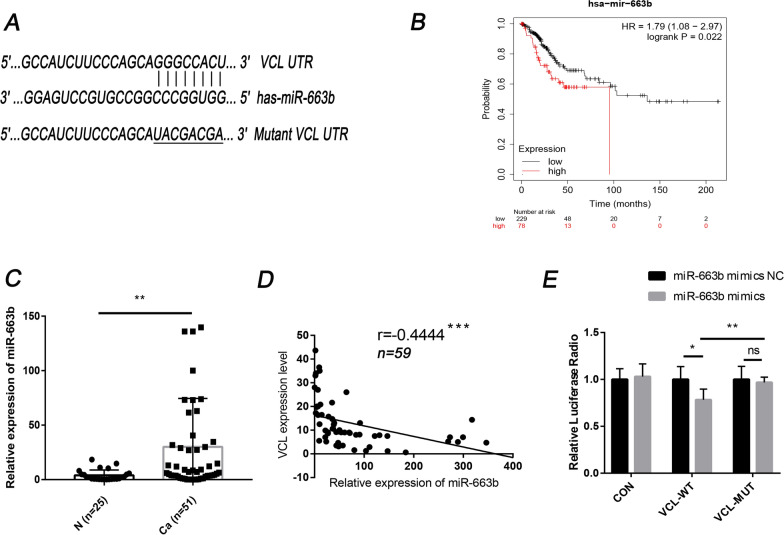
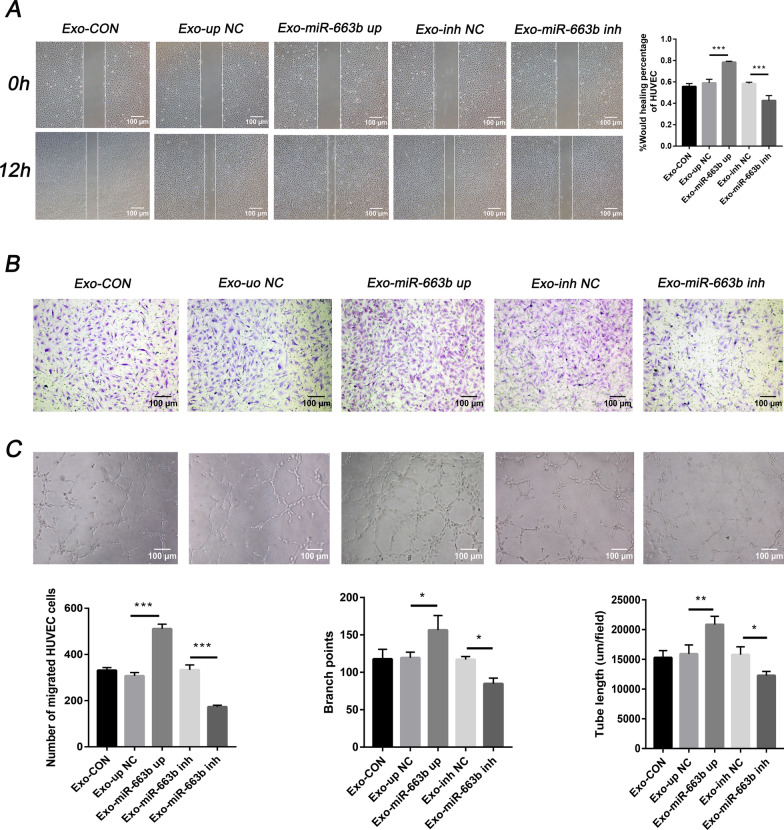
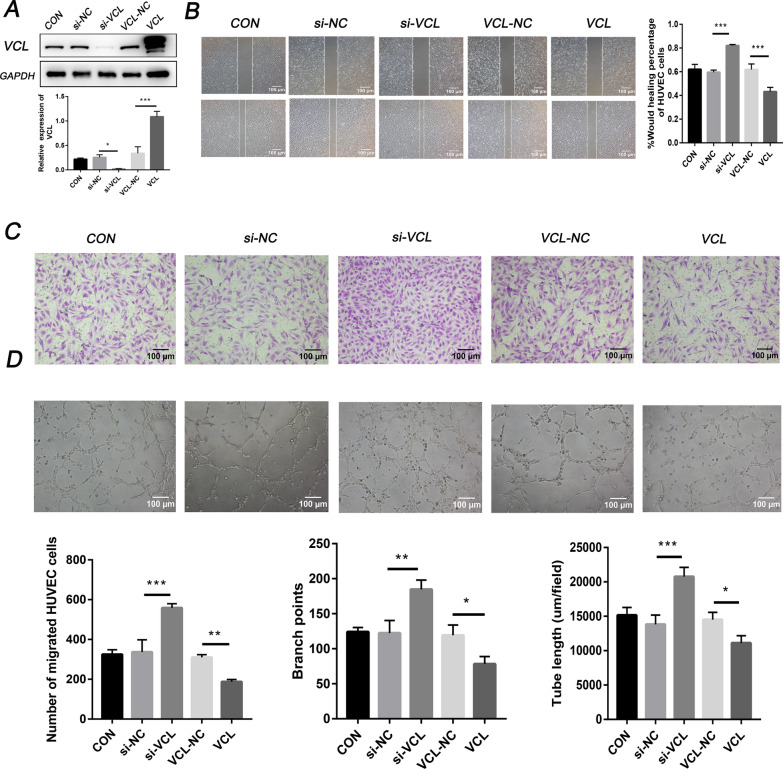
Bioinformatic target prediction and dual luciferase reporter assays were performed to identify the binding site between miR-663b and the 3'-UTR of vinculin (VCL). VCL overexpression lentivirus and miR-663b overexpression/inhibition lentivirus were used to create a VCL overexpression model and miR-663b overexpression/inhibition model in-vitro. Immunohistochemistry (IHC) assays and western blot assays were used to detect protein expression. Exosome-cell cocultures, wound healing assays, tube formation assays and transwell assays were used to measure the migration and tube formation ability of vascular endothelial cells [human umbilical vein endothelial cells (HUVECs)]. siRNA targeted VCL was used to knockdown VCL.
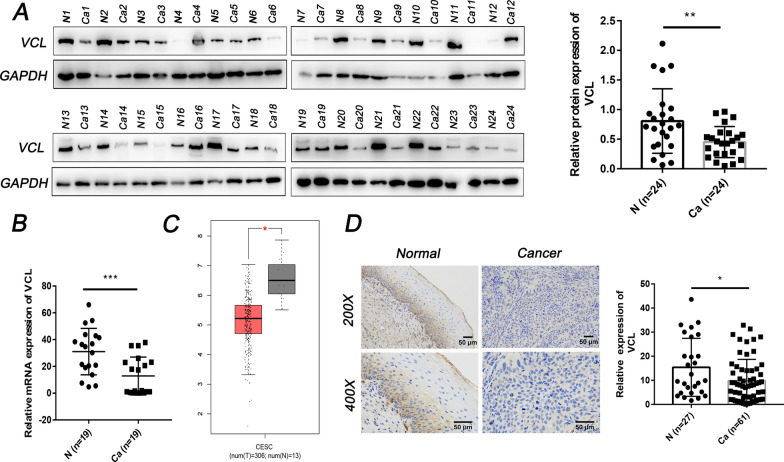
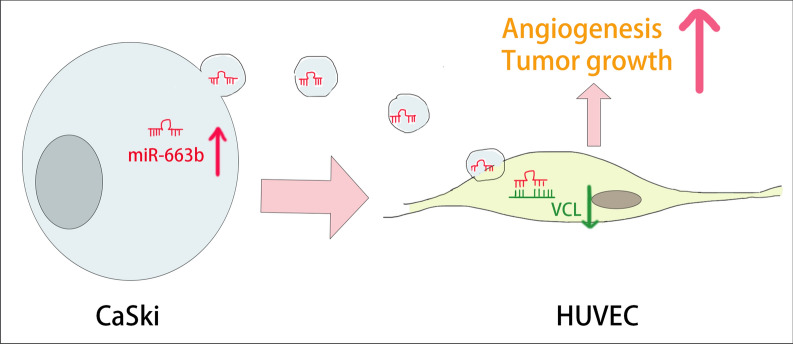
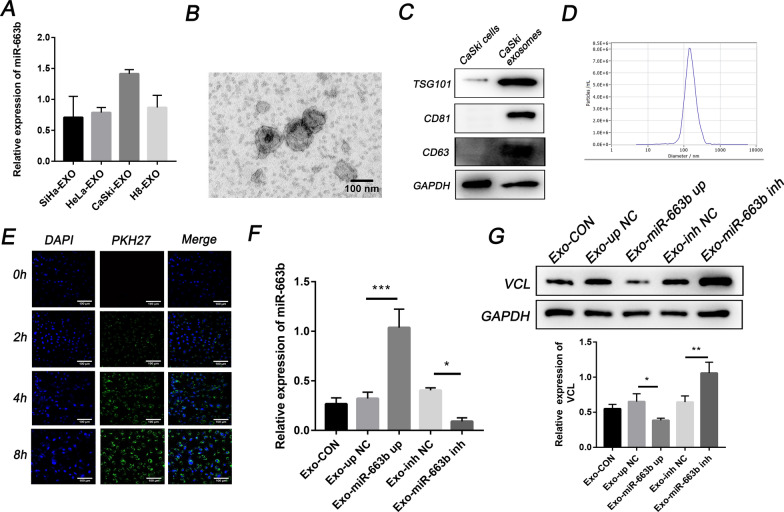
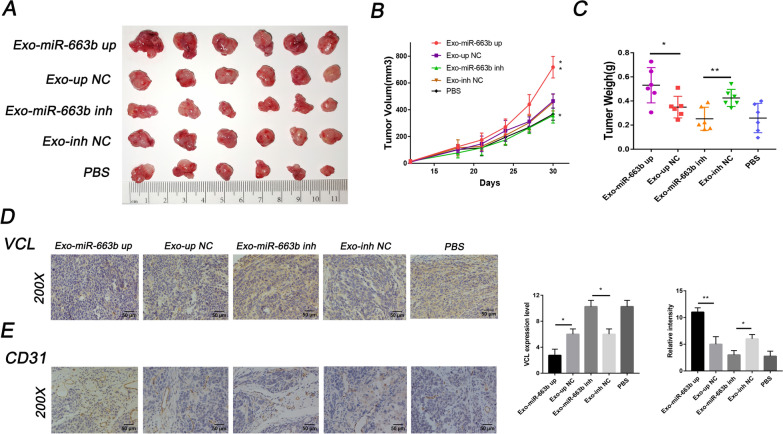
In the present study, we found that miR-663b was elevated in cervical cancer tissue and exosomes. miR-663b could bind the 3'-UTR of VCL and inhibit its expression. VCL is downregulated in cervical cancer, and decreased VCL has a negative correlation with a high level of miR-663b. Further studies demonstrated that exosomes secreted by cervical cancer cells can deliver miR-663b to HUVECs and inhibit the expression of VCL, thereby promoting angiogenesis and tumor growth.
miR-663b derived from cancer cell exosomes acts as a driving factor for angiogenesis and a potential target of antiangiogenic therapy in cervical cancer. Our findings illustrated a new signaling pathway, including exosomes, miRNAs and target genes, which provides potential targets for antiangiogenic therapy.
血管生成为肿瘤生长提供必需的营养物质和氧气,已成为肿瘤侵袭和转移的主要机制。外泌体是包含蛋白质、脂质、信使核糖核酸(mRNA)和微小核糖核酸(miRNA)的纳米级膜泡,介导细胞间通讯并在肿瘤进展中发挥重要作用。越来越多的证据表明,肿瘤来源的外泌体miRNA参与肿瘤微环境并促进血管生成。
进行生物信息学靶标预测和双荧光素酶报告基因检测,以鉴定miR-663b与纽蛋白(VCL)3'-非翻译区(3'-UTR)之间的结合位点。使用VCL过表达慢病毒和miR-663b过表达/抑制慢病毒在体外建立VCL过表达模型和miR-663b过表达/抑制模型。采用免疫组织化学(IHC)检测和蛋白质印迹检测来检测蛋白质表达。外泌体-细胞共培养、伤口愈合检测、管腔形成检测和Transwell检测用于测量血管内皮细胞[人脐静脉内皮细胞(HUVECs)]的迁移和管腔形成能力。使用靶向VCL的小干扰RNA(siRNA)敲低VCL。
在本研究中,我们发现miR-663b在宫颈癌组织和外泌体中升高。miR-663b可结合VCL的3'-UTR并抑制其表达。VCL在宫颈癌中表达下调,VCL降低与高水平的miR-663b呈负相关。进一步研究表明,宫颈癌细胞分泌的外泌体可将miR-663b递送至HUVECs并抑制VCL的表达,从而促进血管生成和肿瘤生长。
癌细胞外泌体来源的miR-663b是血管生成的驱动因素及宫颈癌抗血管生成治疗的潜在靶点。我们的研究结果阐明了一条新的信号通路,包括外泌体、miRNA和靶基因,为抗血管生成治疗提供了潜在靶点。