Department of Psychiatry, University of Texas Health Science Center at San Antonio.
Dev Psychol. 2021 Dec;57(12):2250-2264. doi: 10.1037/dev0001267.
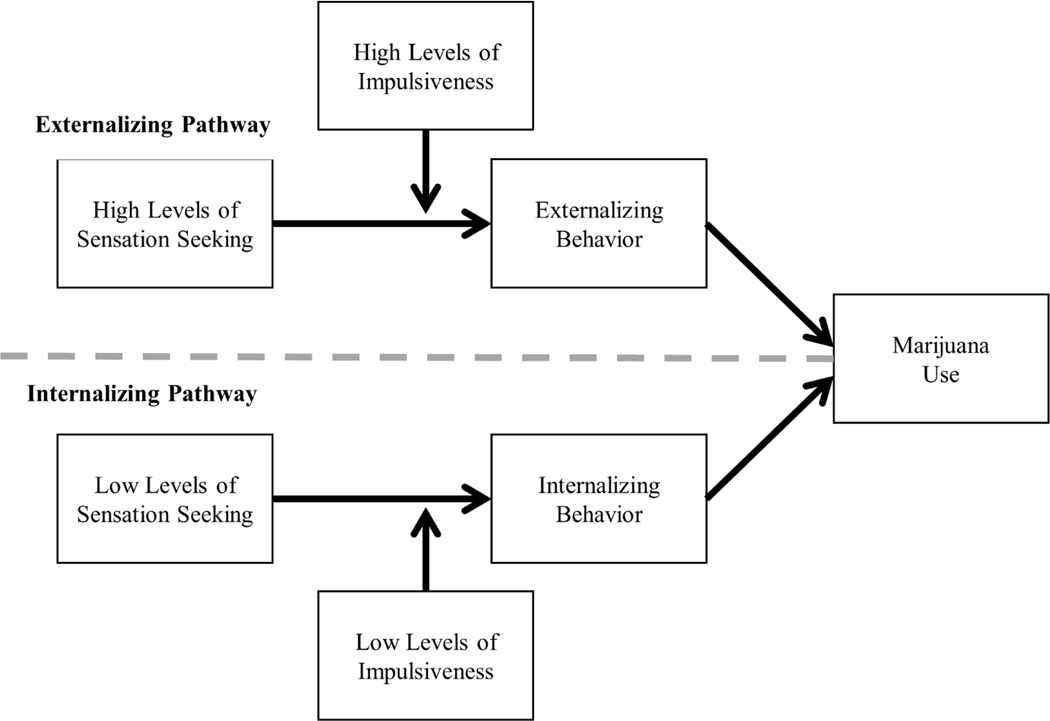
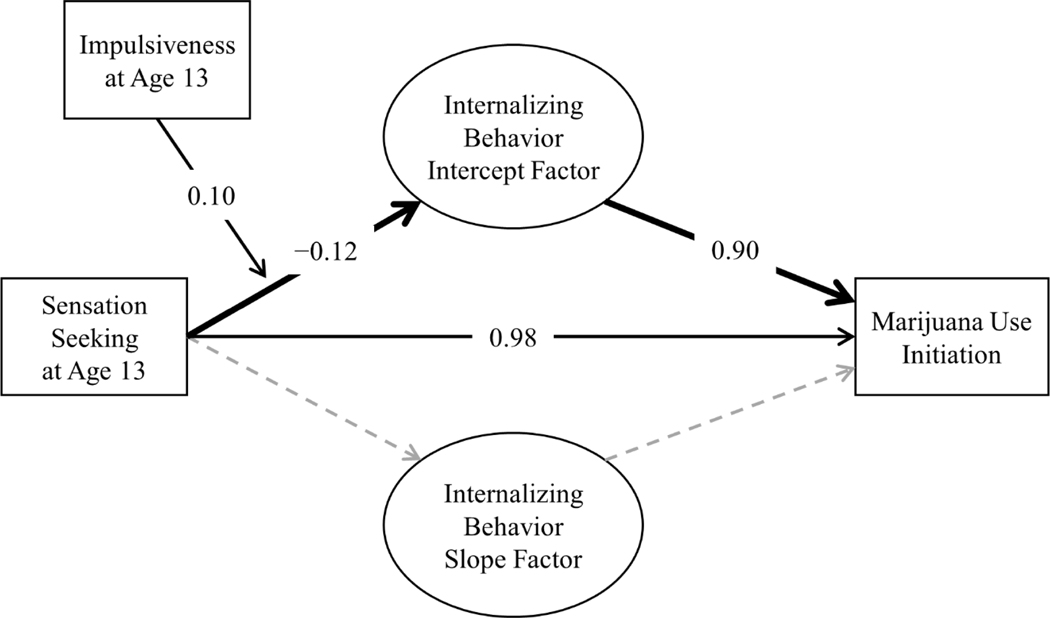
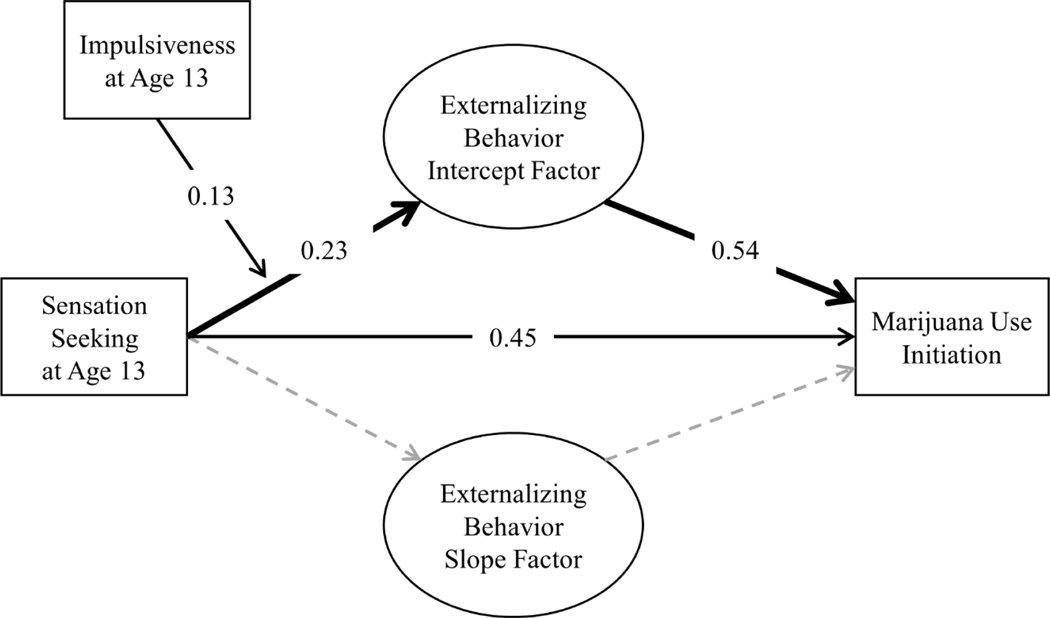
Adolescent marijuana use has become increasingly more problematic compared with the past; thus, understanding developmental processes that increase the liability of marijuana use is essential. Two developmental pathways to adolescent substance use have been proposed: an externalizing pathway that emphasizes the expression of aggressive and delinquent behavior, and an internalizing pathway that emphasizes the role of depressive symptoms and negative affect. In this study, we aimed to examine the synergistic role of impulsiveness and sensation seeking in the two risk pathways to determine whether both high and low levels of the traits are risk factors for marijuana use. Our study included 343 adolescents (52% were girls, 78% identified as Hispanic) that oversampled high-risk youth (78% had a family history of substance use disorder), assessed biannually between the ages of 13-16 years old. Moderated mediation analyses revealed that high levels of sensation seeking indirectly predicted marijuana use through higher mean levels of externalizing behavior. The positive relationship between sensation seeking and externalizing behavior was only significant at high levels of impulsiveness. Conversely, low levels of sensation seeking indirectly predicted marijuana use through higher mean levels of internalizing behavior. The negative relationship between sensation seeking and internalizing behavior was only significant at low levels of impulsiveness. Collectively, these results demonstrate that high and low levels of both impulsiveness and sensation seeking confer increased risk of marijuana use, albeit through different mechanisms. (PsycInfo Database Record (c) 2021 APA, all rights reserved).
与过去相比,青少年大麻使用问题变得越来越严重;因此,了解增加大麻使用可能性的发展过程至关重要。已经提出了两种青少年物质使用的发展途径:强调表现出攻击和犯罪行为的外化途径,以及强调抑郁症状和消极情绪作用的内化途径。在这项研究中,我们旨在检验冲动性和感觉寻求在两种风险途径中的协同作用,以确定特质的高低水平是否都是大麻使用的风险因素。我们的研究包括 343 名青少年(52%为女孩,78%为西班牙裔),这些青少年是高风险青少年的抽样(78%有物质使用障碍家族史),在 13-16 岁之间每两年评估一次。调节中介分析显示,感觉寻求水平高通过更高的外化行为平均水平间接预测大麻使用。感觉寻求与外化行为之间的正相关关系仅在冲动性水平高时显著。相反,感觉寻求水平低通过更高的内化行为平均水平间接预测大麻使用。感觉寻求与内化行为之间的负相关关系仅在冲动性水平低时显著。总的来说,这些结果表明,冲动性和感觉寻求的高低水平都会增加大麻使用的风险,尽管是通过不同的机制。