Division of Surgery, University Medical Centre Ljubljana, Ljubljana, Slovenia.
Faculty of Criminal Justice and Security, University of Maribor, Ljubljana, Slovenia.
PLoS One. 2021 Dec 20;16(12):e0261466. doi: 10.1371/journal.pone.0261466. eCollection 2021.
The safety and quality of patient care are basic guidelines in finding new and improved solutions in nursing. Important and influential factors shape the nurses' work environment in hospitals.
With the study, we intended to investigate whether the perception of nurses' work environment is related to the safety culture and the quality of patient care and whether it differs according to nurses' level of education.
The study with a quantitative research method was conducted at the six clinical departments of the University Medical Centre, Ljubljana in 2019. We used a survey questionnaire from the European survey Nurse forecasting in Europe (RN4CAST).
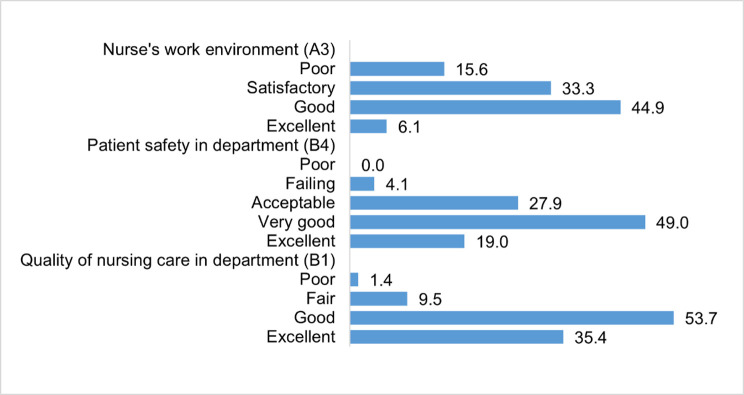
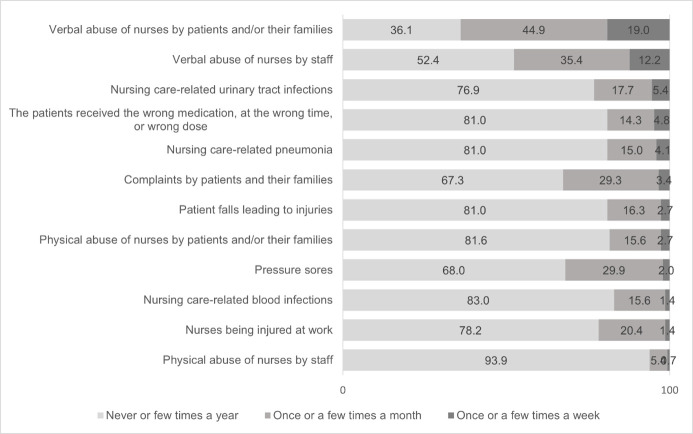
270 nurses were included in the study. The response rate was 54%. The study confirmed that there is a correlation between the assessment of the nurses' work environment and the general assessment of patient safety (r = 0.36; p <0.001), the general assessment of the quality of nursing care (r = 0.32; p <0.001), the confidence in patient self-care at discharge (r = 0.29; p <0.001) and the quality of patient care in the previous year (r = 0.27; p = 0.001). The results showed frequent verbal abuse of nurses, in 44.9% by patients and their relatives and in 35.4% by staff. Graduate nurses rated the work environment more negatively than healthcare technicians (p = 0.003).
We confirmed the correlation between the assessment of nurses' work environment and patient safety and the quality of health care, and that employees' education influences the assessment and perception of the work environment.
患者护理的安全性和质量是在护理中寻找新的和改进的解决方案的基本准则。重要且有影响力的因素塑造了医院护士的工作环境。
通过这项研究,我们旨在调查护士对工作环境的看法是否与安全文化和患者护理质量有关,以及它是否因护士的教育水平而异。
这项研究采用定量研究方法,于 2019 年在卢布尔雅那大学医学中心的六个临床科室进行。我们使用了来自欧洲护士预测调查(RN4CAST)的问卷调查表。
共有 270 名护士参与了这项研究,应答率为 54%。研究证实,护士工作环境的评估与对患者安全的总体评估(r = 0.36;p <0.001)、对护理质量的总体评估(r = 0.32;p <0.001)、对出院时患者自我护理的信心(r = 0.29;p <0.001)和前一年的患者护理质量(r = 0.27;p = 0.001)之间存在相关性。研究结果表明,护士经常受到言语虐待,其中 44.9%来自患者及其亲属,35.4%来自工作人员。与护理技师相比,研究生护士对工作环境的评价更为负面(p = 0.003)。
我们证实了护士工作环境评估与患者安全和医疗保健质量之间的相关性,以及员工教育对评估和工作环境感知的影响。