Pasteur, Chromatine et Infection G5, Paris, France.
PLoS Pathog. 2021 Dec 20;17(12):e1010173. doi: 10.1371/journal.ppat.1010173. eCollection 2021 Dec.
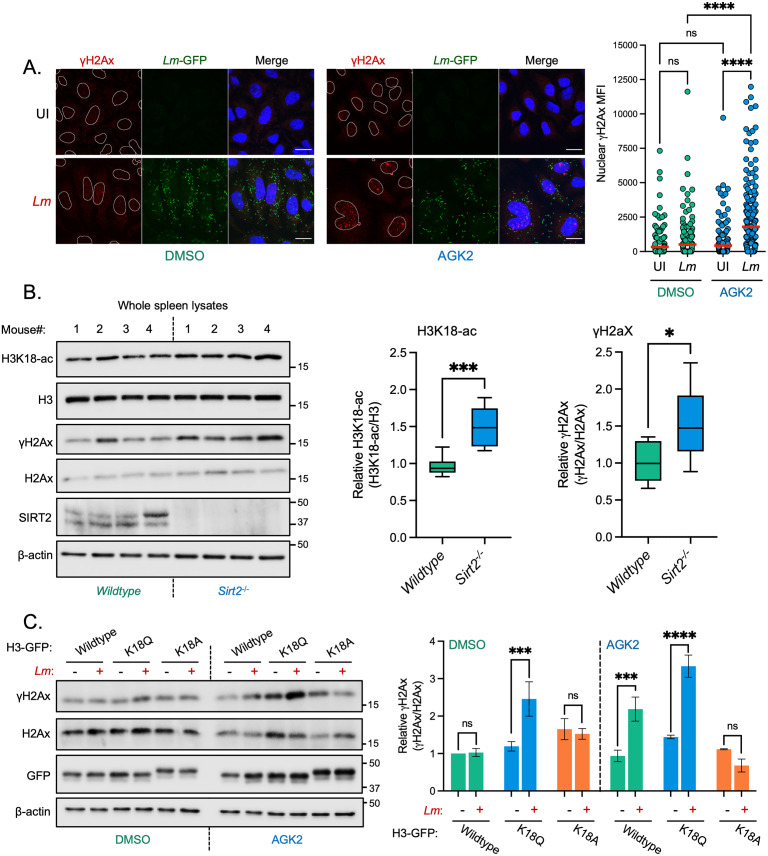
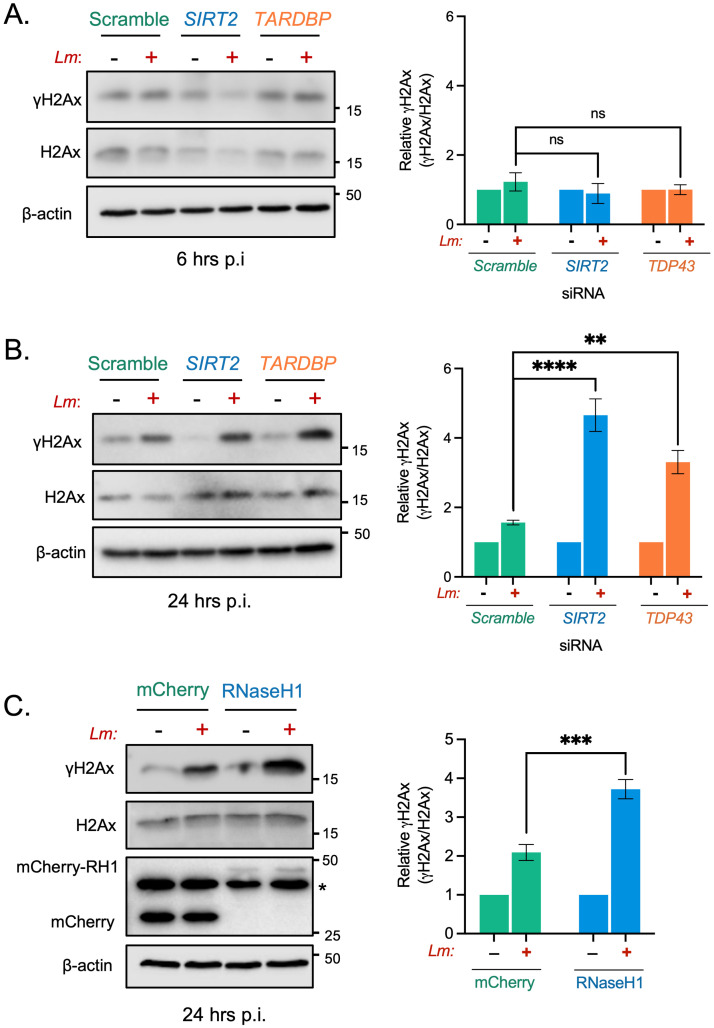
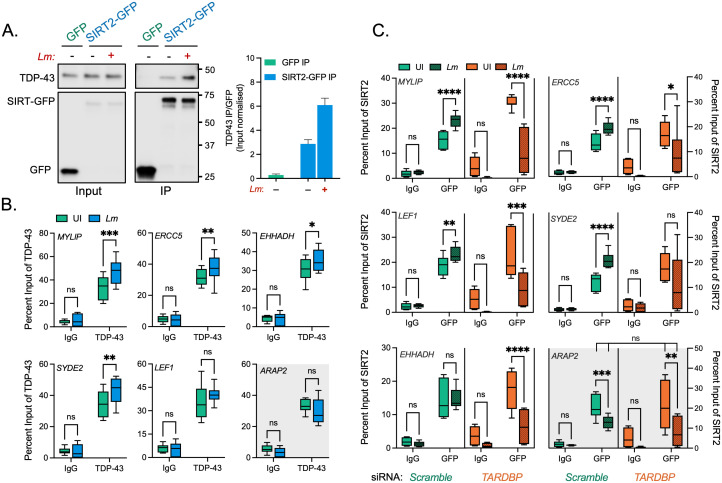
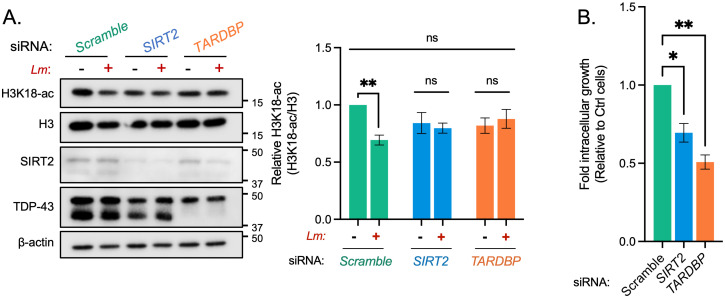
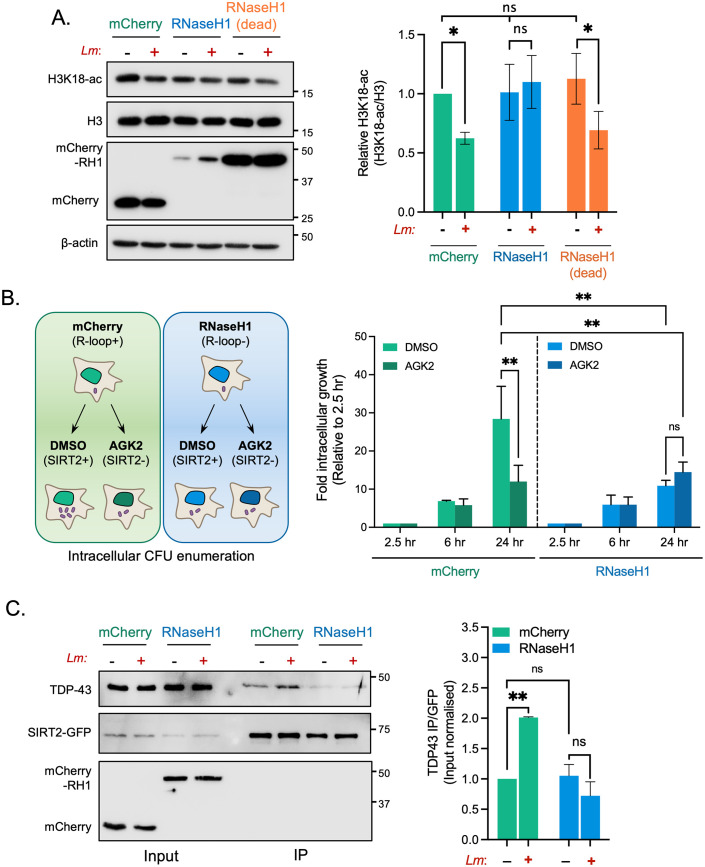
For many intracellular bacterial pathogens manipulating host cell survival is essential for maintaining their replicative niche, and is a common strategy used to promote infection. The bacterial pathogen Listeria monocytogenes is well known to hijack host machinery for its own benefit, such as targeting the host histone H3 for modification by SIRT2. However, by what means this modification benefits infection, as well as the molecular players involved, were unknown. Here we show that SIRT2 activity supports Listeria intracellular survival by maintaining genome integrity and host cell viability. This protective effect is dependent on H3K18 deacetylation, which safeguards the host genome by counteracting infection-induced DNA damage. Mechanistically, infection causes SIRT2 to interact with the nucleic acid binding protein TDP-43 and localise to genomic R-loops, where H3K18 deacetylation occurs. This work highlights novel functions of TDP-43 and R-loops during bacterial infection and identifies the mechanism through which L. monocytogenes co-opts SIRT2 to allow efficient infection.
对于许多细胞内细菌病原体来说,操纵宿主细胞的存活对于维持其复制生态位至关重要,这也是促进感染的常见策略。众所周知,细菌病原体李斯特菌会利用宿主机制为自己谋取利益,例如将宿主组蛋白 H3 靶向 SIRT2 进行修饰。然而,这种修饰如何有利于感染,以及涉及到哪些分子参与者,目前还不清楚。在这里,我们发现 SIRT2 活性通过维持基因组完整性和宿主细胞活力来支持李斯特菌的细胞内存活。这种保护作用依赖于 H3K18 的去乙酰化,它通过抵消感染诱导的 DNA 损伤来保护宿主基因组。从机制上讲,感染导致 SIRT2 与核酸结合蛋白 TDP-43 相互作用,并定位于基因组 R-环,H3K18 的去乙酰化就发生在那里。这项工作强调了 TDP-43 和 R-环在细菌感染过程中的新功能,并确定了李斯特菌利用 SIRT2 进行有效感染的机制。