Wang Jie, He Jun, Fan Yucheng, Xu Fangjing, Liu Qian, He Ruhua, Yan Ru
School of Clinical Medicine, Ningxia Medical University, Yinchuan, Ningxia 750004, P.R China.
Department of Cardiovascular Internal Medicine, General Hospital of Ningxia Medical University, Yinchuan, Ningxia 750004, P.R China.
Exp Ther Med. 2022 Jan;23(1):85. doi: 10.3892/etm.2021.11008. Epub 2021 Nov 25.
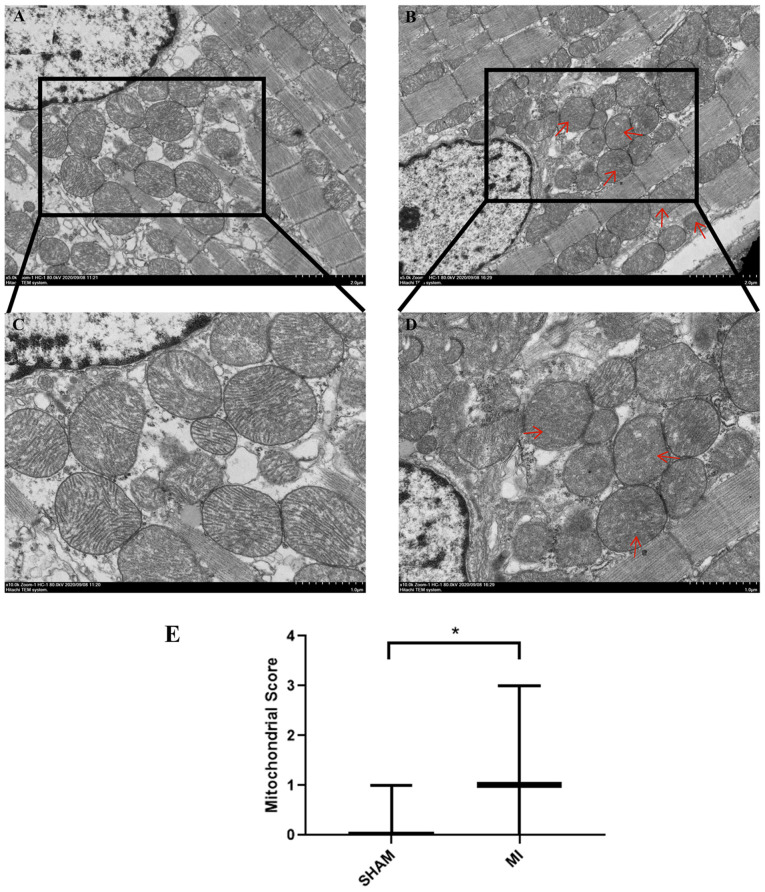
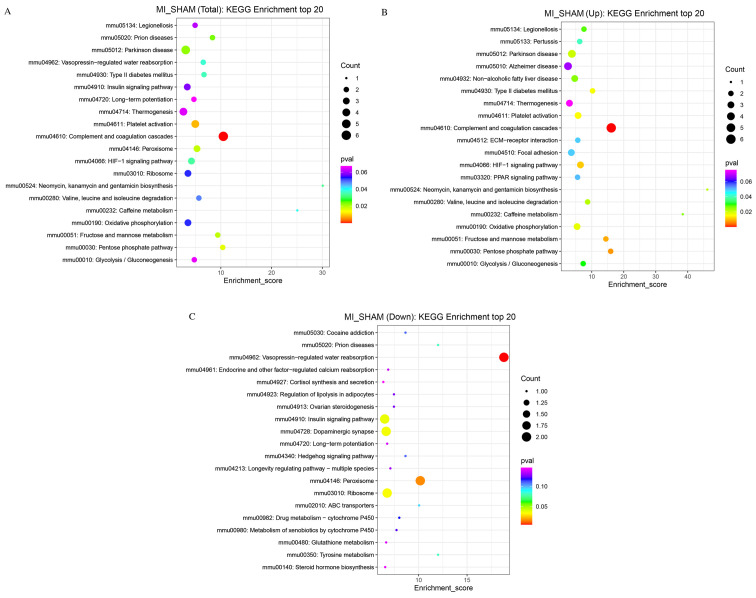
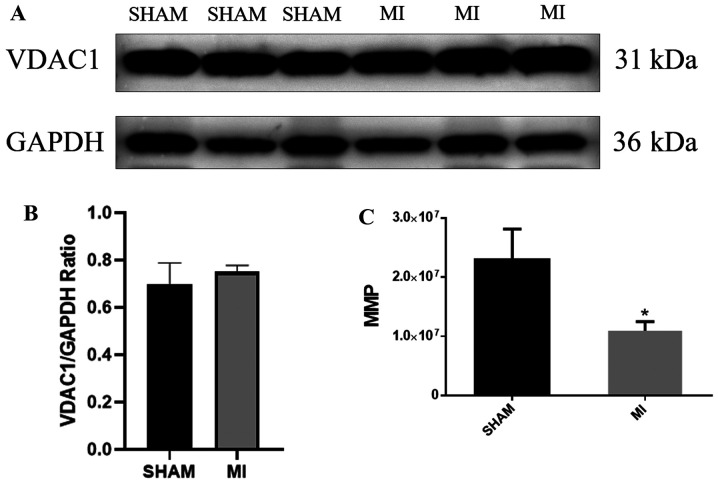
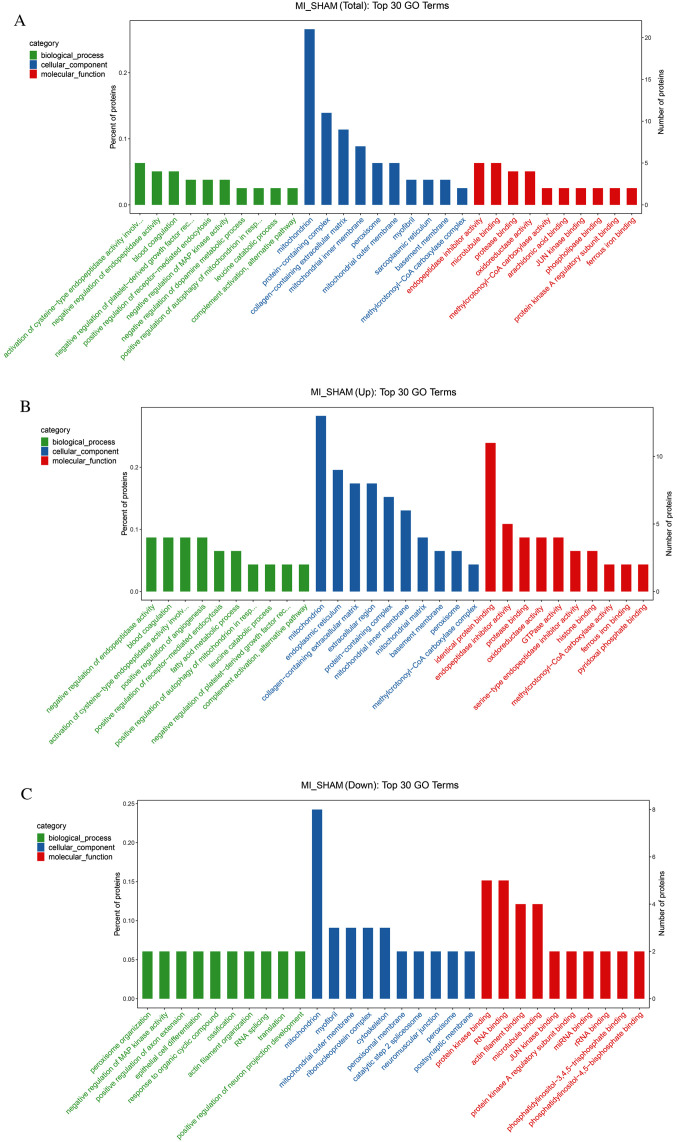
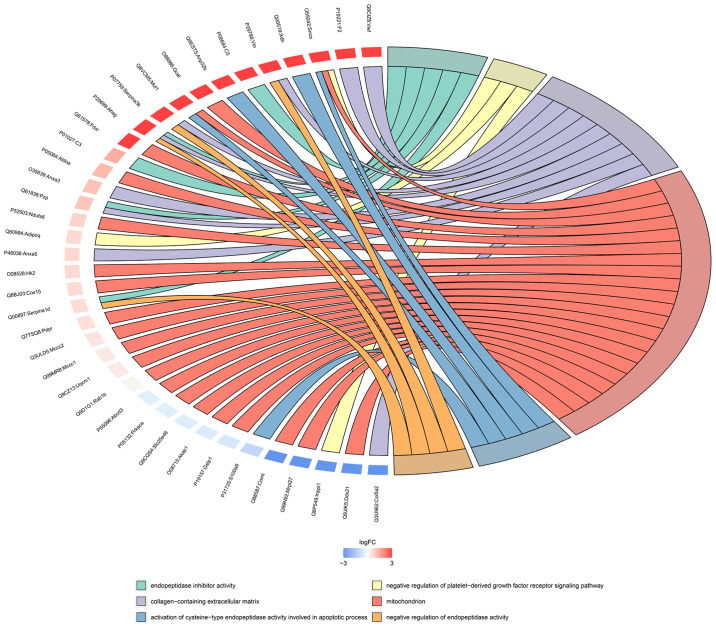
Mitochondrial malfunction leads to the remodeling of myocardial energy metabolism during myocardial ischemia (MI). However, the alterations to the mitochondrial proteome profile during this period has not yet been clarified. An acute MI model was established by high position ligation of the left anterior descending artery in 8-week-old C57BL/6N mice. After 15 min of ligation, the animals were euthanized, and their hearts were collected. The myocardial ultrastructure was observed using transmission electron microscopy (TEM). The cardiac mitochondrial proteome profile was analyzed by liquid chromatography-tandem mass spectrometry (LC-MS/MS) and bioinformatics analyses. TEM showed that the outer membrane of the mitochondria was dissolved, and the inner membrane (cristae) was corrupted and broken down extensively in the MI group. The mitochondrial membrane potential was decreased. More than 1,700 mitochondrial proteins were identified by LC-MS/MS analysis, and 119 were differentially expressed. Gene Ontology and the Kyoto Encyclopedia of Genes and Genomes functional enrichment analysis showed that endopeptidase activity regulation, the mitochondrial inner membrane, oxidative phosphorylation, the hypoxia-inducible factor-1 signaling pathway, the pentose phosphate pathway and the peroxisome proliferator-activated receptor signaling pathway were involved in the pathophysiological process in the early stage of acute MI. Extensive and substantial changes in the mitochondrial proteins as well as mitochondrial microstructural damage occur in the early stages of acute MI. In the present study, the series of proteins crucially involved in the pathways of mitochondrial dysfunction and metabolism were identified. Further studies are needed to clarify the roles of these proteins in myocardial metabolism remodeling during acute MI injury.
线粒体功能障碍导致心肌缺血(MI)期间心肌能量代谢重塑。然而,这一时期线粒体蛋白质组谱的变化尚未阐明。通过对8周龄C57BL/6N小鼠左前降支动脉进行高位结扎建立急性MI模型。结扎15分钟后,处死动物并采集心脏。使用透射电子显微镜(TEM)观察心肌超微结构。通过液相色谱-串联质谱(LC-MS/MS)和生物信息学分析对心脏线粒体蛋白质组谱进行分析。TEM显示,MI组中线粒体的外膜溶解,内膜(嵴)遭到破坏并广泛崩解。线粒体膜电位降低。通过LC-MS/MS分析鉴定出1700多种线粒体蛋白,其中119种差异表达。基因本体论和京都基因与基因组百科全书功能富集分析表明,内肽酶活性调节、线粒体内膜、氧化磷酸化、缺氧诱导因子-1信号通路、磷酸戊糖途径和过氧化物酶体增殖物激活受体信号通路参与了急性MI早期的病理生理过程。急性MI早期线粒体蛋白发生广泛而显著的变化,同时线粒体微观结构受损。在本研究中,鉴定出了一系列关键参与线粒体功能障碍和代谢途径的蛋白质。需要进一步研究以阐明这些蛋白质在急性MI损伤期间心肌代谢重塑中的作用。