Rouse Sarah, Behnoud Pouyan, Hobeali Kaveh, Moghadas Peyman, Salahshour Zolfaghar, Eslahi Hossein, Ommatmohammadi Mousa, Khani Ali, Shabani Abolfazl, Macdonald David W, Farhadinia Mohammad S
School of Geography and the Environment University of Oxford Oxford UK.
Future4Leopards Foundation Tehran Iran.
Ecol Evol. 2021 Nov 10;11(23):16572-16584. doi: 10.1002/ece3.8227. eCollection 2021 Dec.
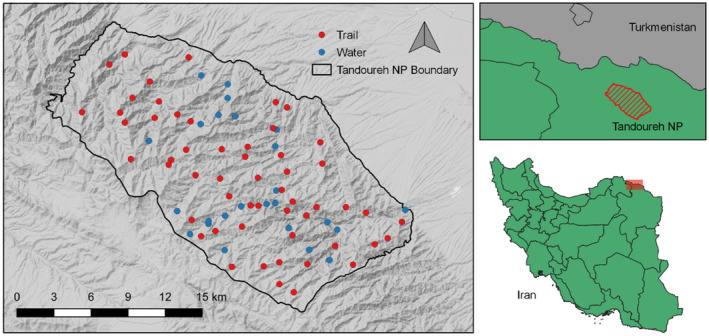
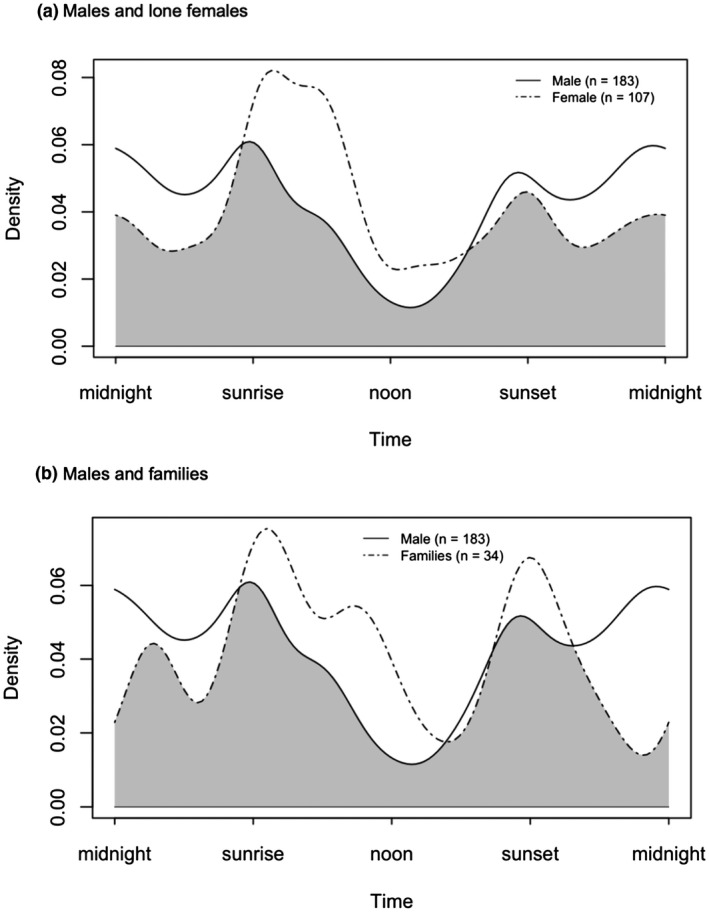
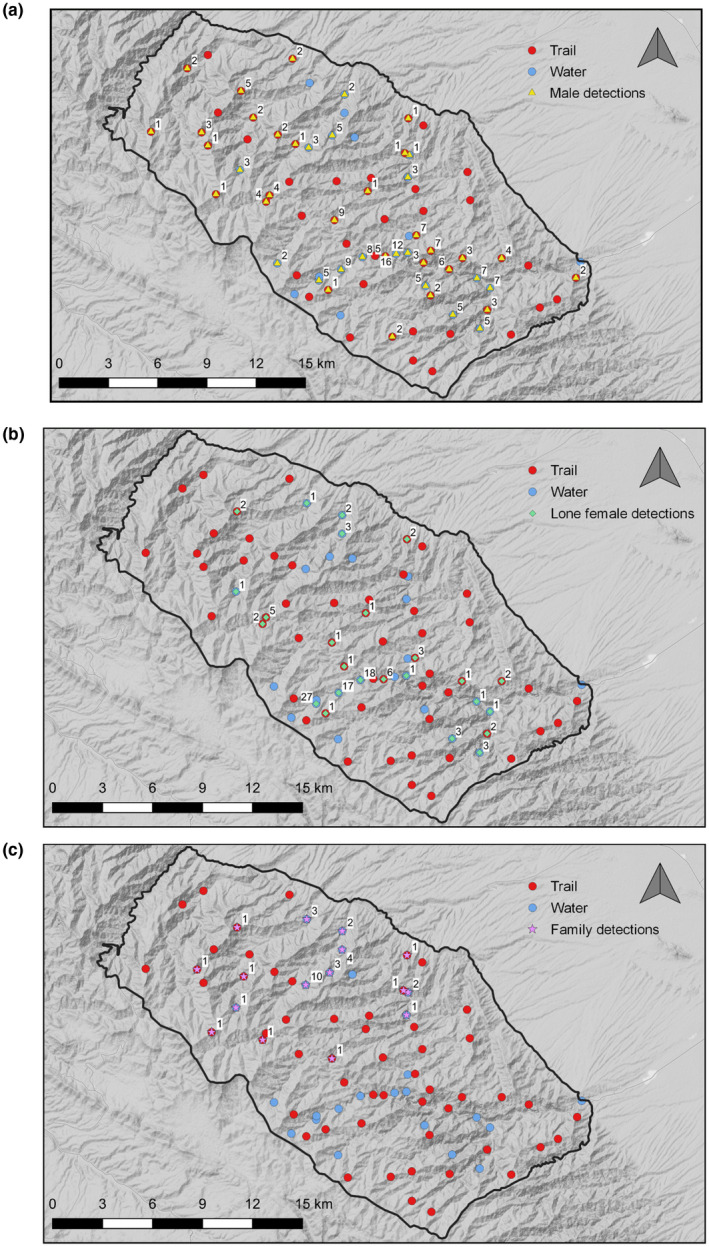
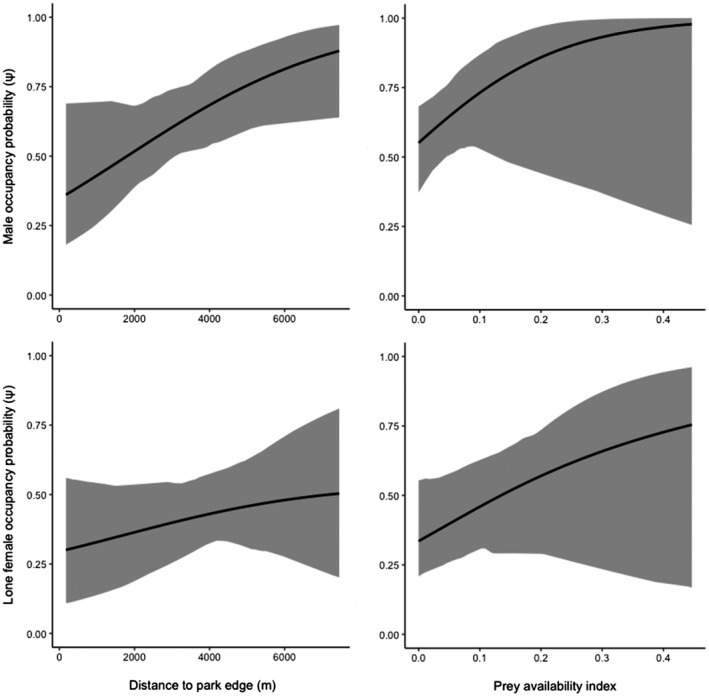
Although less studied than interspecific interactions, interactions among members of the same species can influence space use and temporal activity. Using techniques commonly applied to the analysis of interspecific interactions-multispecies occupancy modeling and the analysis of temporal activity patterns-we studied intraspecific interactions within a high-density population of Persian leopards () in Tandoureh National Park, northeastern Iran. Using camera-trap data, we investigated spatiotemporal interactions between male leopards, lone female leopards, and families (cubs/females with cubs). While we hypothesized that male and female leopards would display different temporal activity patterns, we did not predict spatial avoidance between these groups. We also predicted that leopard families would exhibit spatiotemporal avoidance from male leopards due to the risk of infanticide. Contrary to our expectations, we did not find any evidence for spatial or temporal avoidance between leopard families and adult male leopards. Male and lone female leopards exhibited positive pairwise co-occurrence, consistent with reports of high overlap between male and female leopard home ranges. While a high level of overlap in temporal activity patterns was found between males/lone females and males/families, there was evidence for variation in the proportion of time each leopard group was active in particular periods of the diel cycle. Male leopards showed cathemeral activity, while lone females and families were more active during daylight hours. The application of these techniques to interactions within a species has improved understanding of the ecology and behavior of this endangered solitary carnivore.
尽管种内相互作用的研究比种间相互作用少,但同一物种成员之间的相互作用会影响空间利用和时间活动。我们运用常用于分析种间相互作用的技术——多物种占有模型和时间活动模式分析,对伊朗东北部坦杜雷国家公园高密度波斯豹种群内的种内相互作用进行了研究。利用相机陷阱数据,我们调查了雄性豹、独居雌性豹和家庭(幼崽/带幼崽的雌性)之间的时空相互作用。虽然我们假设雄性和雌性豹会表现出不同的时间活动模式,但我们并未预测这些群体之间会存在空间回避。我们还预测,由于存在杀婴风险,豹的家庭会在时空上回避雄性豹。与我们的预期相反,我们没有发现豹的家庭与成年雄性豹之间存在空间或时间回避的任何证据。雄性豹和独居雌性豹表现出正的成对共存,这与雄性和雌性豹的家域高度重叠的报道一致。虽然在雄性/独居雌性与雄性/家庭之间发现了时间活动模式的高度重叠,但有证据表明每个豹群体在昼夜周期特定时段活跃时间的比例存在差异。雄性豹表现出昼夜活动模式,而独居雌性和家庭在白天更活跃。将这些技术应用于物种内的相互作用,增进了我们对这种濒危独居食肉动物的生态和行为的理解。