Sam Faisal Eudes, Ma Tengzhen, Liang Yuhua, Qiang Wenle, Atuna Richard Atinpoore, Amagloh Francis Kweku, Morata Antonio, Han Shunyu
Gansu Key Laboratory of Viticulture and Enology, College of Food Science and Engineering, Gansu Agricultural University, Lanzhou 730070, China.
Department of Food Science and Technology, University for Development Studies, Nyankpala Campus, P.O. Box TL1882, Tamale 34983, Ghana.
Membranes (Basel). 2021 Dec 1;11(12):957. doi: 10.3390/membranes11120957.
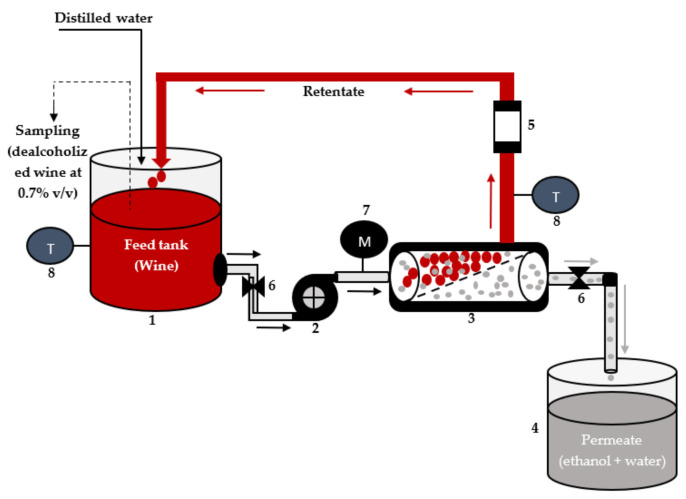
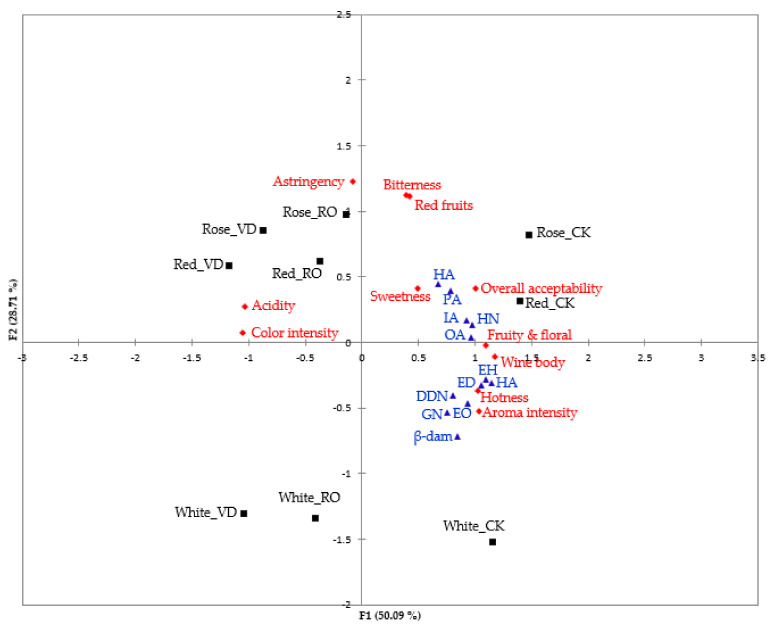
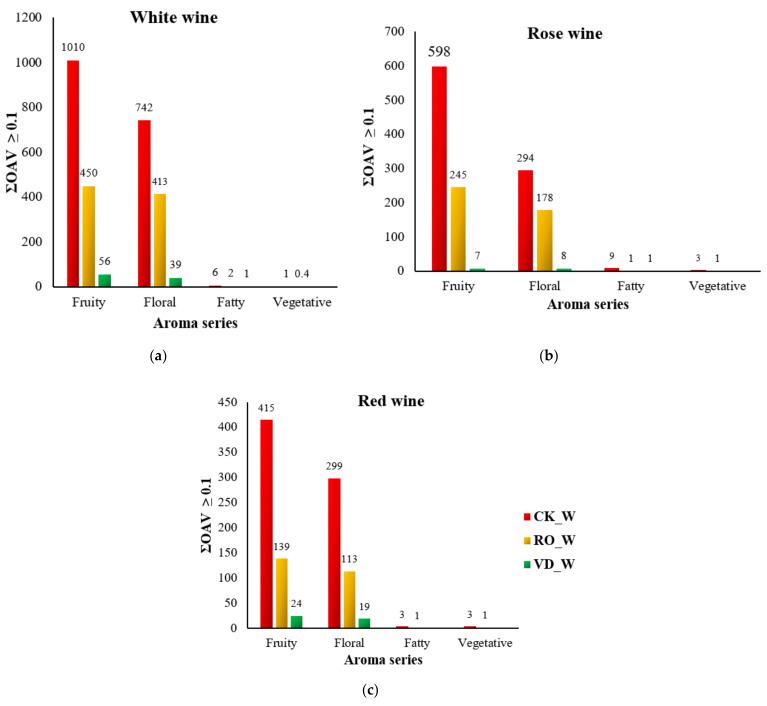
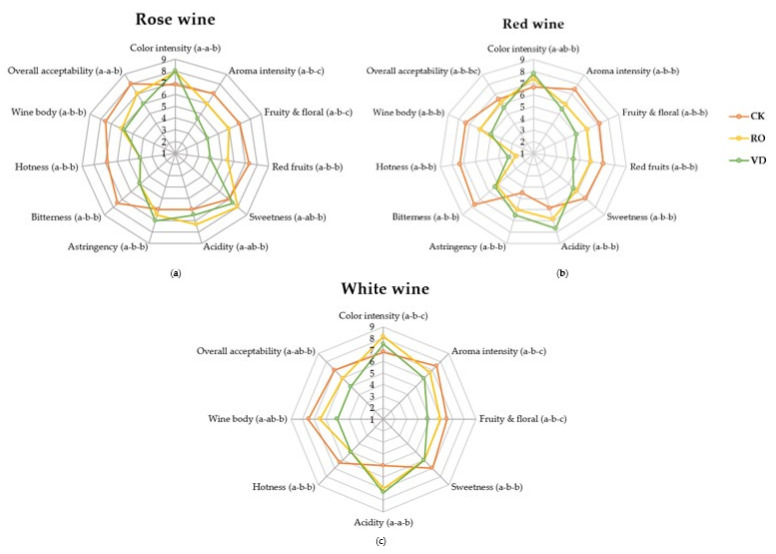
Over the last few years, the dealcoholization of wine has piqued the interest of winemakers and researchers. Physical dealcoholization methods are increasingly used in the dealcoholization of wines because they can partially or completely reduce the alcohol content of wines. This study aimed to compare the chemical parameters, volatile composition and sensory quality of white, rosé and red wines dealcoholized by two physical dealcoholization methods: reverse osmosis (RO) and vacuum distillation (VD) at 0.7% / ethanol. RO and VD effectively reduced the ethanol concentration in all wines to the required 0.7% /, but also significantly affected most chemical parameters. The pH, free sulfur dioxide, total sulfur dioxide, and volatile acidity decreased significantly due to dealcoholization by RO and VD, while reducing sugars and total acidity increased significantly. VD resulted in higher color intensity, which was perceptible in dealcoholized rosé and red wines, while RO caused notable color differences in dealcoholized white and red wine fractions. RO were richer in esters (more ethyl esters and isoamyl acetate), higher alcohols, organic acids, terpenics and C-norisoprenoids, and carbonyl compounds, while wines dealcoholized with VD had lower levels of these volatile compounds, which may reflect both the loss of esters into the distillate during evaporation and condensation (in the case of VD) and a shift in the chemical equilibrium responsible for ester formation and hydrolysis after ethanol removal. β-damascenone exhibited the highest OAV in all wines, however, losses equal to 35.54-61.98% in RO dealcoholized fractions and 93.62% to 97.39% in VD dealcoholized fractions were observed compared to the control wines. The predominant aroma series in the original and dealcoholized wines were fruity and floral but were greatly affected by VD. Sensory evaluation and PCA showed that dealcoholization by RO improved the fruity and floral notes (in rosé and red wines), color intensity, sweetness, viscosity, and aroma intensity better than dealcoholization by VD, while VD mainly enhanced the color of the dealcoholized wines. Both methods increased the acidity of the respective dealcoholized wines. Nevertheless, RO dealcoholized wines achieved higher acceptance by the panelists than VD dealcoholized wines. Therefore, RO may be a better method for producing dealcoholized (0.7% /) wines with minimal impact on aroma and sensory quality.
在过去几年中,葡萄酒的脱醇工艺引发了酿酒师和研究人员的兴趣。物理脱醇方法在葡萄酒脱醇中越来越多地被使用,因为它们可以部分或完全降低葡萄酒的酒精含量。本研究旨在比较通过两种物理脱醇方法(反渗透(RO)和真空蒸馏(VD))在酒精含量为0.7%时脱醇的白葡萄酒、桃红葡萄酒和红葡萄酒的化学参数、挥发性成分和感官质量。RO和VD有效地将所有葡萄酒中的乙醇浓度降低到所需的0.7%,但也显著影响了大多数化学参数。由于RO和VD脱醇,pH值、游离二氧化硫、总二氧化硫和挥发酸显著降低,而还原糖和总酸显著增加。VD导致颜色强度更高,这在脱醇的桃红葡萄酒和红葡萄酒中可以察觉到,而RO在脱醇的白葡萄酒和红葡萄酒部分引起了显著的颜色差异。RO脱醇的葡萄酒富含酯类(更多的乙酯和乙酸异戊酯)、高级醇、有机酸、萜类化合物和C-去甲异戊二烯类化合物以及羰基化合物,而VD脱醇的葡萄酒中这些挥发性化合物的含量较低,这可能既反映了蒸发和冷凝过程中酯类进入馏出物的损失(在VD的情况下),也反映了乙醇去除后酯类形成和水解的化学平衡的变化。β-大马酮在所有葡萄酒中表现出最高的香气活性值,然而,与对照葡萄酒相比,RO脱醇部分的损失为35.54-61.98%,VD脱醇部分的损失为93.62%至97.39%。原酒和脱醇葡萄酒中主要的香气系列是果香和花香,但受到VD的显著影响。感官评价和主成分分析表明,与VD脱醇相比,RO脱醇在改善果香和花香(在桃红葡萄酒和红葡萄酒中)、颜色强度、甜度、粘度和香气强度方面更好,而VD主要增强了脱醇葡萄酒的颜色。两种方法都增加了各自脱醇葡萄酒的酸度。然而,RO脱醇的葡萄酒比VD脱醇的葡萄酒获得了小组成员更高的接受度。因此,RO可能是生产酒精含量为(0.7%)的脱醇葡萄酒且对香气和感官质量影响最小的更好方法。