Institut für Pharmazeutische Chemie, Philipps-Universität Marburg, Marbacher Weg 6, 35037 Marburg, Germany.
Institut für Pharmazeutische Chemie, Zentrum für Tumor und Immunbiologie, Philipps-Universität Marburg, Hans-Meerwein-Straße 3, 35032 Marburg, Germany.
Biomolecules. 2021 Dec 6;11(12):1837. doi: 10.3390/biom11121837.
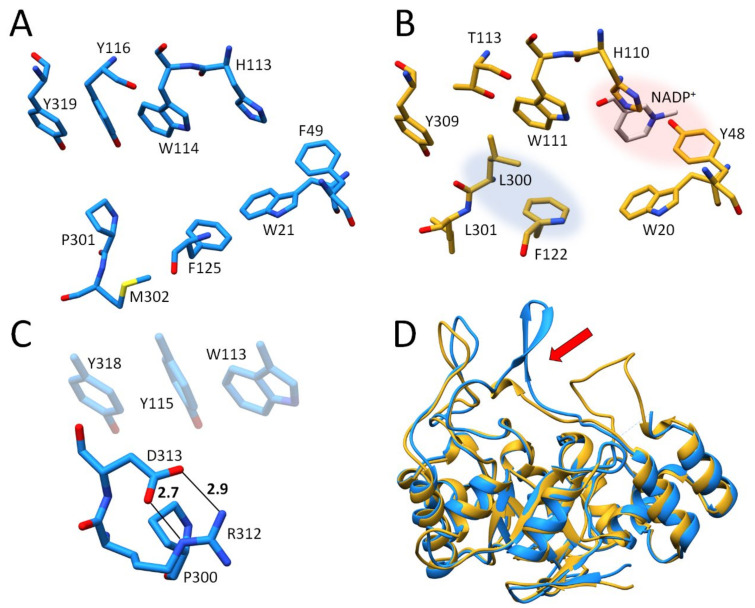
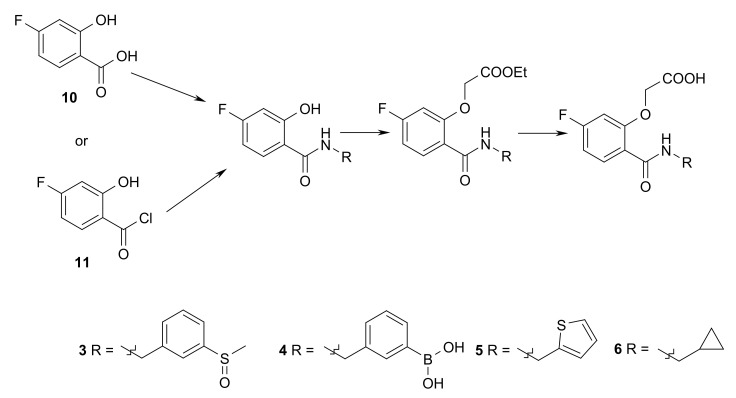
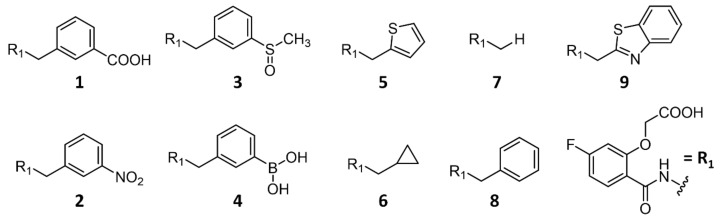
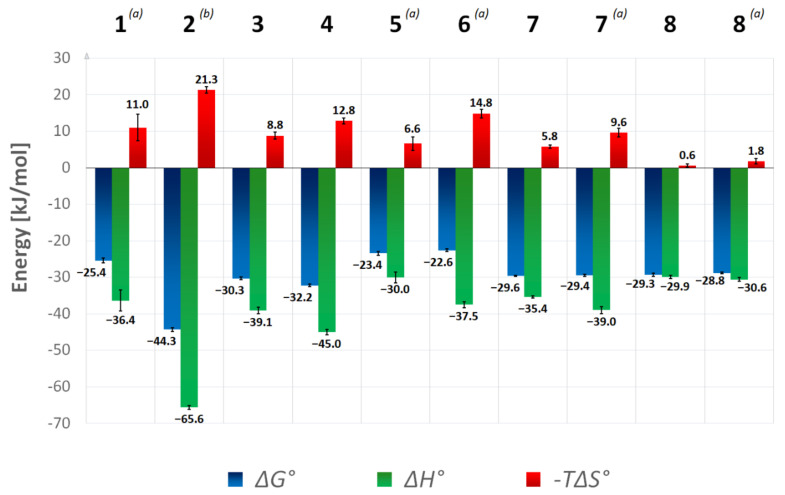
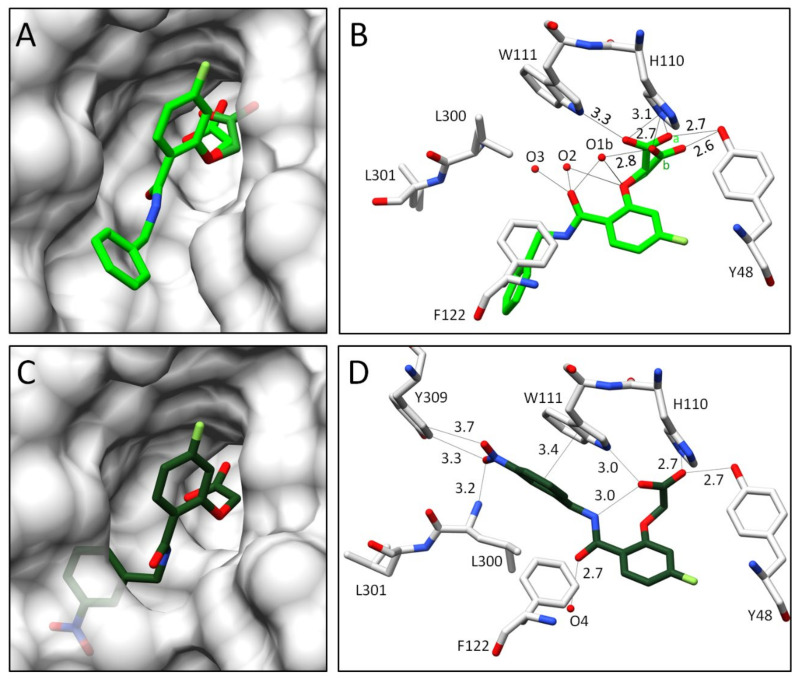
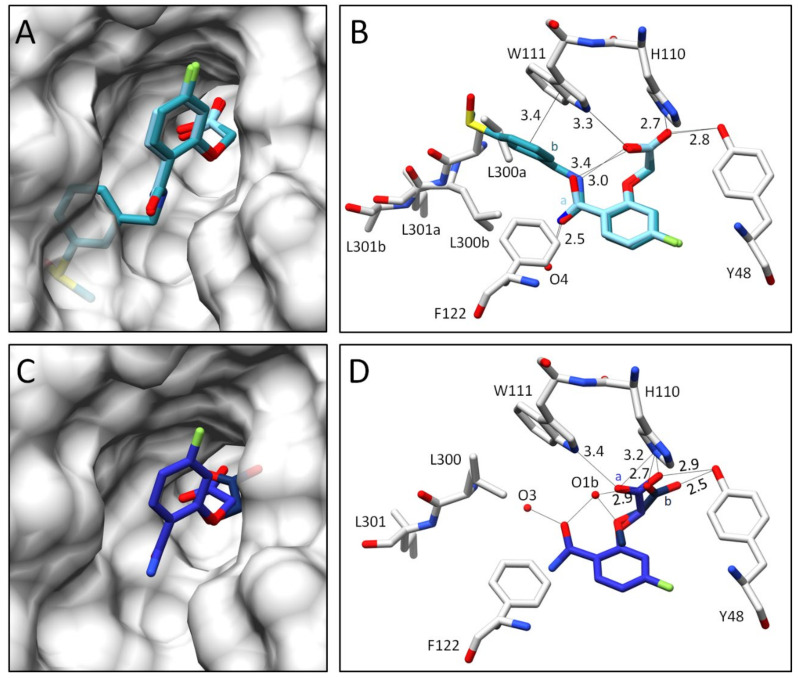
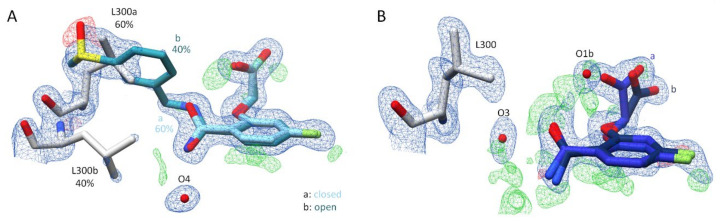
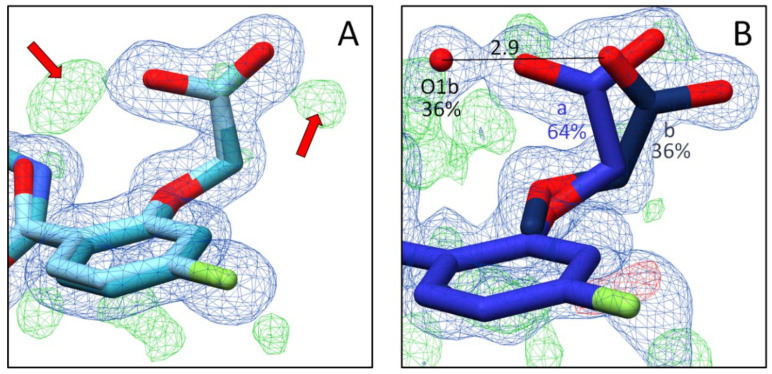
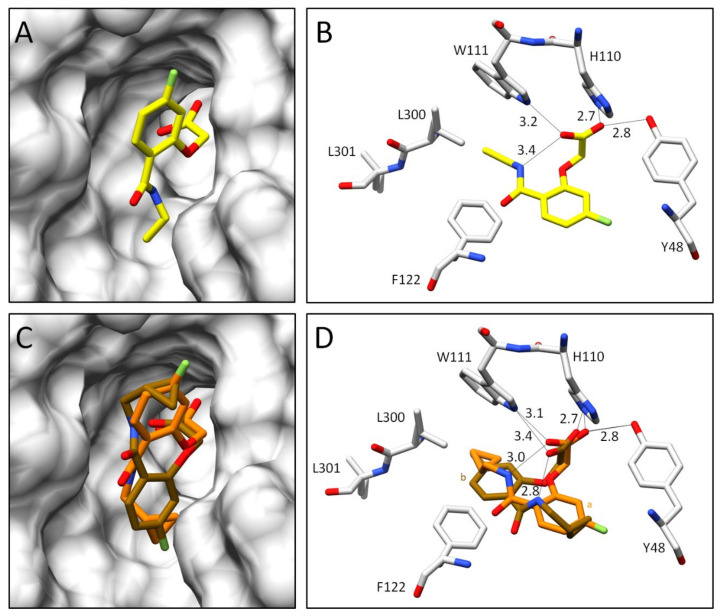
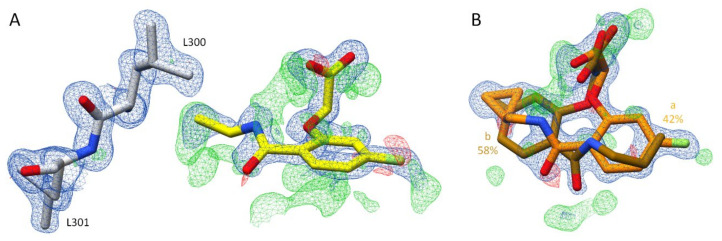
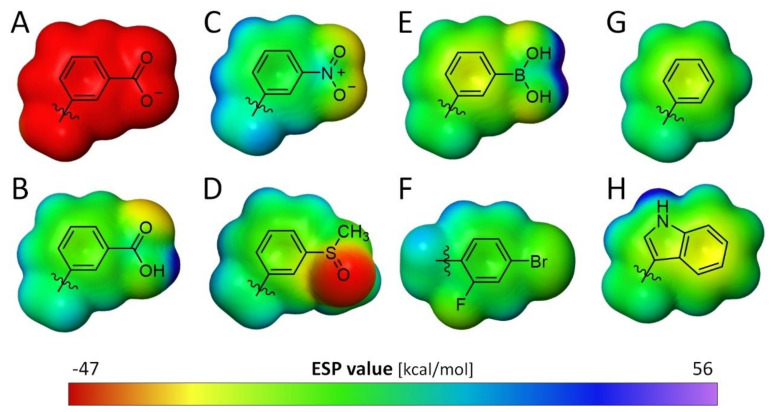
The transient specificity pocket of aldose reductase only opens in response to specific ligands. This pocket may offer an advantage for the development of novel, more selective ligands for proteins with similar topology that lack such an adaptive pocket. Our aim was to elucidate which properties allow an inhibitor to bind in the specificity pocket. A series of inhibitors that share the same parent scaffold but differ in their attached aromatic substituents were screened using ITC and X-ray crystallography for their ability to occupy the pocket. Additionally, we investigated the electrostatic potentials and charge distribution across the attached terminal aromatic groups with respect to their potential to bind to the transient pocket of the enzyme using ESP calculations. These methods allowed us to confirm the previously established hypothesis that an electron-deficient aromatic group is an important prerequisite for opening and occupying the specificity pocket. We also demonstrated from our crystal structures that a pH shift between 5 and 8 does not affect the binding position of the ligand in the specificity pocket. This allows for a comparison between thermodynamic and crystallographic data collected at different pH values.
醛糖还原酶的瞬时特异性口袋仅在响应特定配体时才会打开。对于拓扑结构相似但缺乏这种适应性口袋的蛋白质,这种口袋可能为开发新型、更具选择性的配体提供了优势。我们的目的是阐明哪些特性允许抑制剂结合在特异性口袋中。使用 ITC 和 X 射线晶体学筛选了一系列共享相同母体支架但附着的芳香取代基不同的抑制剂,以研究它们占据口袋的能力。此外,我们还研究了附着的末端芳香基团的静电势和电荷分布,以了解它们与酶的瞬时口袋结合的潜力,使用 ESP 计算。这些方法使我们能够证实先前建立的假设,即缺电子芳香基团是打开和占据特异性口袋的重要前提。我们还从晶体结构中证明,在 pH 值为 5 到 8 之间的 pH 变化不会影响配体在特异性口袋中的结合位置。这允许在不同 pH 值下收集的热力学和晶体学数据进行比较。