Neuroscience Research Group, Medical Research Institute, Faculty of Medicine, University of Antioquia (UdeA), Calle 70 No. 52-21, and Calle 62 # 52-59, Building 1, Room 412, SIU, Medellin 050010, Colombia.
Biomolecules. 2021 Dec 8;11(12):1845. doi: 10.3390/biom11121845.
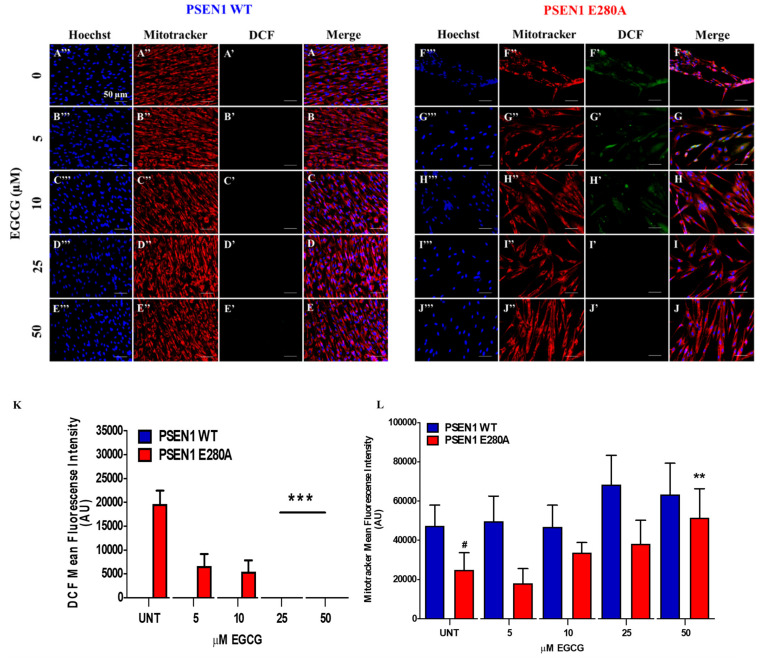
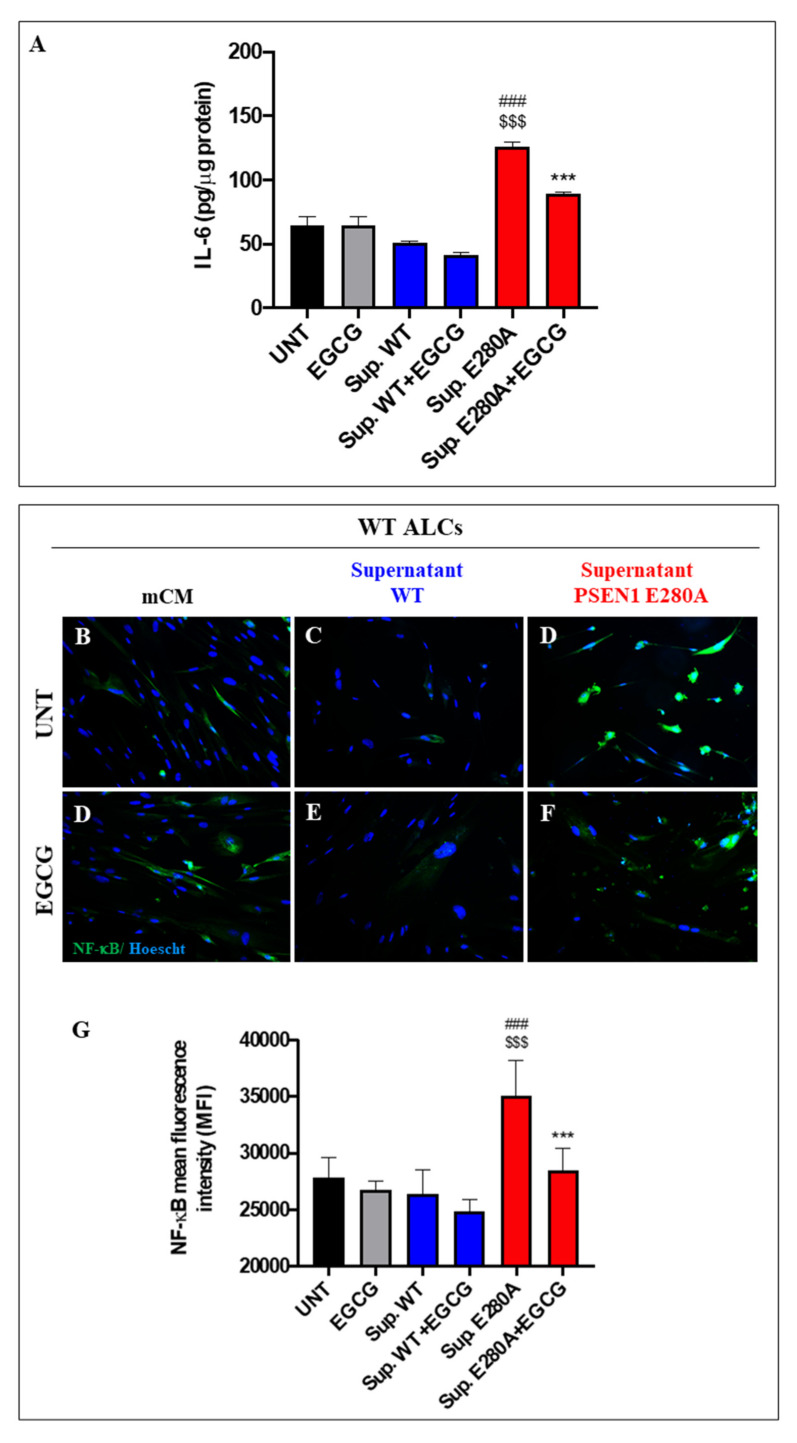
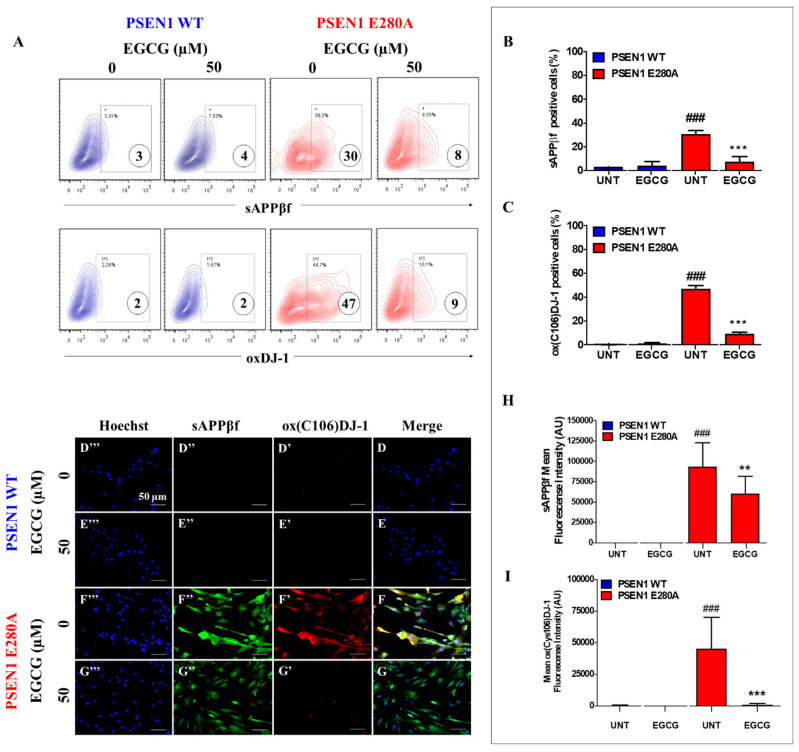
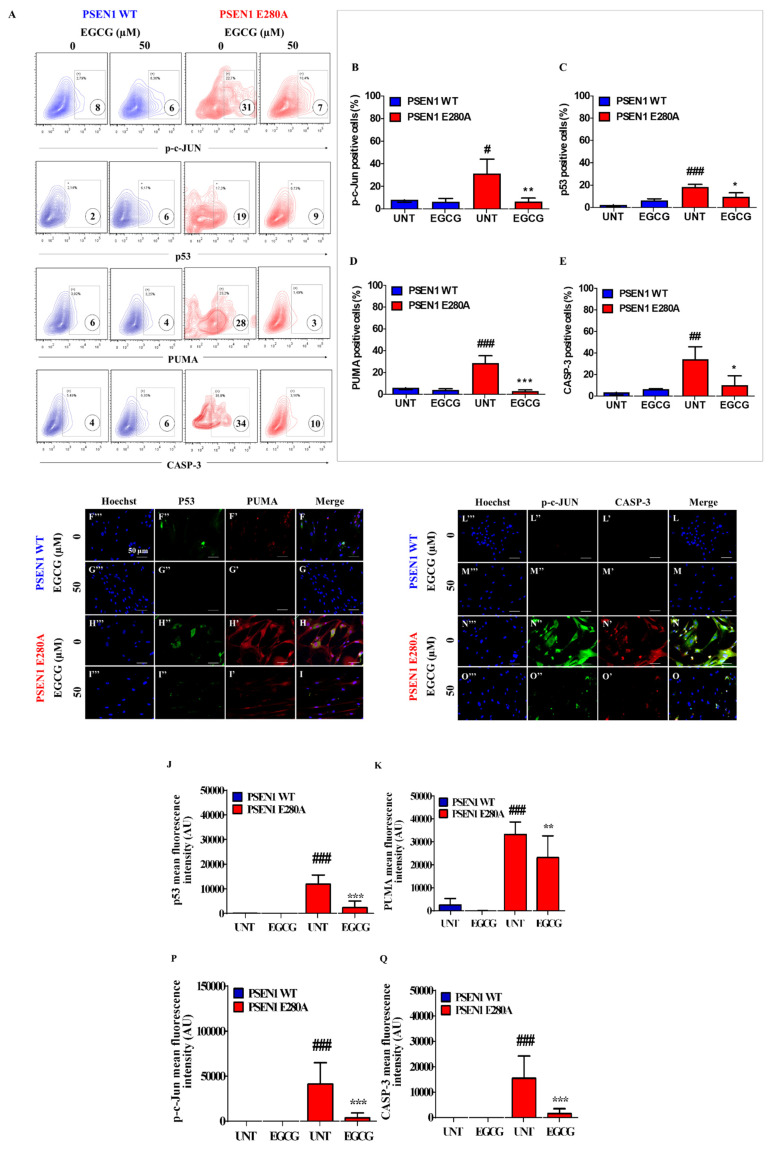
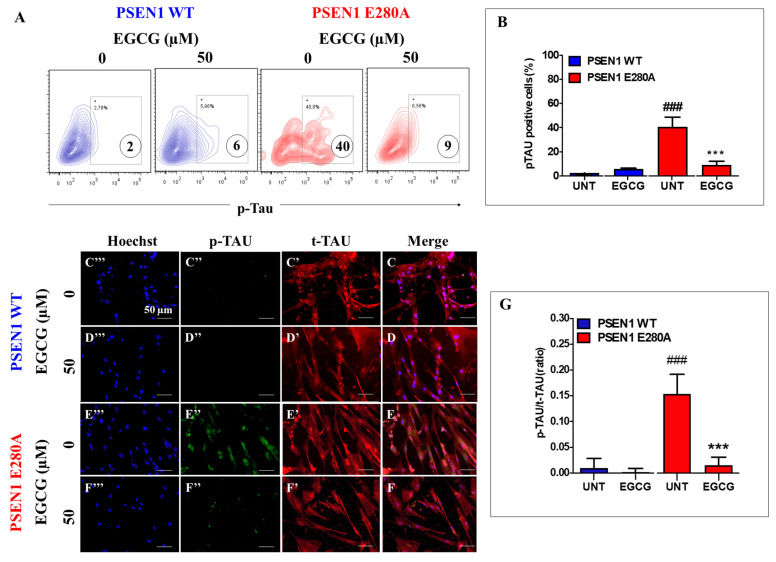
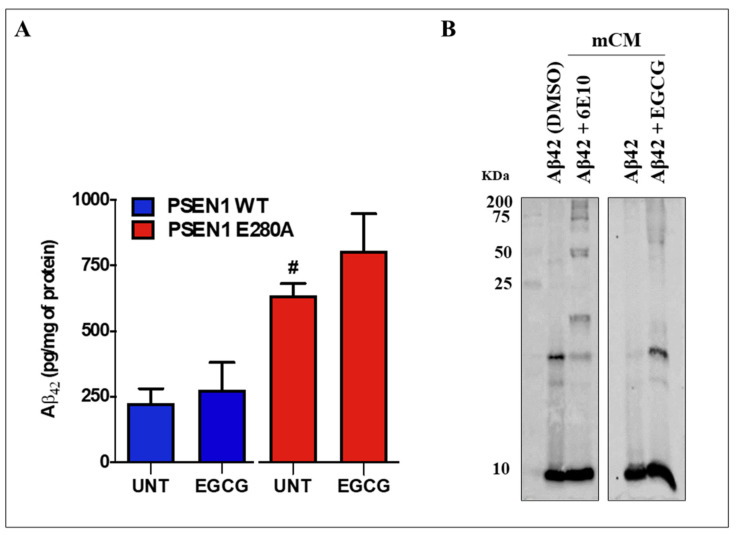
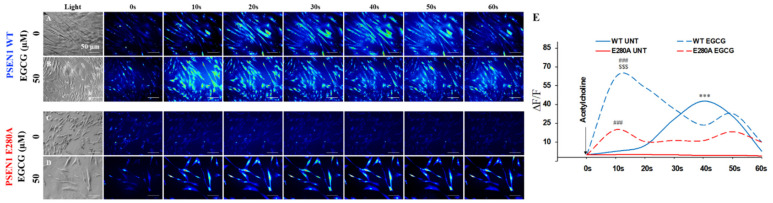
Alzheimer's disease (AD) is a complex neurodegenerative disease characterized by functional disruption, death of cholinergic neurons (ChNs) because of intracellular and extracellular Aβ aggregates, and hyperphosphorylation of protein TAU (p-TAU). To date, there are no efficient therapies against AD. Therefore, new therapies for its treatment are in need. The goal of this investigation was to evaluate the effect of the polyphenol epigallocatechin-3-gallate (EGCG) on cholinergic-like neurons (ChLNs) bearing the mutation E280A in PRESENILIN 1 (PSEN1 E280A). To this aim, wild-type (WT) and PSEN1 E280A ChLNs were exposed to EGCG (5-50 μM) for 4 days. Untreated or treated neurons were assessed for biochemical and functional analysis. We found that EGCG (50 μM) significantly inhibited the aggregation of (i)sAPPβf, blocked p-TAU, increased ∆Ψm, decreased oxidation of DJ-1 at residue Cys106-SH, and inhibited the activation of transcription factor c-JUN and P53, PUMA, and CASPASE-3 in mutant ChLNs compared to WT. Although EGCG did not reduce (e)Aβ42, the polyphenol reversed Ca influx dysregulation as a response to acetylcholine (ACh) stimuli in PSEN1 E280A ChLNs, inhibited the activation of transcription factor NF-κB, and reduced the secretion of pro-inflammatory IL-6 in wild-type astrocyte-like cells (ALCs) when exposed to mutant ChLNs culture supernatant. Taken together, our findings suggest that the EGCG might be a promising therapeutic approach for the treatment of FAD.
阿尔茨海默病(AD)是一种复杂的神经退行性疾病,其特征是功能障碍、由于细胞内和细胞外 Aβ 聚集而导致的胆碱能神经元(ChN)死亡,以及蛋白 TAU(p-TAU)的过度磷酸化。迄今为止,尚无有效的 AD 治疗方法。因此,需要新的治疗方法。本研究的目的是评估多酚表没食子儿茶素没食子酸酯(EGCG)对载有早老素 1(PSEN1)E280A 突变的胆碱能样神经元(ChLN)的影响。为此,将野生型(WT)和 PSEN1 E280A ChLN 暴露于 EGCG(5-50 μM)4 天。未处理或处理过的神经元进行生化和功能分析。我们发现,EGCG(50 μM)可显著抑制(i)sAPPβf 的聚集,阻断 p-TAU,增加 ∆Ψm,减少 DJ-1 在 Cys106-SH 残基的氧化,并抑制转录因子 c-JUN 和 P53、PUMA 和 CASPASE-3 在突变型 ChLN 中的激活,与 WT 相比。尽管 EGCG 不能减少(e)Aβ42,但该多酚可逆转 PSEN1 E280A ChLN 对乙酰胆碱(ACh)刺激的 Ca 流入失调,抑制转录因子 NF-κB 的激活,并减少野生型星形胶质样细胞(ALC)中促炎细胞因子 IL-6 的分泌当暴露于突变型 ChLN 培养上清液时。总之,我们的研究结果表明,EGCG 可能是治疗早发型家族性 AD 的一种有前途的治疗方法。