Di Napoli Arianna, Vacca Davide, Bertolazzi Giorgio, Lopez Gianluca, Piane Maria, Germani Aldo, Rogges Evelina, Pepe Giuseppina, Santanelli Di Pompeo Fabio, Salgarello Marzia, Jobanputra Vaidehi, Hsiao Susan, Wrzeszczynski Kazimierz O, Berti Emilio, Bhagat Govind
Department of Clinical and Molecular Medicine, Sant'Andrea Hospital, Sapienza University, 00189 Rome, Italy.
Department of Surgical, Oncological and Oral Sciences, Palermo University, 90134 Palermo, Italy.
Cancers (Basel). 2021 Dec 7;13(24):6174. doi: 10.3390/cancers13246174.
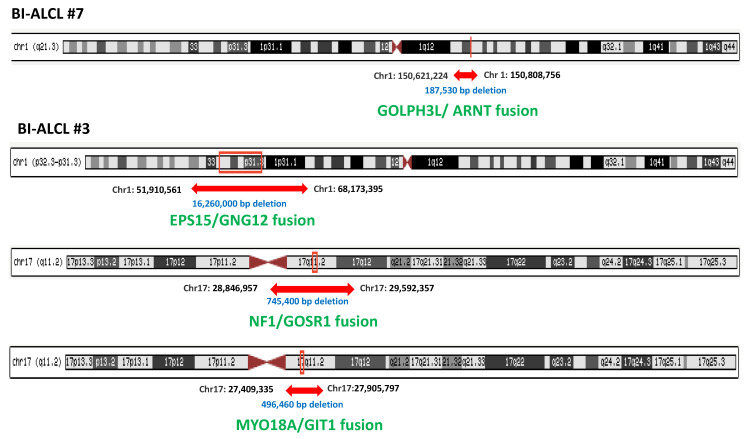
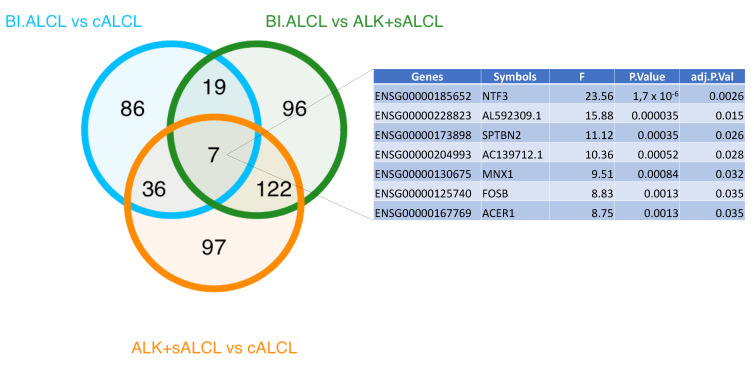
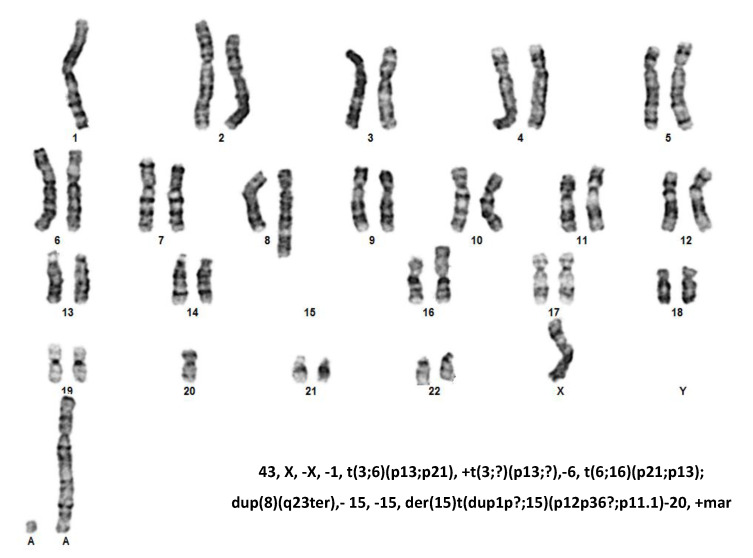
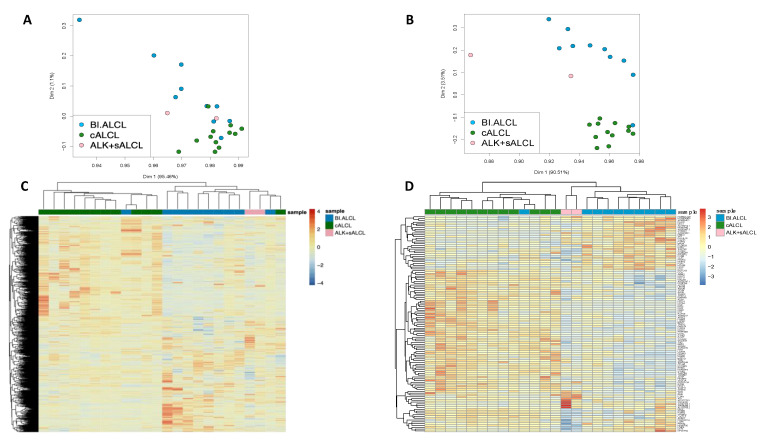
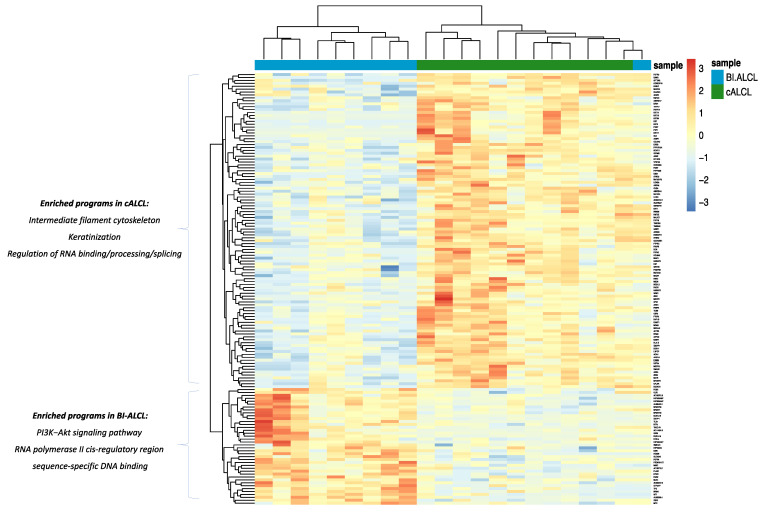
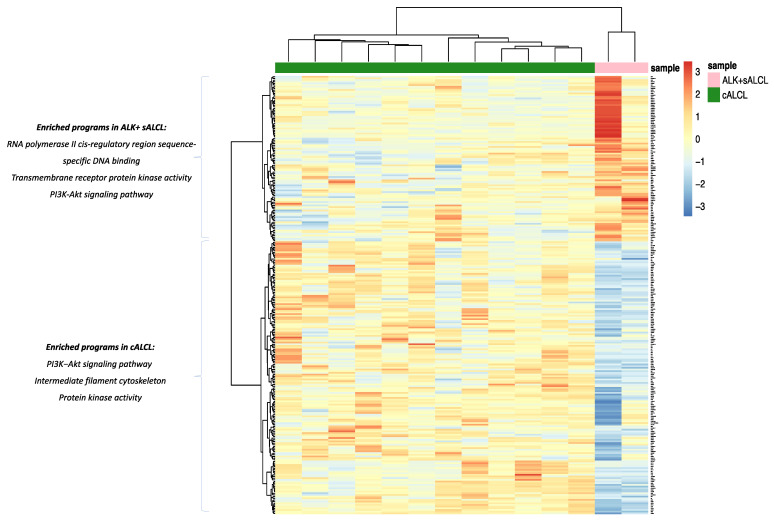
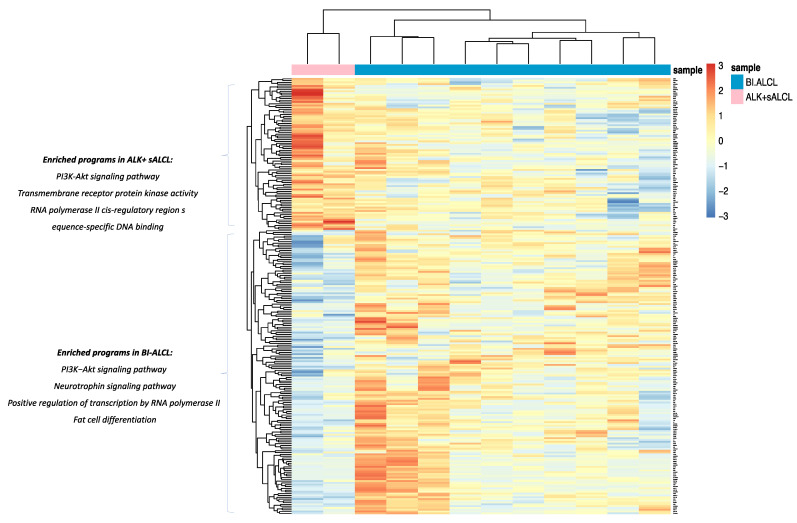
Cutaneous and breast implant-associated anaplastic large-cell lymphomas (cALCLs and BI-ALCLs) are two localized forms of peripheral T-cell lymphomas (PTCLs) that are recognized as distinct entities within the family of ALCL. JAK-STAT signaling is a common feature of all ALCL subtypes, whereas DUSP22/IRF4, TP63 and TYK gene rearrangements have been reported in a proportion of ALK-negative sALCLs and cALCLs. Both cALCLs and BI-ALCLs differ in their gene expression profiles compared to PTCLs; however, a direct comparison of the genomic alterations and transcriptomes of these two entities is lacking. By performing RNA sequencing of 1385 genes (TruSight RNA Pan-Cancer, Illumina) in 12 cALCLs, 10 BI-ALCLs and two anaplastic lymphoma kinase (ALK)-positive sALCLs, we identified the previously reported TYK2-NPM1 fusion in 1 cALCL (1/12, 8%), and four new intrachromosomal gene fusions in 2 BI-ALCLs (2/10, 20%) involving genes on chromosome 1 (EPS15-GNG12 and ARNT-GOLPH3L) and on chromosome 17 (MYO18A-GIT1 and NF1-GOSR1). One of the two BI-ALCL samples showed a complex karyotype, raising the possibility that genomic instability may be responsible for intra-chromosomal fusions in BI-ALCL. Moreover, transcriptional analysis revealed similar upregulation of the PI3K/Akt pathway, associated with enrichment in the expression of neurotrophin signaling genes, which was more conspicuous in BI-ALCL, as well as differences, i.e., over-expression of genes involved in the RNA polymerase II transcription program in BI-ALCL and of the RNA splicing/processing program in cALCL.
皮肤和乳腺植入物相关间变性大细胞淋巴瘤(cALCL和BI-ALCL)是外周T细胞淋巴瘤(PTCL)的两种局限性形式,在间变性大细胞淋巴瘤家族中被视为不同的实体。JAK-STAT信号传导是所有间变性大细胞淋巴瘤亚型的共同特征,而在一部分ALK阴性的皮肤间变性大细胞淋巴瘤和原发性皮肤间变性大细胞淋巴瘤中已报道存在DUSP22/IRF4、TP63和TYK基因重排。与PTCL相比,cALCL和BI-ALCL的基因表达谱均有所不同;然而,这两个实体的基因组改变和转录组之间缺乏直接比较。通过对12例cALCL、10例BI-ALCL和2例间变性淋巴瘤激酶(ALK)阳性的皮肤间变性大细胞淋巴瘤进行1385个基因的RNA测序(TruSight RNA全癌,Illumina公司),我们在1例cALCL中鉴定出先前报道的TYK2-NPM1融合(1/12,8%),并在2例BI-ALCL中鉴定出4种新的染色体内基因融合(2/10,20%),涉及1号染色体上的基因(EPS15-GNG12和ARNT-GOLPH3L)和17号染色体上的基因(MYO18A-GIT1和NF1-GOSR1)。2例BI-ALCL样本中的1例显示出复杂的核型,这增加了基因组不稳定可能是BI-ALCL中染色体内融合原因的可能性。此外,转录分析显示PI3K/Akt通路有相似的上调,与神经营养因子信号基因表达的富集相关,这在BI-ALCL中更为明显,同时也存在差异,即BI-ALCL中参与RNA聚合酶II转录程序的基因过表达,而cALCL中参与RNA剪接/加工程序的基因过表达。