Thibaut Morgane M, Gillard Justine, Dolly Adeline, Roumain Martin, Leclercq Isabelle A, Delzenne Nathalie M, Muccioli Giulio G, Bindels Laure B
Metabolism and Nutrition Research Group, Louvain Drug Research Institute, Université Catholique de Louvain (UCLouvain), 1200 Brussels, Belgium.
Laboratory of Hepato-Gastroenterology, Institut de Recherche Expérimentale et Clinique, Université Catholique de Louvain (UCLouvain), 1200 Brussels, Belgium.
Cancers (Basel). 2021 Dec 20;13(24):6389. doi: 10.3390/cancers13246389.
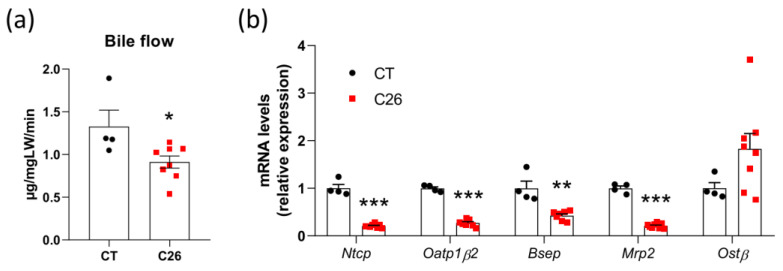
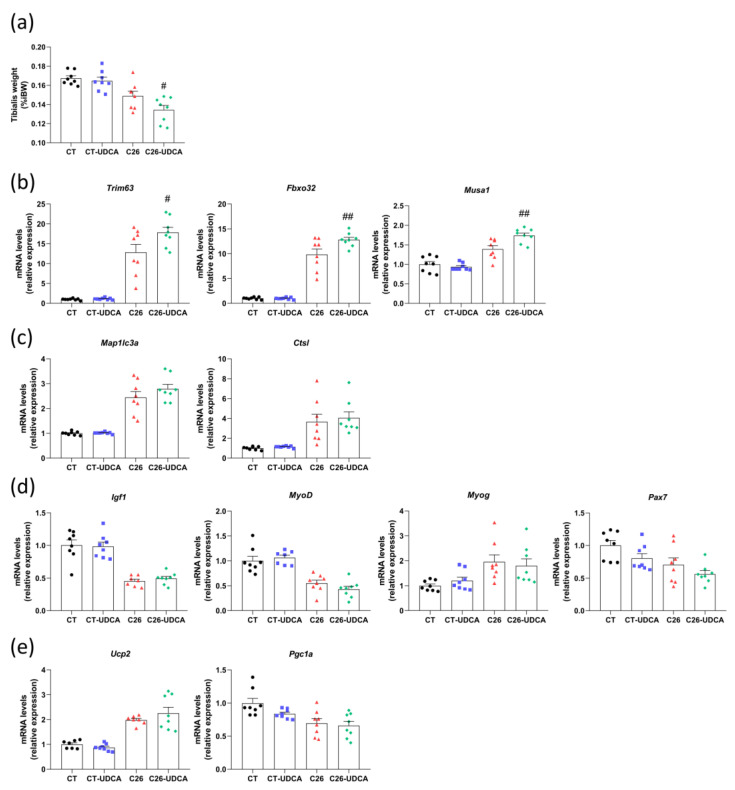
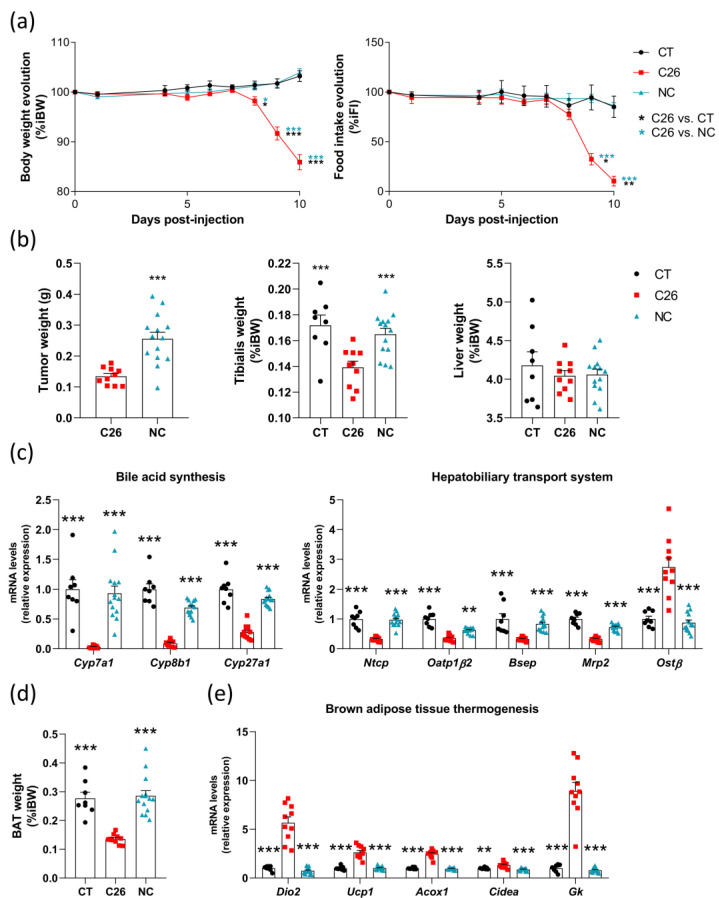
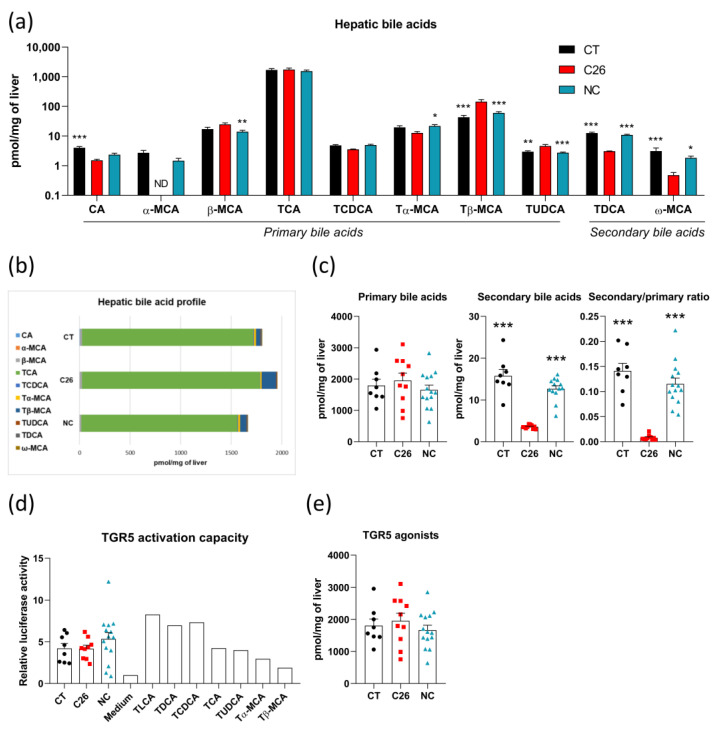
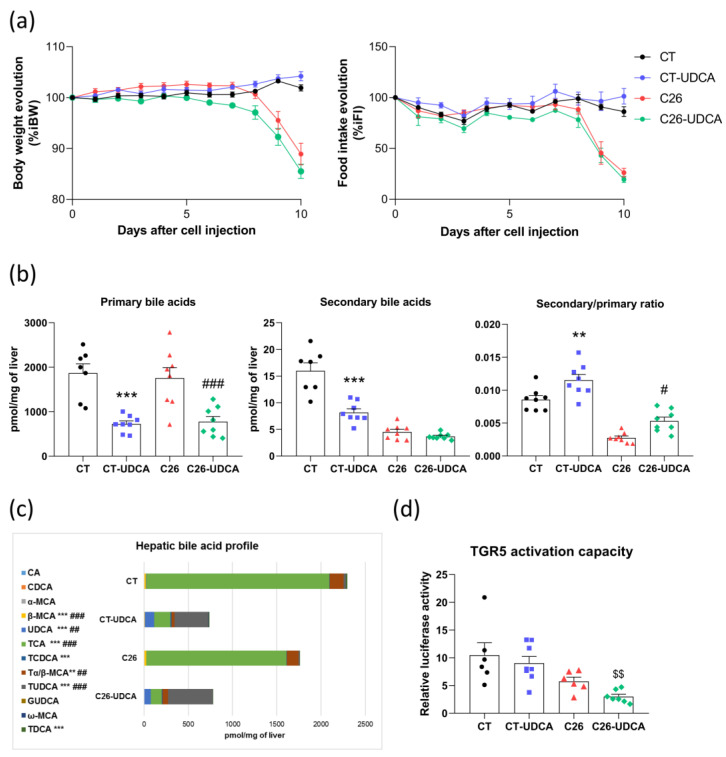
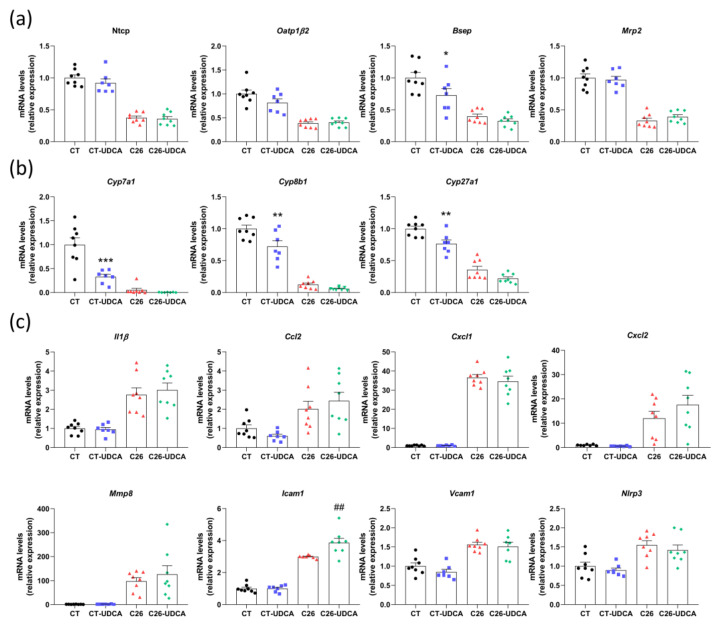
Bile acids exert diverse actions on host metabolism and immunity through bile acid-activated receptors, including Takeda G protein-coupled receptor 5 (TGR5). We have recently evidenced an alteration in bile acids in cancer cachexia, an inflammatory and metabolic syndrome contributing to cancer death. This current study aims to further explore the links emerging between bile acids and cancer cachexia. First, we showed that bile flow is reduced in cachectic mice. Next, comparing mice inoculated with cachexia-inducing and with non-cachexia-inducing C26 colon carcinoma cells, we demonstrated that alterations in the bile acid pathways and profile are directly associated with cachexia. Finally, we performed an interventional study using ursodeoxycholic acid (UDCA), a compound commonly used in hepatobiliary disorders, to induce bile acid secretion and decrease inflammation. We found that UDCA does not improve hepatic inflammation and worsens muscle atrophy in cachectic mice. This exacerbation of the cachectic phenotype upon UDCA was accompanied by a decreased TGR5 activity, suggesting that TGR5 agonists, known to reduce inflammation in several pathological conditions, could potentially counteract cachectic features. This work brings to light major evidence sustaining the emerging links between bile acids and cancer cachexia and reinforces the interest in studying bile acid-activated receptors in this context.
胆汁酸通过胆汁酸激活受体,包括武田G蛋白偶联受体5(TGR5),对宿主代谢和免疫发挥多种作用。我们最近发现癌症恶病质(一种导致癌症死亡的炎症和代谢综合征)患者的胆汁酸发生了改变。本研究旨在进一步探索胆汁酸与癌症恶病质之间新出现的联系。首先,我们发现恶病质小鼠的胆汁流量减少。接下来,通过比较接种诱导恶病质和非诱导恶病质的C26结肠癌细胞的小鼠,我们证明胆汁酸途径和谱的改变与恶病质直接相关。最后,我们进行了一项干预研究,使用熊去氧胆酸(UDCA,一种常用于肝胆疾病的化合物)来诱导胆汁酸分泌并减轻炎症。我们发现UDCA并不能改善恶病质小鼠的肝脏炎症,反而会加重肌肉萎缩。UDCA使恶病质表型恶化的同时,TGR5活性降低,这表明已知在几种病理状况下能减轻炎症的TGR5激动剂可能会抵消恶病质特征。这项工作揭示了支持胆汁酸与癌症恶病质之间新出现联系的重要证据,并强化了在这种情况下研究胆汁酸激活受体的意义。