Oca Ana I, Pérez-Sala Álvaro, Pariente Ana, Ochoa Rodrigo, Velilla Sara, Peláez Rafael, Larráyoz Ignacio M
Biomarkers and Molecular Signaling Group, Center for Biomedical Research of La Rioja (CIBIR), Foundation Rioja Salud, 26006 Logroño, La Rioja, Spain.
Unidad Predepartamental de Enfermería, Universidad de La Rioja (UR), 26006 Logroño, La Rioja, Spain.
J Pers Med. 2021 Dec 8;11(12):1329. doi: 10.3390/jpm11121329.
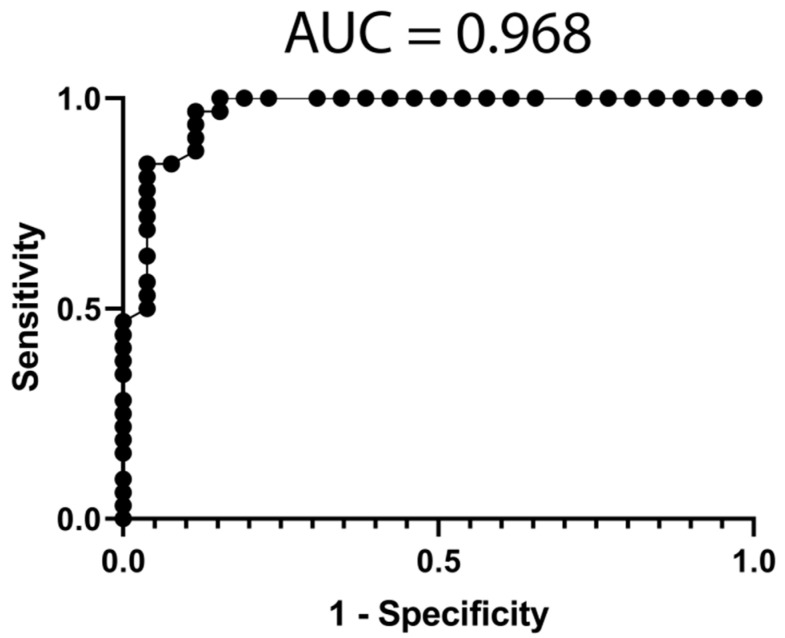
Age-related macular degeneration (AMD) is an incurable disease associated with aging that destroys sharp and central vision. Increasing evidence implicates both systemic and local inflammation in the pathogenesis of AMD. Intravitreal injection of anti-vascular endothelial growth factor (VEGF) agents is currently the first-line therapy for choroidal neovascularization in AMD patients. However, a high number of patients do not show satisfactory responses to anti-VEGF treatment after three injections. Predictive treatment response models are one of the most powerful tools for personalized medicine. Therefore, the application of these models is very helpful to predict the optimal treatment for an early application on each patient. We analyzed the transcriptome of peripheral blood mononuclear cells (PBMCs) from AMD patients before treatment to identify biomarkers of response to ranibizumab. A classification model comprised of four mRNAs and one miRNA isolated from PBMCs was able to predict the response to ranibizumab with high accuracy (Area Under the Curve of the Receiver Operating Characteristic curve = 0.968), before treatment. We consider that our classification model, based on mRNA and miRNA from PBMCs allows a robust prediction of patients with insufficient response to anti-VEGF treatment. In addition, it could be used in combination with other methods, such as specific baseline characteristics, to identify patients with poor response to anti-VEGF treatment to establish patient-specific treatment plans at the first visit.
年龄相关性黄斑变性(AMD)是一种与衰老相关的无法治愈的疾病,会破坏清晰的中心视力。越来越多的证据表明全身和局部炎症都参与了AMD的发病机制。玻璃体内注射抗血管内皮生长因子(VEGF)药物是目前AMD患者脉络膜新生血管的一线治疗方法。然而,大量患者在三次注射后对抗VEGF治疗未表现出满意的反应。预测性治疗反应模型是个性化医疗最有力的工具之一。因此,这些模型的应用对于预测早期应用于每位患者的最佳治疗方法非常有帮助。我们分析了AMD患者治疗前外周血单个核细胞(PBMC)的转录组,以确定对雷珠单抗反应的生物标志物。由从PBMC中分离出的四种mRNA和一种miRNA组成的分类模型能够在治疗前高精度地预测对雷珠单抗的反应(受试者操作特征曲线下面积=0.968)。我们认为,基于PBMC的mRNA和miRNA的分类模型能够可靠地预测对抗VEGF治疗反应不足的患者。此外,它可以与其他方法(如特定的基线特征)结合使用,以识别对抗VEGF治疗反应不佳的患者,从而在首次就诊时制定针对患者的治疗方案。