Pither Molly Dorothy, Mantova Giuseppe, Scaglione Elena, Pagliuca Chiara, Colicchio Roberta, Vitiello Mariateresa, Chernikov Oleg V, Hua Kuo-Feng, Kokoulin Maxim S, Silipo Alba, Salvatore Paola, Molinaro Antonio, Di Lorenzo Flaviana
Department of Chemical Sciences, University of Naples Federico II, Via Cinthia 4, 80126 Naples, Italy.
Department of Molecular Medicine and Medical Biotechnologies, University of Naples Federico II, Via S. Pansini n 5, 80131 Naples, Italy.
Microorganisms. 2021 Dec 10;9(12):2552. doi: 10.3390/microorganisms9122552.
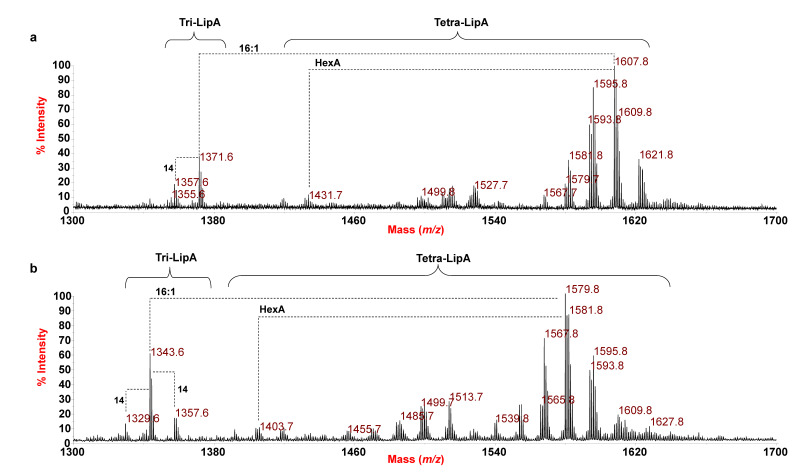
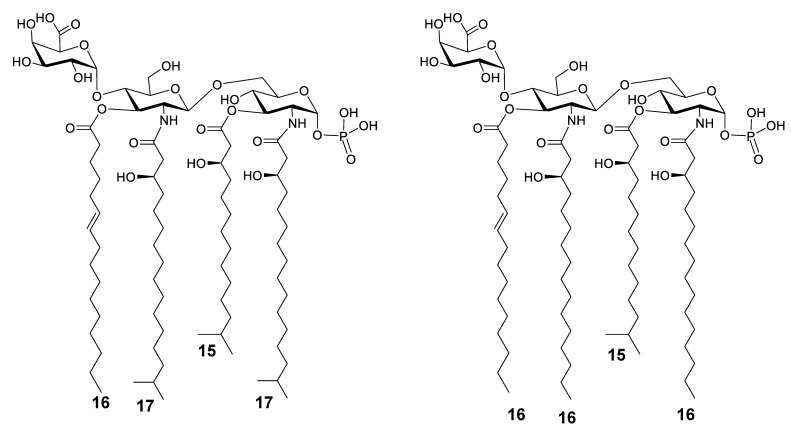
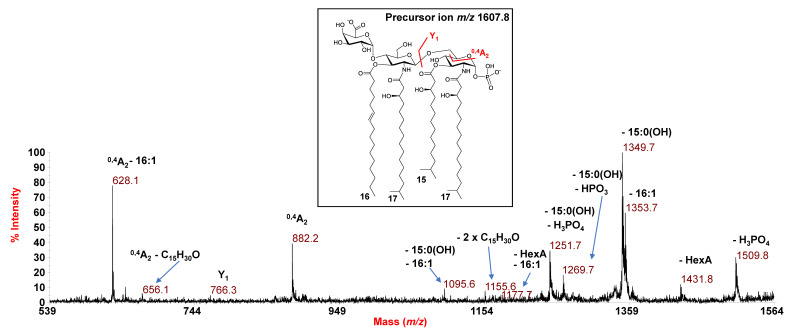
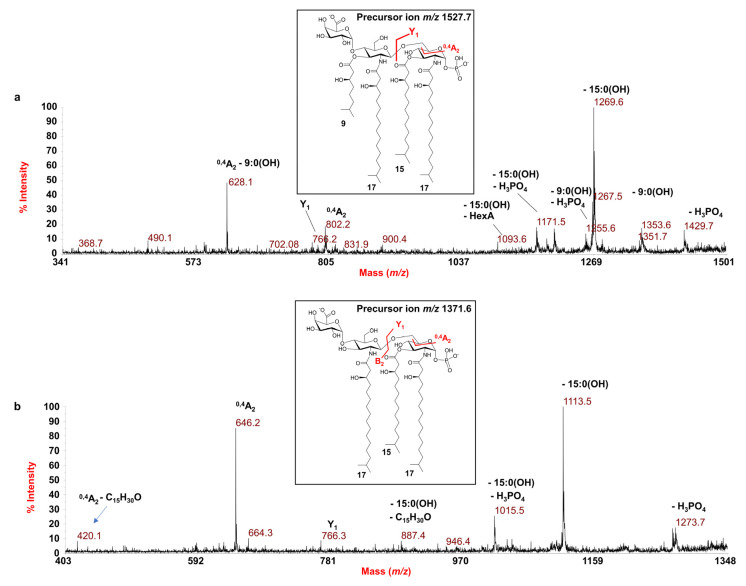
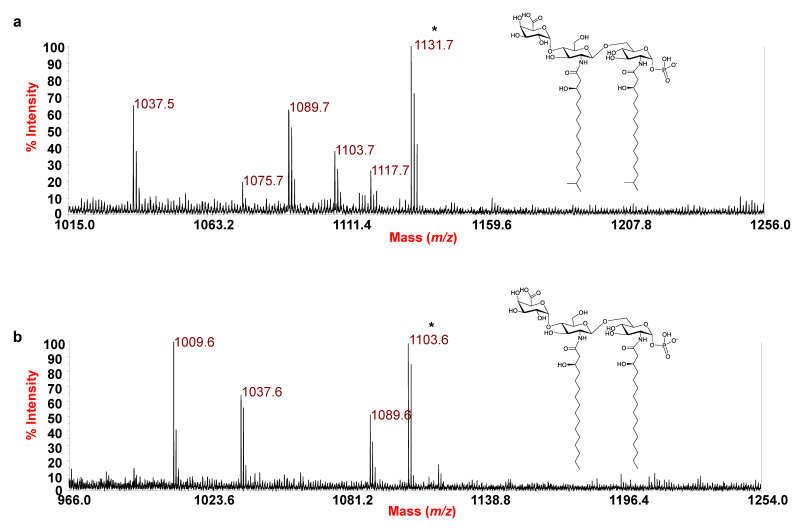
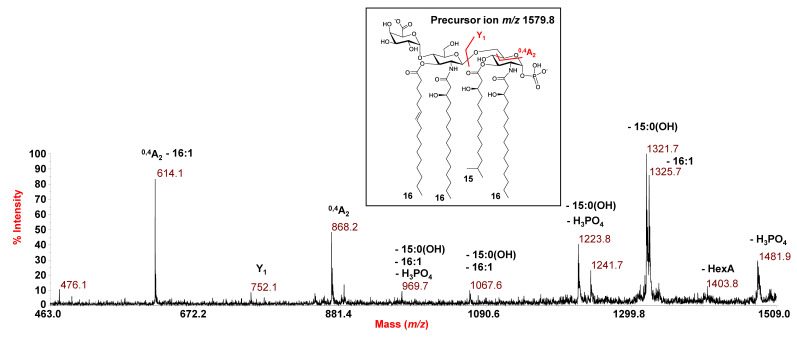
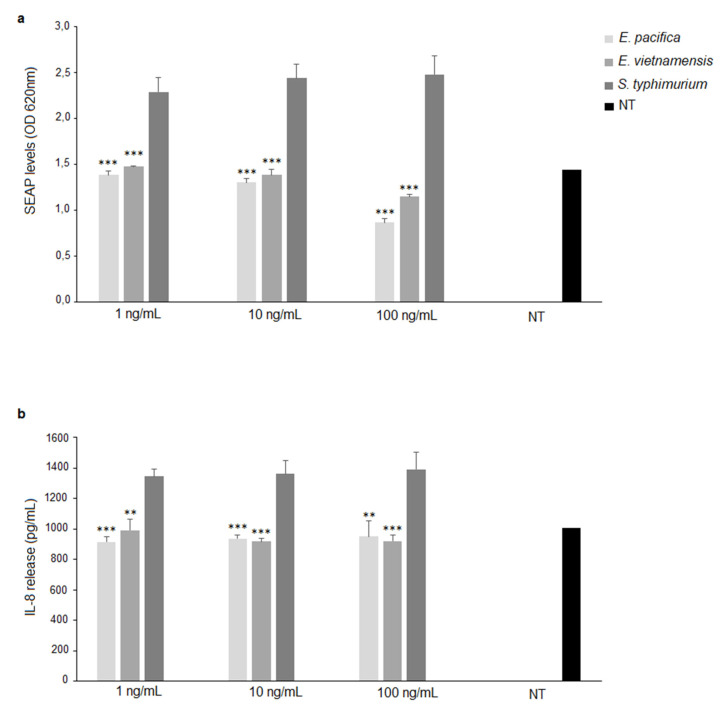
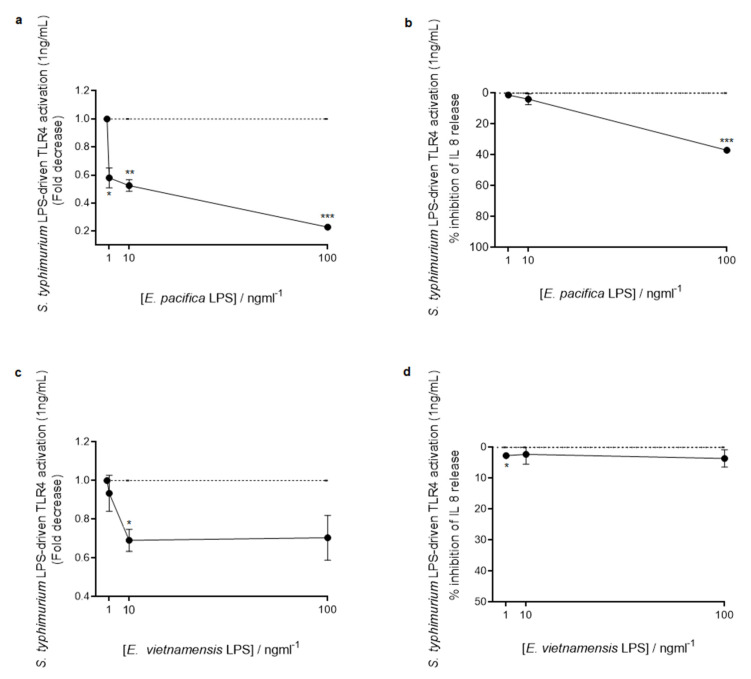
Gram-negative bacteria experiencing marine habitats are constantly exposed to stressful conditions dictating their survival and proliferation. In response to these selective pressures, marine microorganisms adapt their membrane system to ensure protection and dynamicity in order to face the highly mutable sea environments. As an integral part of the Gram-negative outer membrane, structural modifications are commonly observed in the lipopolysaccharide (LPS) molecule; these mainly involve its glycolipid portion, i.e., the lipid A, mostly with regard to fatty acid content, to counterbalance the alterations caused by chemical and physical agents. As a consequence, unusual structural chemical features are frequently encountered in the lipid A of marine bacteria. By a combination of data attained from chemical, MALDI-TOF mass spectrometry (MS), and MS/MS analyses, here, we describe the structural characterization of the lipid A isolated from two marine bacteria of the genus, i.e., KMM 6172 and KMM 6221. This study showed for both strains a complex blend of mono-phosphorylated tri- and tetra-acylated lipid A species carrying an additional sugar moiety, a d-galacturonic acid, on the glucosamine backbone. The unusual chemical structures are reflected in a molecule that only scantly activates the immune response upon its binding to the LPS innate immunity receptor, the TLR4-MD-2 complex. Strikingly, both LPS potently inhibited the toxic effects of proinflammatory LPS on human TLR4/MD-2.
生活在海洋环境中的革兰氏阴性菌不断面临着决定其生存和繁殖的压力条件。为应对这些选择压力,海洋微生物会调整其膜系统,以确保在面对高度多变的海洋环境时具有保护作用和动态适应性。作为革兰氏阴性菌外膜的一个组成部分,脂多糖(LPS)分子中常见结构修饰;这些修饰主要涉及其糖脂部分,即脂质A,主要是在脂肪酸含量方面,以抵消化学和物理因素引起的变化。因此,海洋细菌的脂质A中经常出现不寻常的结构化学特征。通过结合化学、基质辅助激光解吸电离飞行时间质谱(MALDI-TOF MS)和MS/MS分析获得的数据,我们在此描述了从该属的两种海洋细菌,即KMM 6172和KMM 6221中分离出的脂质A的结构特征。这项研究表明,两种菌株的脂质A均为单磷酸化的三酰基和四酰基脂质A物种的复杂混合物,在葡糖胺主链上带有一个额外的糖部分,即D-半乳糖醛酸。这种不寻常的化学结构反映在一个与LPS天然免疫受体TLR4-MD-2复合物结合时仅能微弱激活免疫反应的分子中。令人惊讶的是,两种LPS均能有效抑制促炎性LPS对人TLR4/MD-2的毒性作用。