Sajjad Uzair, Hussain Imtiyaz, Imran Muhammad, Sultan Muhammad, Wang Chi-Chuan, Alsubaie Abdullah Saad, Mahmoud Khaled H
Department of Mechanical Engineering, National Yang Ming Chiao Tung University, 1001 University Road, Hsinchu 300, Taiwan.
Department of Power Mechanical Engineering, National Tsing Hua University, No. 101, Section 2, Guangfu Road, East District, Hsinchu City 300, Taiwan.
Nanomaterials (Basel). 2021 Dec 13;11(12):3383. doi: 10.3390/nano11123383.
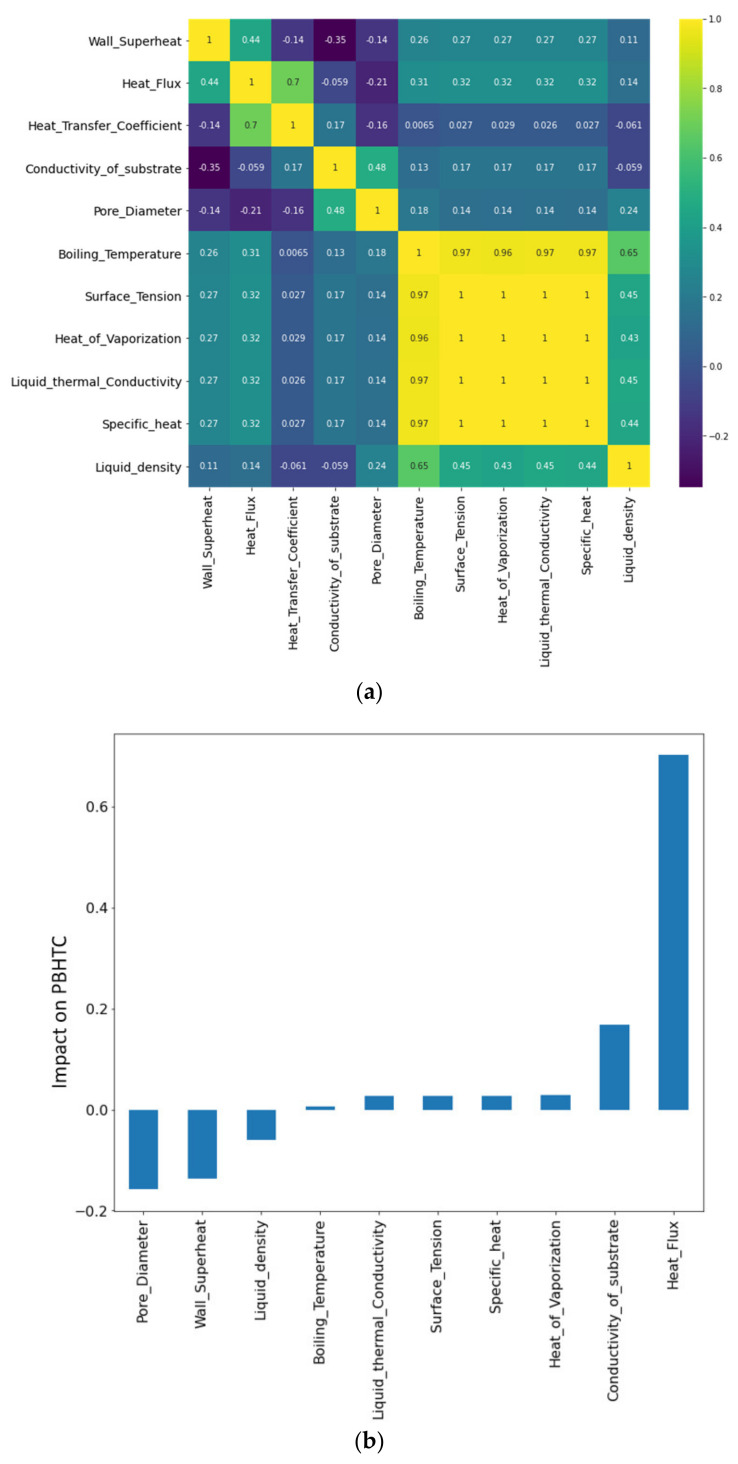
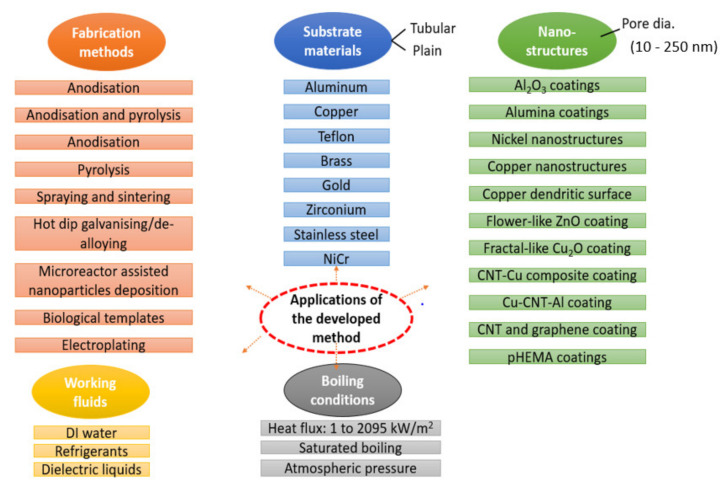
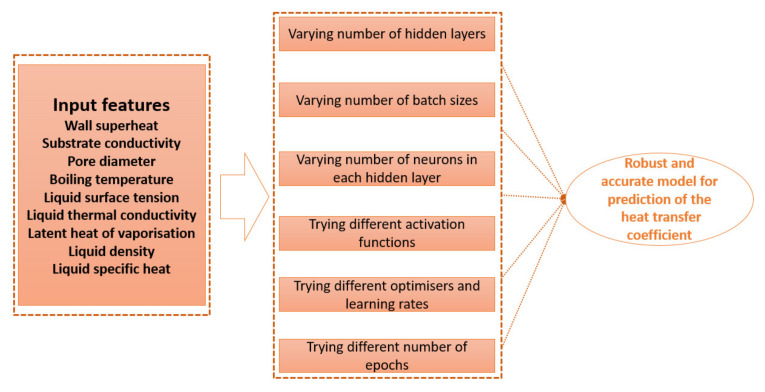
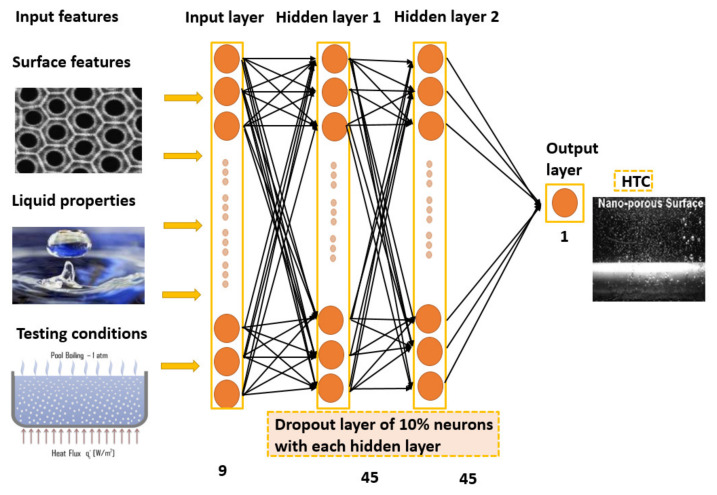
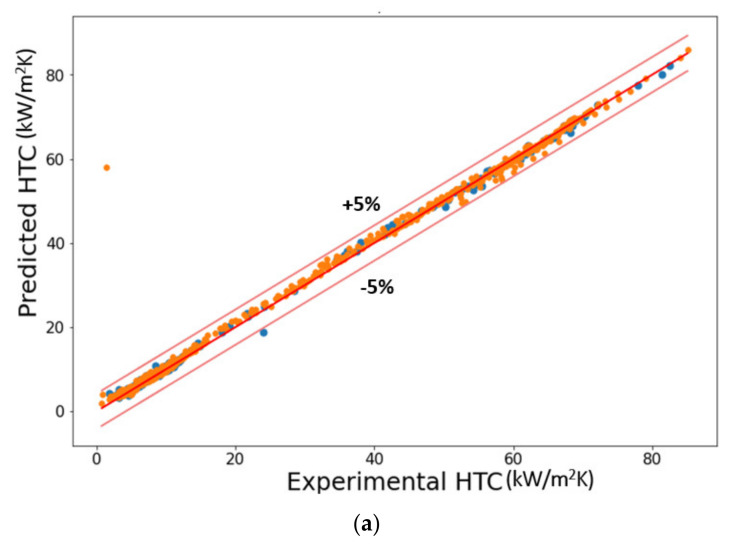
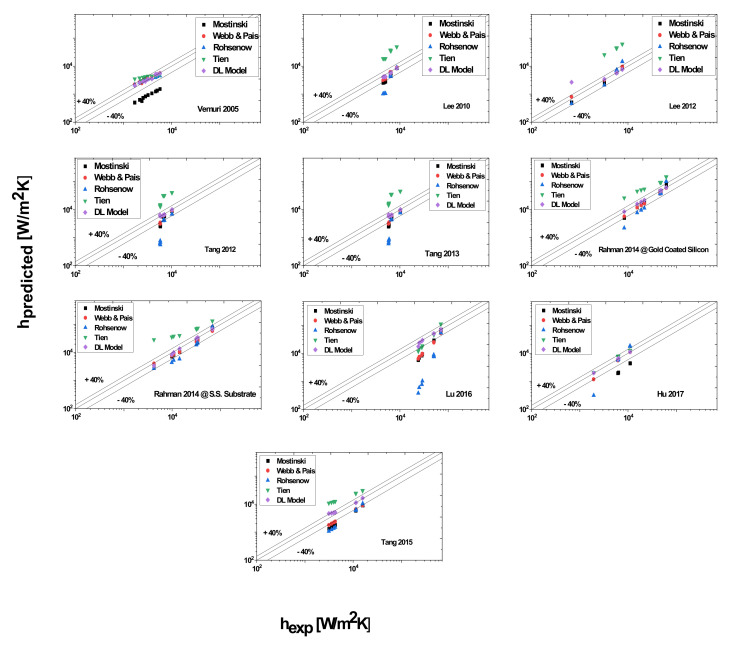
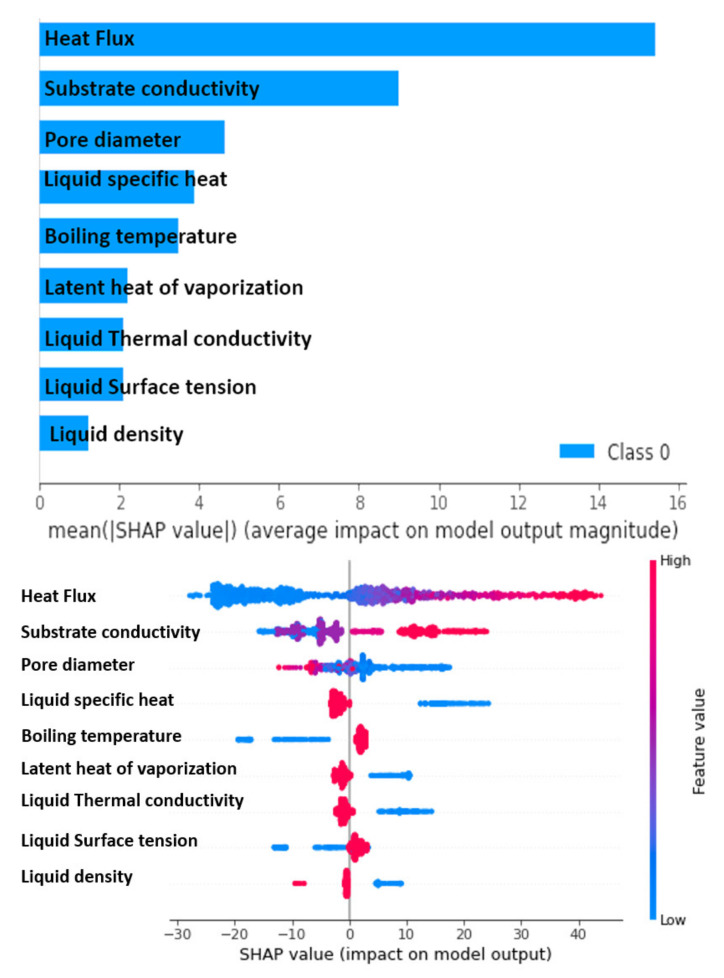
The present study develops a deep learning method for predicting the boiling heat transfer coefficient (HTC) of nanoporous coated surfaces. Nanoporous coated surfaces have been used extensively over the years to improve the performance of the boiling process. Despite the large amount of experimental data on pool boiling of coated nanoporous surfaces, precise mathematical-empirical approaches have not been developed to estimate the HTC. The proposed method is able to cope with the complex nature of the boiling of nanoporous surfaces with different working fluids with completely different thermophysical properties. The proposed deep learning method is applicable to a wide variety of substrates and coating materials manufactured by various manufacturing processes. The analysis of the correlation matrix confirms that the pore diameter, the thermal conductivity of the substrate, the heat flow, and the thermophysical properties of the working fluids are the most important independent variable parameters estimation under consideration. Several deep neural networks are designed and evaluated to find the optimized model with respect to its prediction accuracy using experimental data (1042 points). The best model could assess the HTC with an R = 0.998 and (mean absolute error) MAE% = 1.94.
本研究开发了一种深度学习方法,用于预测纳米多孔涂层表面的沸腾传热系数(HTC)。多年来,纳米多孔涂层表面已被广泛用于提高沸腾过程的性能。尽管有大量关于涂层纳米多孔表面池沸腾的实验数据,但尚未开发出精确的数学经验方法来估算HTC。所提出的方法能够应对使用具有完全不同热物理性质的不同工作流体时纳米多孔表面沸腾的复杂特性。所提出的深度学习方法适用于通过各种制造工艺制造的多种基材和涂层材料。相关矩阵分析证实,孔径、基材的热导率、热流以及工作流体的热物理性质是所考虑的最重要的自变量参数估计。设计并评估了几个深度神经网络,以使用实验数据(1042个点)找到预测精度方面的优化模型。最佳模型能够以R = 0.998和平均绝对误差(MAE%)= 1.94来评估HTC。