Institute of Physiology, iCBR, Faculty of Medicine, University of Coimbra, 3000-548 Coimbra, Portugal.
LAQV, REQUIMTE, Faculty of Farmacy, University of Coimbra, 3000-548 Coimbra, Portugal.
Int J Mol Sci. 2021 Dec 20;22(24):13671. doi: 10.3390/ijms222413671.
We investigated the effects of luteolin on metabolism, vascular reactivity, and perivascular adipose tissue (PVAT) in nonobese type 2 diabetes mellitus animal model, Goto-Kakizaki (GK) rats.
Wistar and GK rats were divided in two groups: (1) control groups treated with vehicle; (2) groups treated with luteolin (10 mg/kg/day, for 2 months). Several metabolic parameters such as adiposity index, lipid profile, fasting glucose levels, glucose and insulin tolerance tests were determined. Endothelial function and contraction studies were performed in aortas with (PVAT+) or without (PVAT-) periaortic adipose tissue. We also studied vascular oxidative stress, glycation and assessed CRP, CCL2, and nitrotyrosine levels in PVAT.
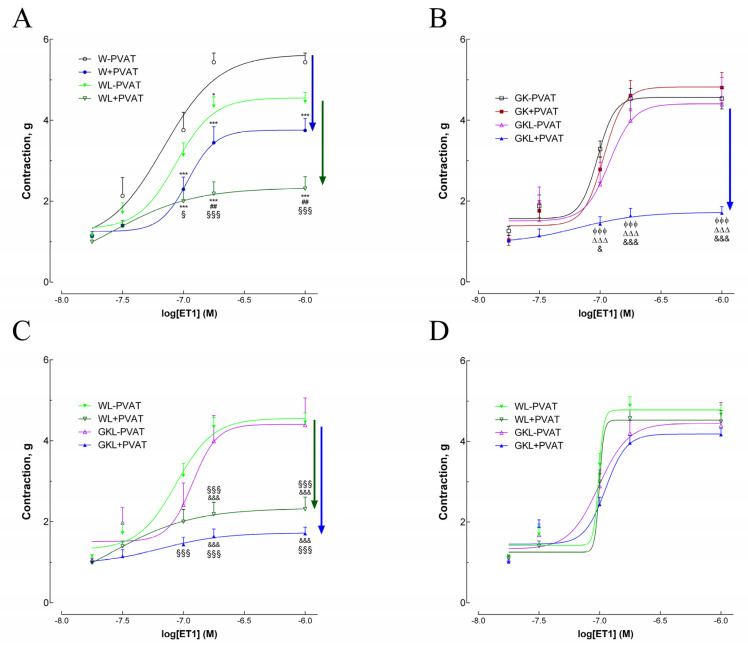
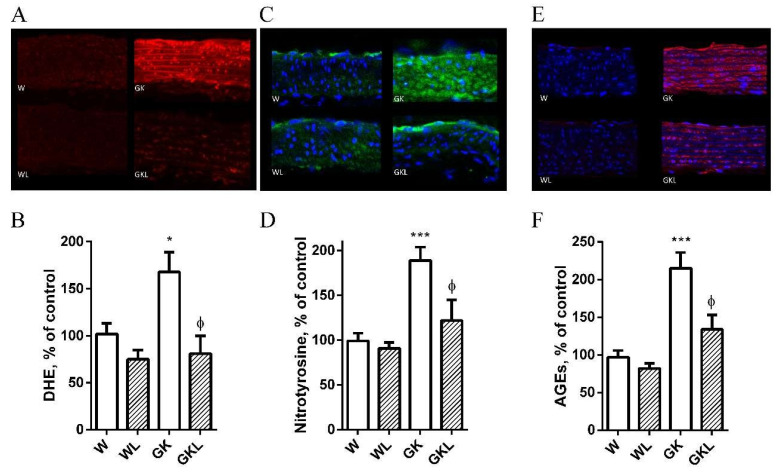
Endothelial function was impaired in diabetic GK rats (47% (GK - PVAT) and 65% (GK + PVAT) inhibition of maximal endothelial dependent relaxation) and significantly improved by luteolin treatment (29% (GK - PVAT) and 22% (GK + PVAT) inhibition of maximal endothelial dependent relaxation, < 0.01). Vascular oxidative stress and advanced glycation end-products' levels were increased in aortic rings (~2-fold, < 0.05) of diabetic rats and significantly improved by luteolin treatment (to levels not significantly different from controls). Periaortic adipose tissue anti-contractile action was significantly rescued with luteolin administration ( < 0.001). In addition, luteolin treatment significantly recovered proinflammatory and pro-oxidant PVAT phenotype, and improved systemic and metabolic parameters in GK rats.
Luteolin ameliorates endothelial dysfunction in type 2 diabetes and exhibits therapeutic potential for the treatment of vascular complications associated with type 2 diabetes.
研究木樨草素对非肥胖 2 型糖尿病动物模型 Goto-Kakizaki(GK)大鼠代谢、血管反应性和血管周围脂肪组织(PVAT)的影响。
将 Wistar 和 GK 大鼠分为两组:(1)对照组给予载体;(2)木樨草素(10mg/kg/天,2 个月)治疗组。测定肥胖指数、血脂谱、空腹血糖水平、葡萄糖和胰岛素耐量试验等多项代谢参数。在有(PVAT+)或没有(PVAT-)peri 主动脉脂肪组织的主动脉中进行内皮功能和收缩研究。我们还研究了血管氧化应激、糖化,并评估了 PVAT 中的 CRP、CCL2 和硝基酪氨酸水平。
糖尿病 GK 大鼠的内皮功能受损(47%(GK-PVAT)和 65%(GK+PVAT)最大内皮依赖性舒张抑制),木樨草素治疗显著改善(29%(GK-PVAT)和 22%(GK+PVAT)最大内皮依赖性舒张抑制, < 0.01)。糖尿病大鼠主动脉环中血管氧化应激和晚期糖基化终产物水平升高(~2 倍, < 0.05),木樨草素治疗显著改善(水平与对照组无显著差异)。给予木樨草素后,peri 主动脉脂肪组织的抗收缩作用明显恢复( < 0.001)。此外,木樨草素治疗显著恢复了促炎和促氧化的 PVAT 表型,并改善了 GK 大鼠的全身和代谢参数。
木樨草素改善 2 型糖尿病的内皮功能障碍,具有治疗 2 型糖尿病相关血管并发症的潜在治疗作用。