Rezapour Aziz, Palmer Andrew J, Alipour Vahid, Hajahmadi Marjan, Jafari Abdosaleh
Health Management and Economics Research Center, Iran University of Medical Sciences, Tehran, Iran.
Department of Health Economics, School of Health Management and Information Sciences, Iran University of Medical Sciences, Tehran, Iran.
Cost Eff Resour Alloc. 2021 Dec 23;19(1):81. doi: 10.1186/s12962-021-00334-z.
B-type natriuretic peptide (BNP) is commonly used as a diagnostic method for patients with heart failure. This study was designed to evaluate the cost-effectiveness of BNP compared to standard clinical assessment in outpatients with heart failure with reduced ejection fraction (HFrEF) in Tehran, Iran.
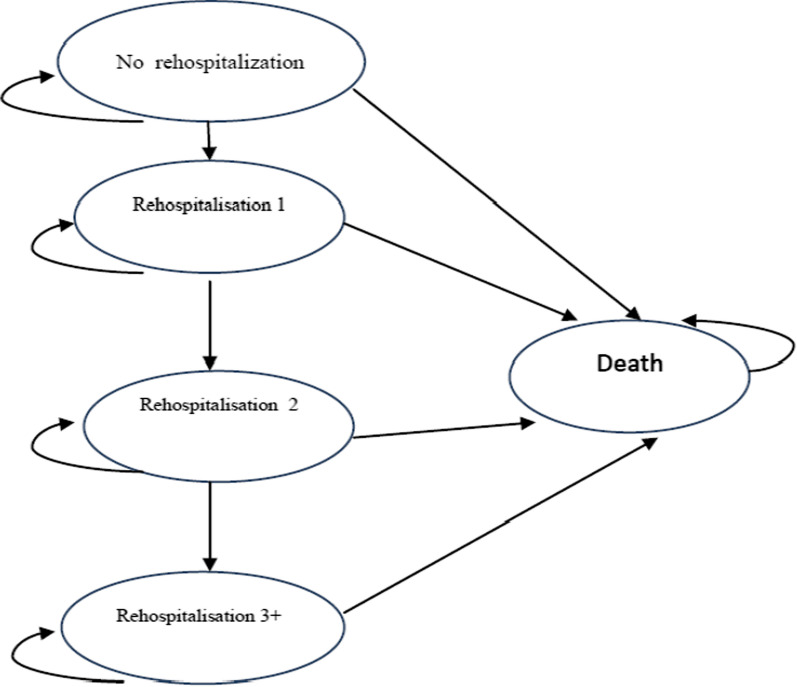
This study was a cost-effectiveness analysis carried on 400 HFrEF outpatients > 45 years who were admitted to Rasoul Akram General Hospital of Tehran, Iran. A Markov model with a lifetime horizon was developed to evaluate economic and clinical outcomes for BNP and standard clinical assessment. Quality-adjusted life-years (QALYs), direct, and indirect costs collected from the patients.
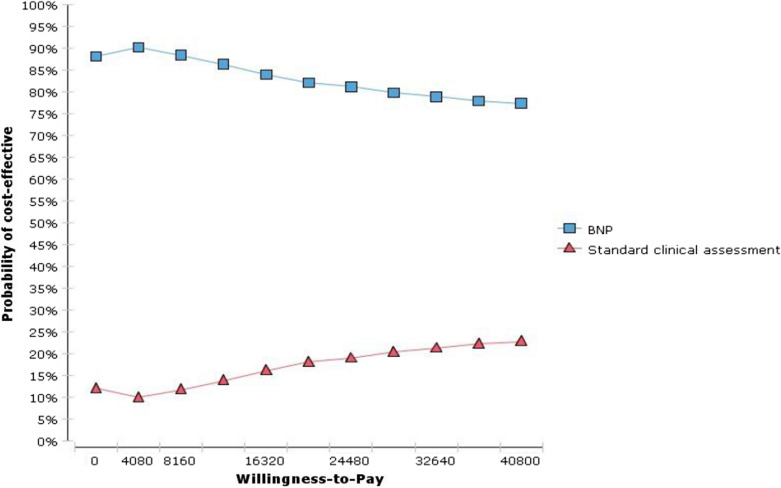
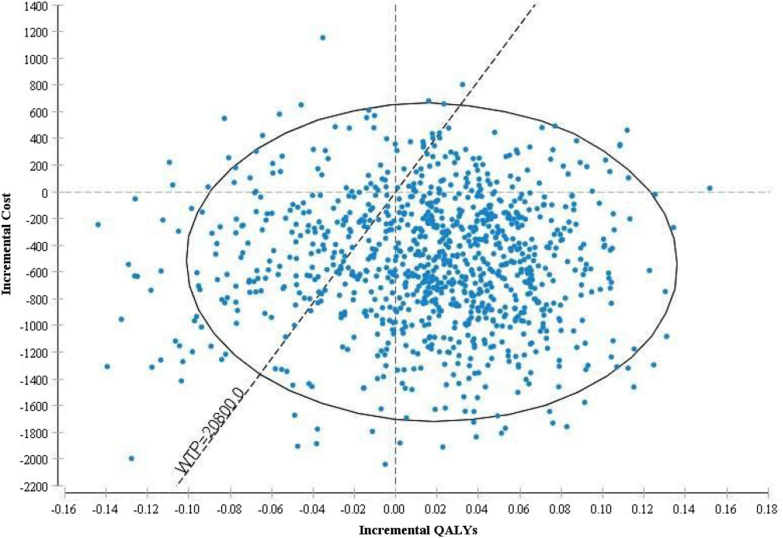
The results of this study indicated that mean QALYs and cost were estimated to be 2.18 QALYs and $1835 for BNP and 2.07 and $2376 for standard clinical assessment, respectively. In terms of reducing costs and increasing QALYs, BNP was dominant compared to standard clinical assessment. Also, BNP had an 85% probability of being cost-effective versus standard clinical assessment if the willingness to pay threshold is higher than $20,800/QALY gained.
Based on the results of the present study, measuring BNP levels represents good value for money, decreasing costs and increasing QALYs compared to standard clinical assessment. It is suggested that the costs of the BNP test be covered by insurance in Iran. The result of the current study has important implications for policymakers in developing clinical guidelines for the diagnosis of heart failure.
B型利钠肽(BNP)常用于心力衰竭患者的诊断。本研究旨在评估在伊朗德黑兰射血分数降低的心力衰竭(HFrEF)门诊患者中,与标准临床评估相比,BNP检测的成本效益。
本研究是一项成本效益分析,纳入了400名年龄大于45岁、入住伊朗德黑兰拉苏勒·阿克拉姆综合医院的HFrEF门诊患者。构建了一个具有终身时间范围的马尔可夫模型,以评估BNP检测和标准临床评估的经济和临床结果。从患者处收集质量调整生命年(QALY)、直接和间接成本。
本研究结果表明,BNP检测的平均QALY和成本估计分别为2.18个QALY和1835美元,标准临床评估的平均QALY和成本分别为2.07个QALY和2376美元。在降低成本和增加QALY方面,与标准临床评估相比,BNP检测具有优势。此外,如果支付意愿阈值高于每获得一个QALY 20,800美元,BNP检测相对于标准临床评估具有成本效益的概率为85%。
基于本研究结果,与标准临床评估相比,检测BNP水平具有良好的性价比,可降低成本并增加QALY。建议伊朗的保险覆盖BNP检测费用。本研究结果对制定心力衰竭诊断临床指南的政策制定者具有重要意义。