University of Vienna, Faculty for Chemistry, Department of Physical Chemistry, Waehringer Strasse 42, 1090, Vienna, Austria.
Anal Bioanal Chem. 2022 Jan;414(1):731-741. doi: 10.1007/s00216-021-03771-0. Epub 2021 Dec 23.
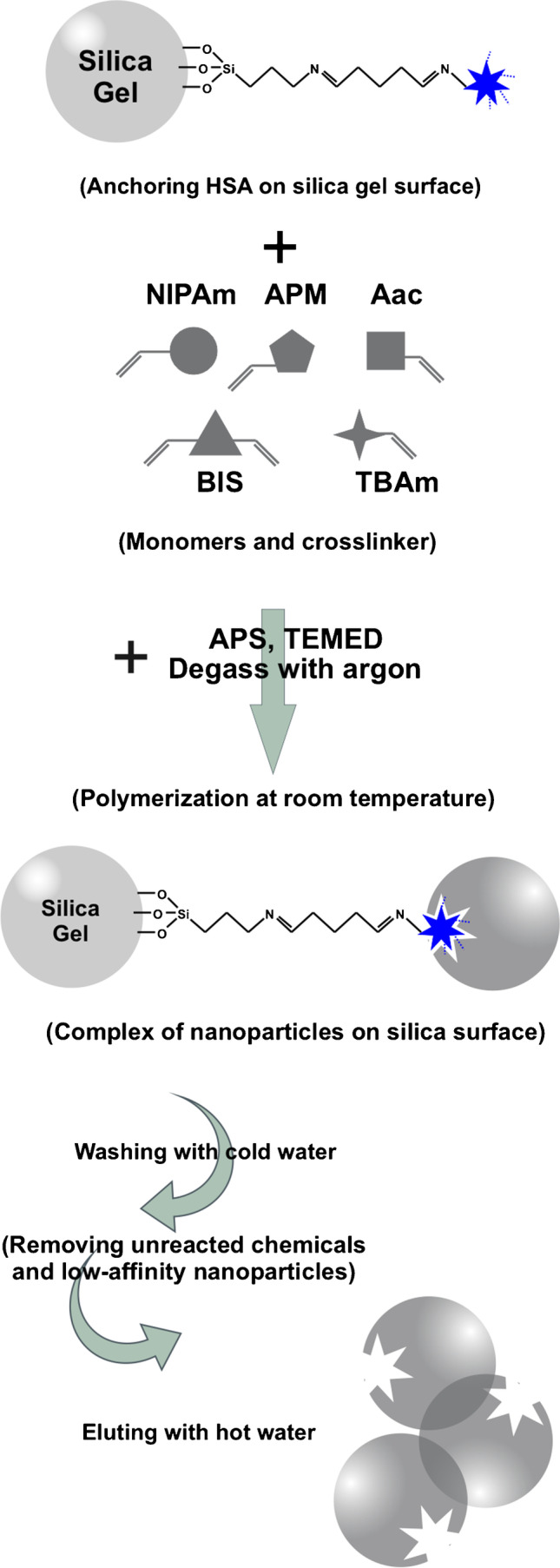
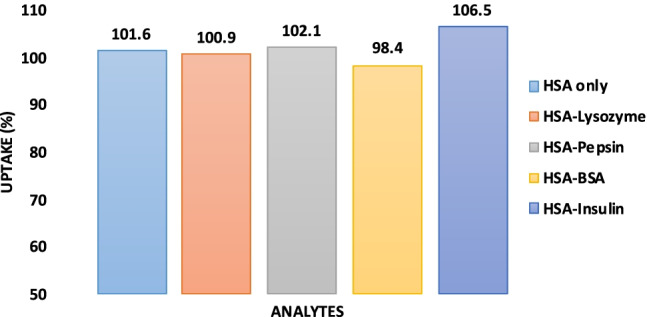
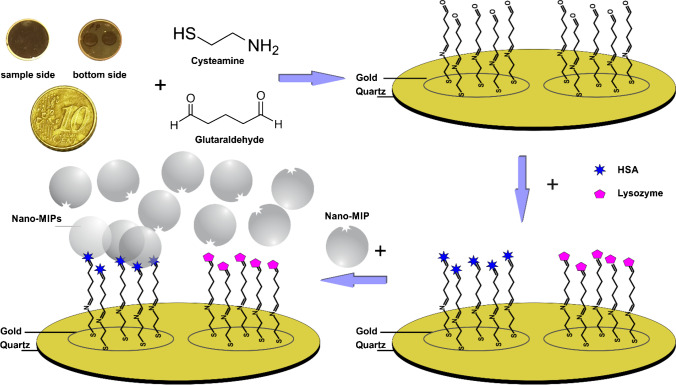
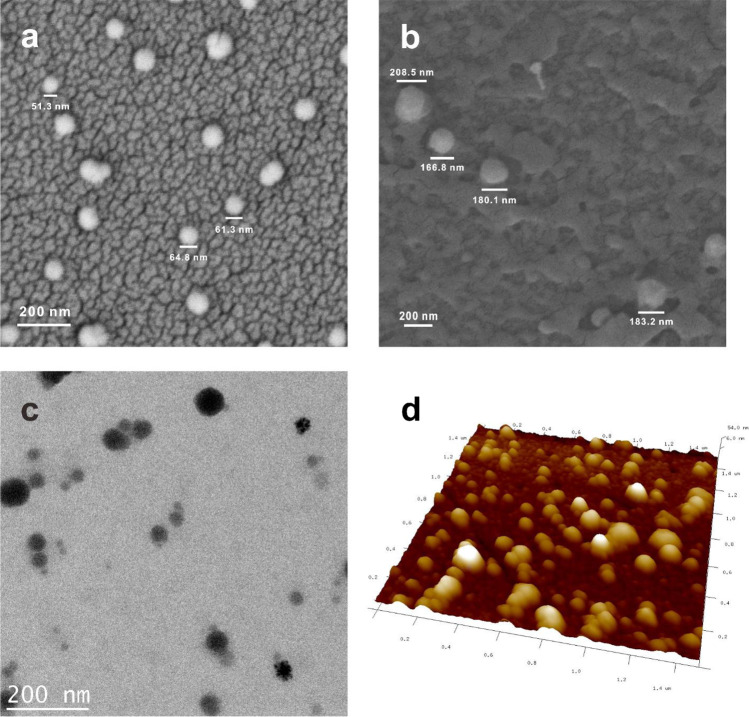
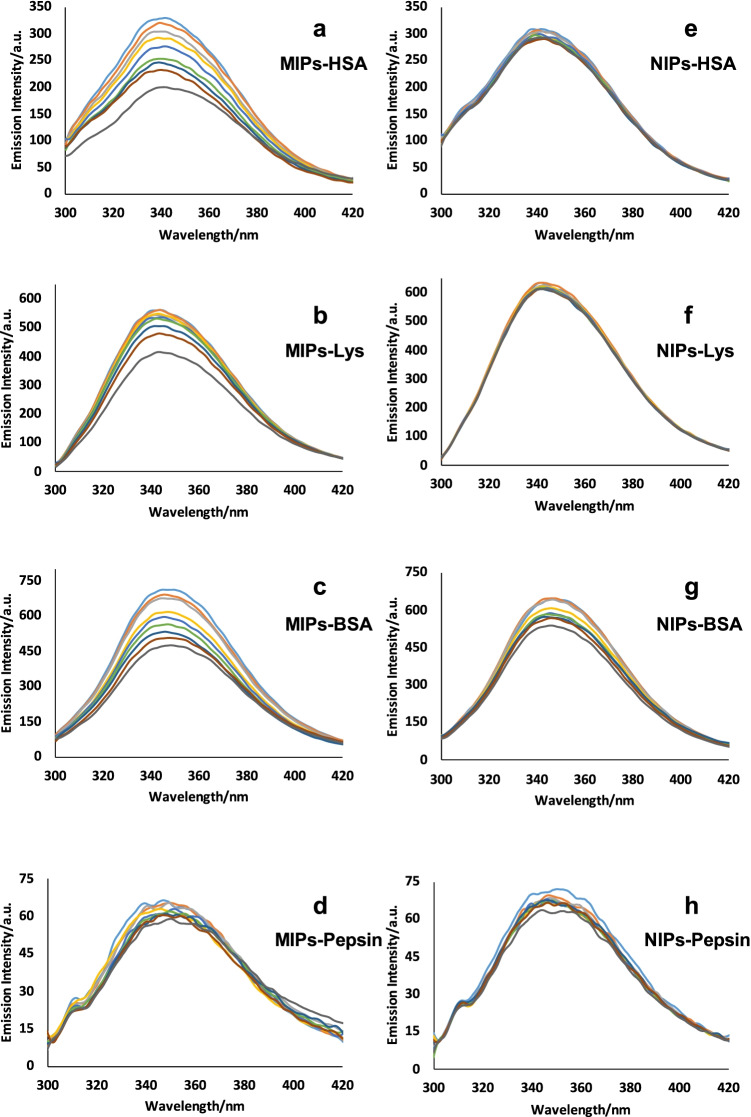
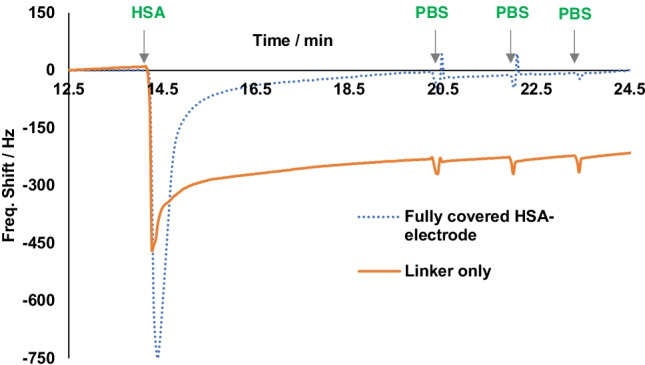
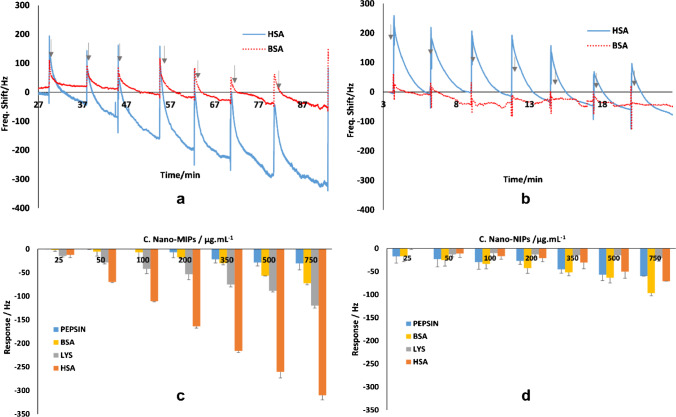
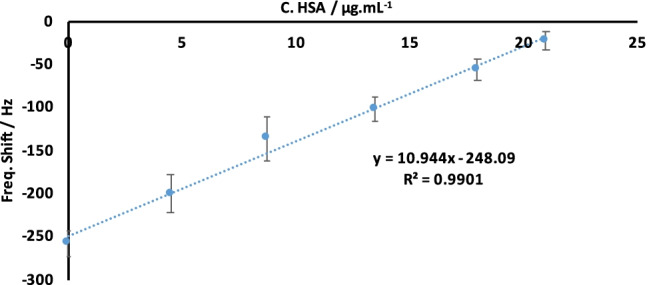
Solid-phase synthesis is an elegant way to create molecularly imprinted polymer nanoparticles (nano-MIPs) comprising a single binding site, i.e. mimics of antibodies. When using human serum albumin (HSA) as the template, one achieves nano-MIPs with 53 ± 19 nm diameter, while non-imprinted polymer nanoparticles (nano-NIPs) reach 191 ± 96 nm. Fluorescence assays lead to Stern-Volmer plots revealing selective binding to HSA with selectivity factors of 1.2 compared to bovine serum albumin (BSA), 1.9 for lysozyme, and 4.1 for pepsin. Direct quartz crystal microbalance (QCM) assays confirm these results: nano-MIPs bind to HSA immobilized on QCM surfaces. This opens the way for competitive QCM-based assays for HSA: adding HSA to nanoparticle solutions indeed reduces binding to the QCM surfaces in a concentration-dependent manner. They achieve a limit of detection (LoD) of 80 nM and a limit of quantification (LoQ) of 244 nM. Furthermore, the assay shows recovery rates around 100% for HSA even in the presence of competing analytes.
固相合成是一种创建包含单个结合位点(即抗体模拟物)的分子印迹聚合物纳米粒子(nano-MIPs)的优雅方法。当用人血清白蛋白(HSA)作为模板时,可以得到直径为 53±19nm 的 nano-MIPs,而非印迹聚合物纳米粒子(nano-NIPs)则达到 191±96nm。荧光分析导致 Stern-Volmer 图揭示了与 HSA 的选择性结合,与牛血清白蛋白(BSA)相比,选择性因子为 1.2,与溶菌酶相比为 1.9,与胃蛋白酶相比为 4.1。直接石英晶体微天平(QCM)分析证实了这些结果:nano-MIPs 与 QCM 表面固定的 HSA 结合。这为基于 QCM 的 HSA 竞争性分析开辟了道路:将 HSA 添加到纳米粒子溶液中确实会以浓度依赖的方式减少与 QCM 表面的结合。它们实现了 80nM 的检测限(LoD)和 244nM 的定量限(LoQ)。此外,即使存在竞争分析物,该测定法对 HSA 的回收率也接近 100%。