The First Department of Internal Medicine, University of Occupational and Environmental Health, Kitakyushu, Japan.
Rheumatology (Oxford). 2021 Dec 24;60(Suppl 6):vi12-vi20. doi: 10.1093/rheumatology/keab609.
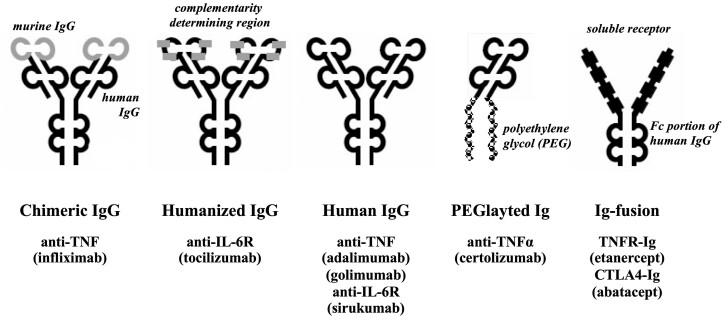
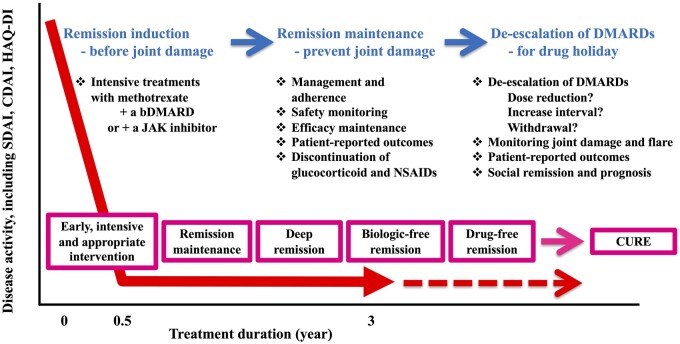
Through treatment with biological DMARDs (bDMARDs) or targeted synthetic (tsDMARDs) such as Janus kinase (JAK) inhibitors in addition to MTX, clinical remission has become a realistic therapeutic goal for the majority of patients with RA, and sustained remission facilitates prevention of joint damage and physical dysfunction. Long-term safety and sustained inhibition of structural changes and physical dysfunction by bDMARDs have been reported. The development of next-generation bDMARDs and expansion of their indications to various autoimmune diseases are expected. Five JAK inhibitors show comparable efficacy to bDMARDs, and the latest ones are effective for overcoming difficult-to-treat RA regardless of prior medications. Patients treated with JAK inhibitors should be adequately screened and monitored for infection, cardiovascular disorders, thrombosis, malignancies and so on. Advances in therapeutic strategies, including the differential use of therapeutic drugs and de-escalation of treatment after remission induction, are prioritized.
通过使用生物 DMARDs(bDMARDs)或靶向合成药物(tsDMARDs),如 Janus 激酶(JAK)抑制剂,联合甲氨蝶呤(MTX)治疗,大多数 RA 患者已能够实现临床缓解,并且持续缓解有助于预防关节损伤和功能障碍。已有报道称,bDMARDs 可长期安全且持续抑制结构改变和功能障碍。预计下一代 bDMARDs 的发展及其适应证将扩展到各种自身免疫性疾病。五种 JAK 抑制剂与 bDMARDs 的疗效相当,而最新的药物无论之前使用何种药物,对于治疗难治性 RA 均有效。使用 JAK 抑制剂治疗的患者应进行充分的筛查和监测,以预防感染、心血管疾病、血栓形成、恶性肿瘤等。治疗策略的进展,包括治疗药物的差异化使用和缓解诱导后的治疗降级,是优先考虑的事项。