de Almeida Versiéri Oliveira, Pereira Renan Augusto, Amantéa Sérgio Luís, Rhoden Cláudia Ramos, Colvero Maurício Obal
Universidade Federal de Ciências da Saúde de Porto Alegre, Programa de Pós-graduação em Pediatria: Atenção à Saúde da Criança e ao Adolescente, Porto Alegre, RS, Brazil.
Universidade Federal de Ciências da Saúde de Porto Alegre, Programa de Pós-graduação em Pediatria: Atenção à Saúde da Criança e ao Adolescente, Porto Alegre, RS, Brazil.
J Pediatr (Rio J). 2022 Sep-Oct;98(5):455-462. doi: 10.1016/j.jped.2021.11.008. Epub 2021 Dec 23.
To describe the relationship of oxidative stress and antioxidant biomarkers in cord blood of premature newborns and the prognosis of diseases in the neonatal period.
This study consists of an integrative review. Searches were conducted in electronic databases Scopus, PubMed, Web of Science, and Medline/Lilacs through the Virtual Library on Health Issues, using the descriptors: "premature infants", "preterm infants", "preterm birth", "preterm", "oxidative stress", "antioxidants", "infant, premature, diseases" and "cord blood". Original articles published between 2016 and 2021 in Portuguese, English, or Spanish, which analyzed oxidative stress and/or antioxidant levels through cord blood of premature newborns and evaluated clinical outcomes, were included.
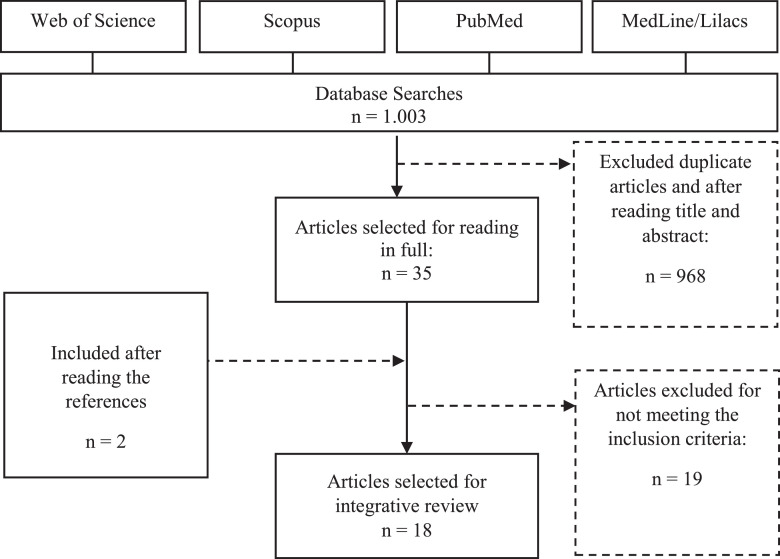
Of the 1,003 studies reviewed, after exclusion of duplicate articles, analysis of titles, abstracts, and full texts, 18 articles were included. 72.2% (n = 13) of analyzed studies reported a positive association between oxidative stress and the development of prematurity-related diseases; 27.7% (n = 5) showed no significant relation. Outcomes that showed a positive association were: intrauterine growth restriction, necrotizing enterocolitis, bronchopulmonary dysplasia, intraventricular hemorrhage, fetal inflammatory response syndrome, early-onset neonatal sepsis, retinopathy of prematurity, morbidity, and mortality.
The analysis of oxidative stress and antioxidants in cord blood of premature newborns may be useful in the prognosis of some pathologies. The consequences of oxidative damage are known to be associated with increased morbidity in the short and long term. Further investigation is needed in this population in order to define normality parameters of biomarkers, clinical manifestations, diagnosis and treatment of these conditions.
描述早产新生儿脐带血中氧化应激与抗氧化生物标志物的关系以及新生儿期疾病的预后。
本研究为综合评价。通过健康问题虚拟图书馆在电子数据库Scopus、PubMed、Web of Science和Medline/Lilacs中进行检索,使用的描述词为:“早产儿”“早产婴儿”“早产”“未足月”“氧化应激”“抗氧化剂”“婴儿,早产,疾病”和“脐带血”。纳入2016年至2021年间发表的葡萄牙语、英语或西班牙语原创文章,这些文章通过早产新生儿脐带血分析氧化应激和/或抗氧化水平并评估临床结局。
在检索的1003项研究中,排除重复文章、分析标题、摘要和全文后,纳入18篇文章。72.2%(n = 13)的分析研究报告氧化应激与早产相关疾病的发生呈正相关;27.7%(n = 5)显示无显著关系。呈正相关的结局包括:宫内生长受限、坏死性小肠结肠炎、支气管肺发育不良、脑室内出血、胎儿炎症反应综合征、早发性新生儿败血症、早产儿视网膜病变、发病率和死亡率。
分析早产新生儿脐带血中的氧化应激和抗氧化剂可能有助于某些疾病的预后判断。已知氧化损伤的后果与短期和长期发病率增加有关。为了确定这些疾病生物标志物的正常参数、临床表现、诊断和治疗,需要对该人群进行进一步研究。