Plant Medical Services, Wetzlar, Germany.
University Hospital of Frankfurt, Company Medical Services, Frankfurt/M., Germany.
GMS J Med Educ. 2021 Nov 15;38(7):Doc115. doi: 10.3205/zma001511. eCollection 2021.
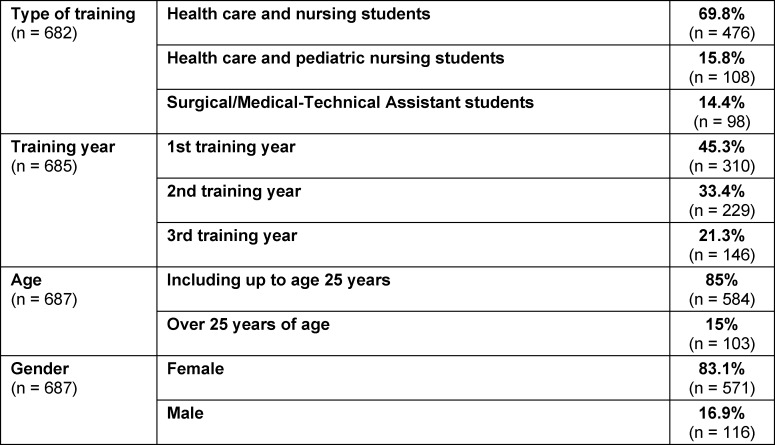
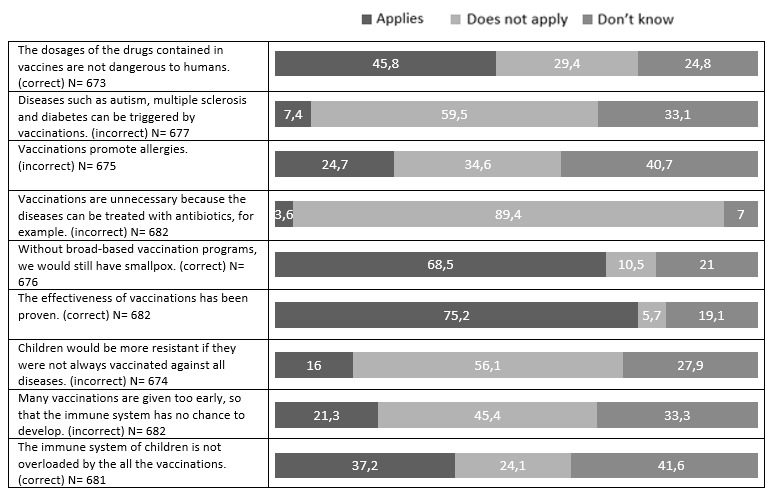
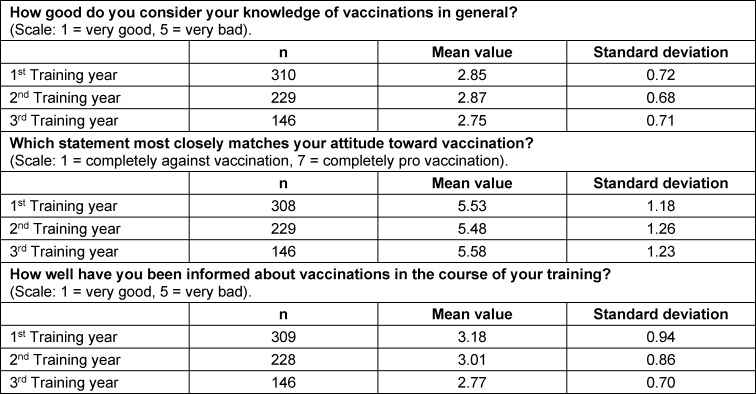
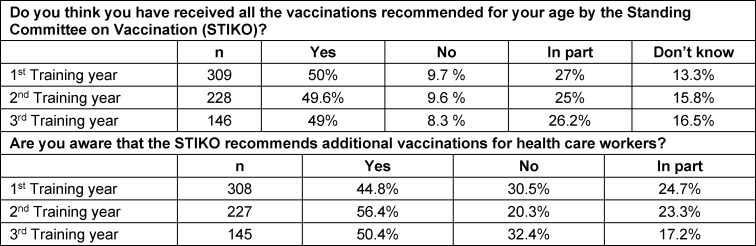
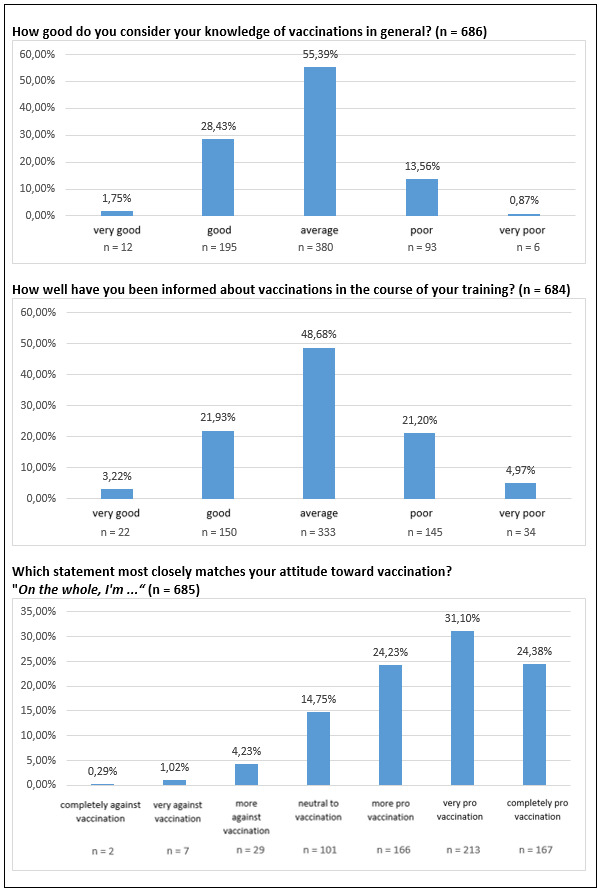
Work-related vaccinations are recommended for employees in nursing and health care professions due to their elevated risk of infection because of job-related exposure. These vaccinations prevent work-related infections, protect patients and help to maintain the medical infrastructure. Thorough training and imparting of knowledge about vaccinations and work-related infections are essential pillars of the vaccination decision and thus for achieving a protective immune status. The present study examines the knowledge, attitudes and behavior of nursing- and health care students in Hesse regarding work-related infections and vaccinations. In spring 2018, seven nursing schools in Hesse took part in an anonymous survey study. A total of 690 surveys from students of various health care professions were included in the study. The content of the survey was based on the recommendations of the Standing Committee on Vaccination (STIKO), a literature review and sample questions from the World Health Organization (WHO) regarding "vaccine hesitancy". Vaccination cards were also evaluated based on the STIKO recommendations concerning standard vaccinations and occupational vaccinations for health care workers. The risk of acquiring a work-related infection was estimated to be quite high over all years of training. Gaps in knowledge were particularly evident in the area of vaccinations. Only three quarter of those surveyed believed that the effectiveness of vaccinations has been proven, and nearly 30% believed that the doses of the drugs used in vaccines were dangerous. Over 80% of the students had never had an influenza vaccination documented in their vaccination card. The knowledge about vaccinations imparted in the course of the education should be expanded. A special course on the subject of vaccinations and the immune system with practical elements could contribute to a better understanding of how vaccinations work and misunderstandings could be eliminated in early stages of the training through the dialog between the students and the teacher in the classroom and the occupational physician as part of preventive occupational health check-ups.
由于与工作相关的接触而使护理和医疗保健专业的员工面临更高的感染风险,因此建议他们接种与工作相关的疫苗。这些疫苗可预防与工作相关的感染,保护患者并有助于维持医疗基础设施。全面的培训和传授有关疫苗和与工作相关的感染的知识是疫苗接种决策的重要支柱,也是实现保护性免疫状态的关键。本研究调查了黑森州护理和医疗保健专业学生对与工作相关的感染和疫苗接种的知识、态度和行为。2018 年春季,黑森州的七所护理学校参加了一项匿名调查研究。共有来自各种医疗保健专业的 690 名学生参与了该研究。调查内容基于疫苗接种常设委员会(STIKO)的建议、文献综述以及世界卫生组织(WHO)关于“疫苗犹豫”的示例问题。还根据 STIKO 关于标准疫苗接种和职业疫苗接种的建议,对疫苗接种卡进行了评估。所有培训年中,与工作相关的感染风险估计都很高。在疫苗接种方面,知识差距尤为明显。只有四分之三的受访者认为疫苗的有效性已得到证明,近 30%的人认为所用药物的剂量是危险的。超过 80%的学生从未在疫苗接种卡中记录过流感疫苗接种。应扩大教育过程中提供的疫苗接种知识。特别的疫苗接种和免疫系统课程,其中包含实践元素,可以帮助学生更好地理解疫苗接种的工作原理,并通过课堂上学生与教师之间的对话以及职业医生作为预防性职业健康检查的一部分,在培训的早期阶段消除误解。