Svobodova Marketa, Skouridou Vasso, Jauset-Rubio Miriam, Viéitez Irene, Fernández-Villar Alberto, Cabrera Alvargonzalez Jorge Julio, Poveda Eva, Bofill Clara Benavent, Sans Teresa, Bashammakh Abdulaziz, Alyoubi Abdulrahman O, O'Sullivan Ciara K
INTERFIBIO Research Group, Departament d'Enginyeria Química, Universitat Rovira i Virgili, Avinguda Països Catalans 26, Tarragona 43007, Spain.
Rare Diseases & Pediatric Medicine Research Group, Galicia Sur Health Research Institute (IIS Galicia Sur), SERGAS-Uvigo, Vigo 36213, Spain.
ACS Omega. 2021 Dec 15;6(51):35657-35666. doi: 10.1021/acsomega.1c05521. eCollection 2021 Dec 28.
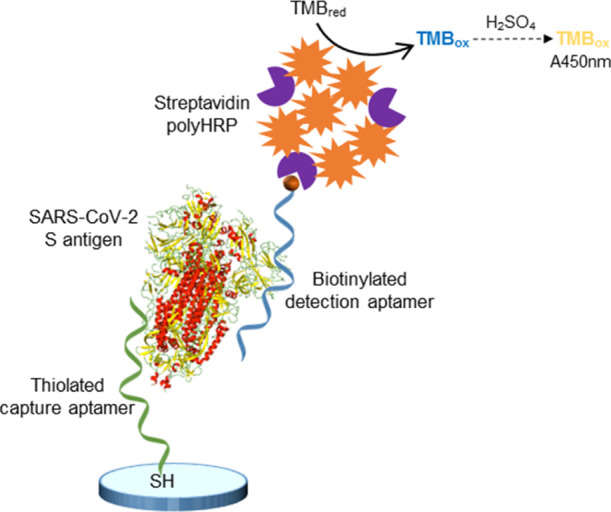
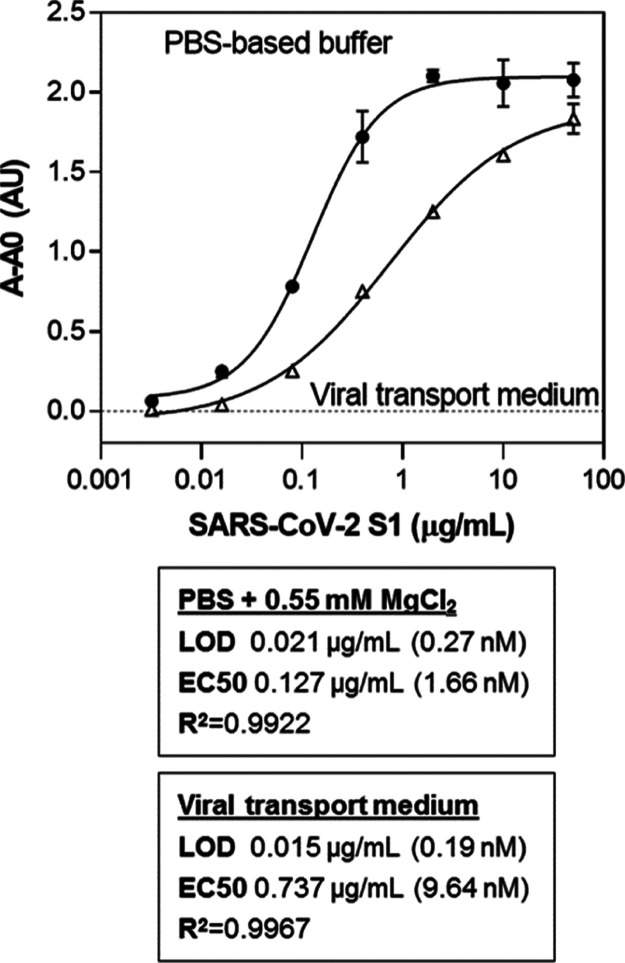
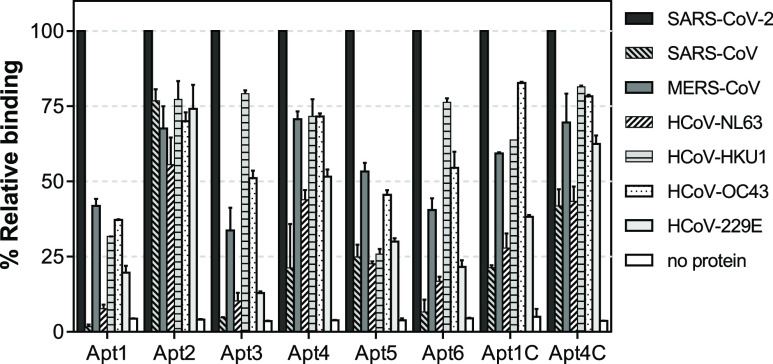
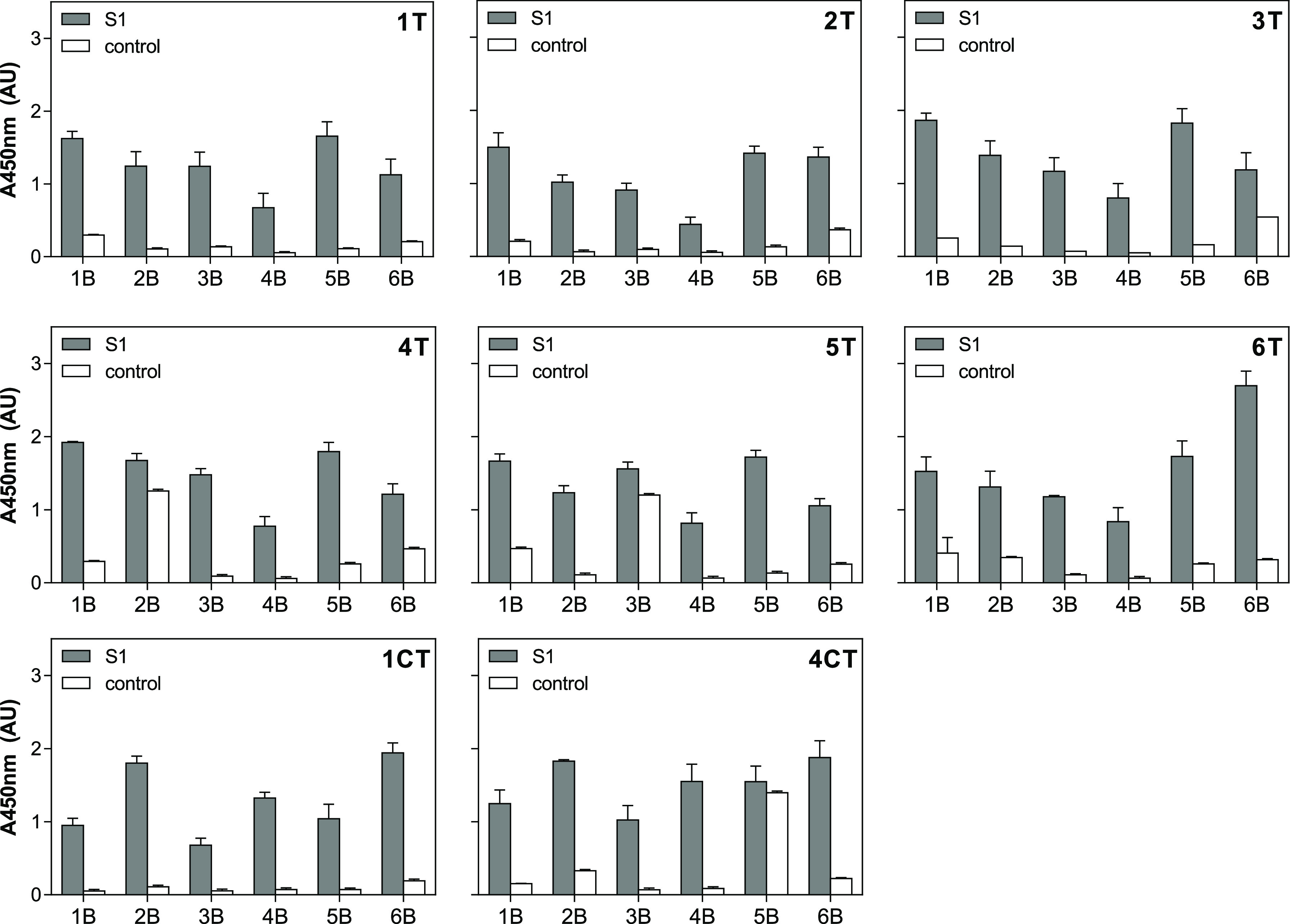
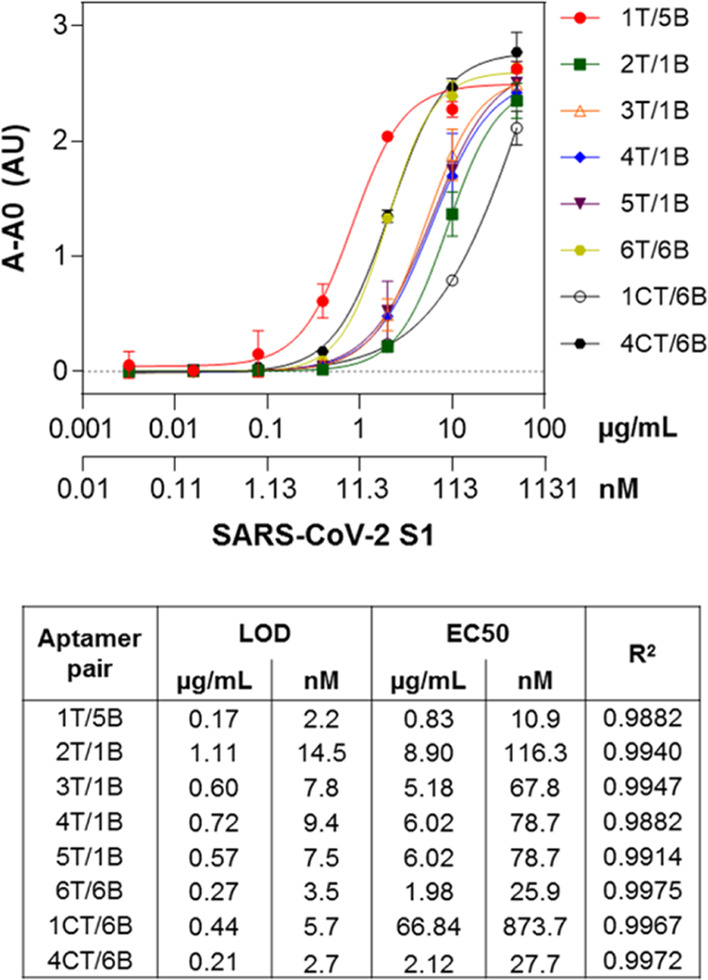
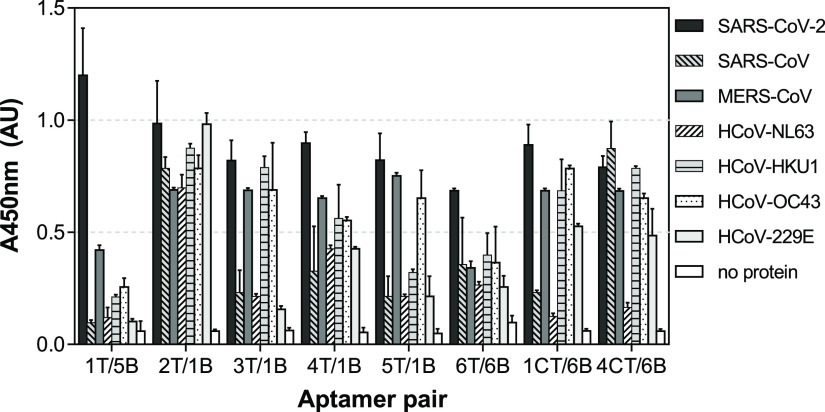
The novel severe acute respiratory syndrome coronavirus (SARS-CoV-2) emerged at the end of 2019, resulting in the ongoing COVID-19 pandemic. The high transmissibility of the virus and the substantial number of asymptomatic individuals have led to an exponential rise in infections worldwide, urgently requiring global containment strategies. Reverse transcription-polymerase chain reaction is the gold standard for the detection of SARS-CoV-2 infections. Antigen tests, targeting the spike (S) or nucleocapsid (N) viral proteins, are considered as complementary tools. Despite their shortcomings in terms of sensitivity and specificity, antigen tests could be deployed for the detection of potentially contagious individuals with high viral loads. In this work, we sought to develop a sandwich aptamer-based assay for the detection of the S protein of SARS-CoV-2. A detailed study on the binding properties of aptamers to the receptor-binding domain of the S protein in search of aptamer pairs forming a sandwich is presented. Screening of aptamer pairs and optimization of assay conditions led to the development of a laboratory-based sandwich assay able to detect 21 ng/mL (270 pM) of the protein with negligible cross-reactivity with the other known human coronaviruses. The detection of 375 pg of the protein in viral transport medium demonstrates the compatibility of the assay with clinical specimens. Finally, successful detection of the S antigen in nasopharyngeal swab samples collected from suspected patients further establishes the suitability of the assay for screening purposes as a complementary tool to assist in the control of the pandemic.
新型严重急性呼吸综合征冠状病毒(SARS-CoV-2)于2019年底出现,导致了持续的COVID-19大流行。该病毒的高传播性以及大量无症状个体导致全球感染人数呈指数级上升,迫切需要全球防控策略。逆转录-聚合酶链反应是检测SARS-CoV-2感染的金标准。针对刺突(S)或核衣壳(N)病毒蛋白的抗原检测被视为补充工具。尽管抗原检测在灵敏度和特异性方面存在不足,但可用于检测病毒载量高的潜在传染性个体。在这项工作中,我们试图开发一种基于适体的夹心分析法来检测SARS-CoV-2的S蛋白。本文详细研究了适体与S蛋白受体结合域的结合特性,以寻找能形成夹心结构的适体对。适体对的筛选和分析条件的优化导致开发出一种基于实验室的夹心分析法,该方法能够检测21 ng/mL(270 pM)的该蛋白,与其他已知人类冠状病毒的交叉反应可忽略不计。在病毒运输介质中检测到375 pg的该蛋白,证明了该分析方法与临床标本的兼容性。最后,在从疑似患者采集的鼻咽拭子样本中成功检测到S抗原,进一步确定了该分析方法作为一种补充工具用于筛查以协助控制大流行的适用性。