Department of Engineering, University of Campania "L. Vanvitelli", Via Roma 29, 81031, Aversa, Italy.
Indivenire srl, Via Alla Cascata 56/C, 38123, Trento, Italy.
Talanta. 2021 Oct 1;233:122532. doi: 10.1016/j.talanta.2021.122532. Epub 2021 May 20.
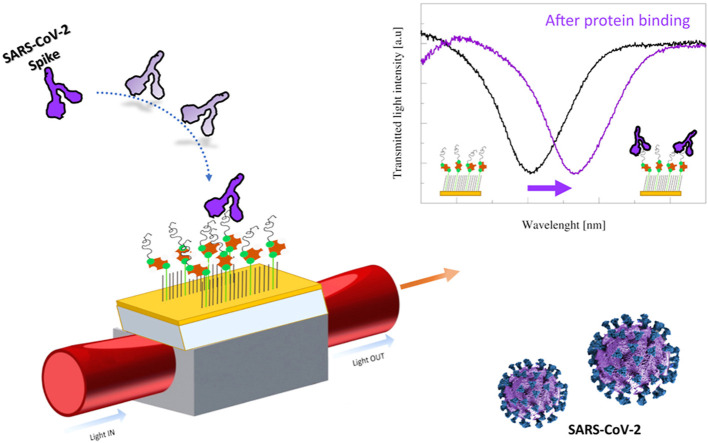
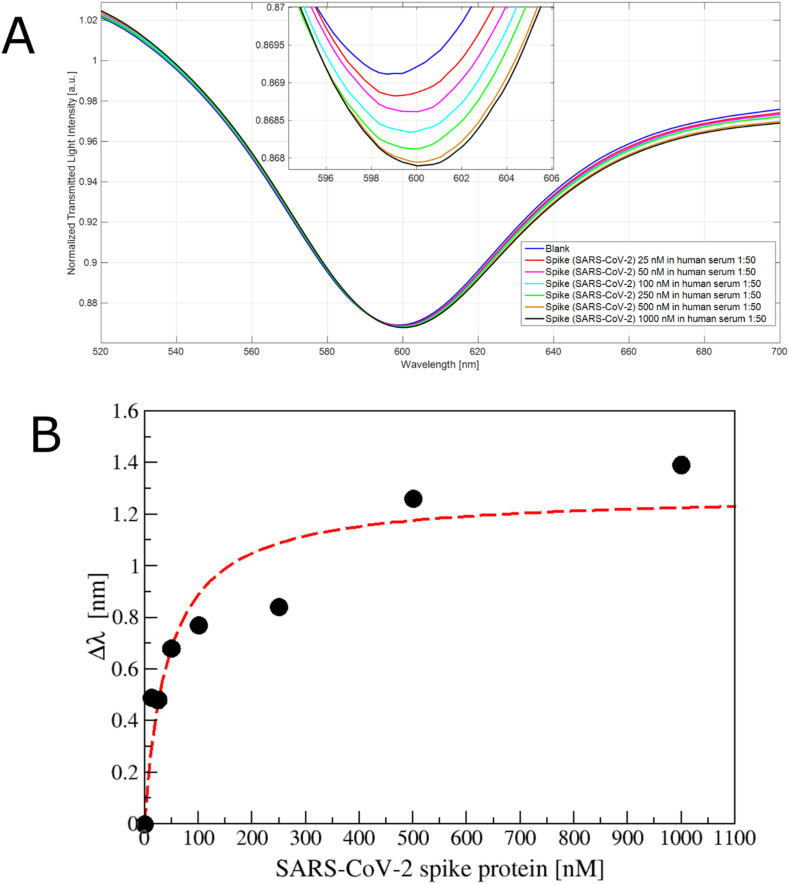
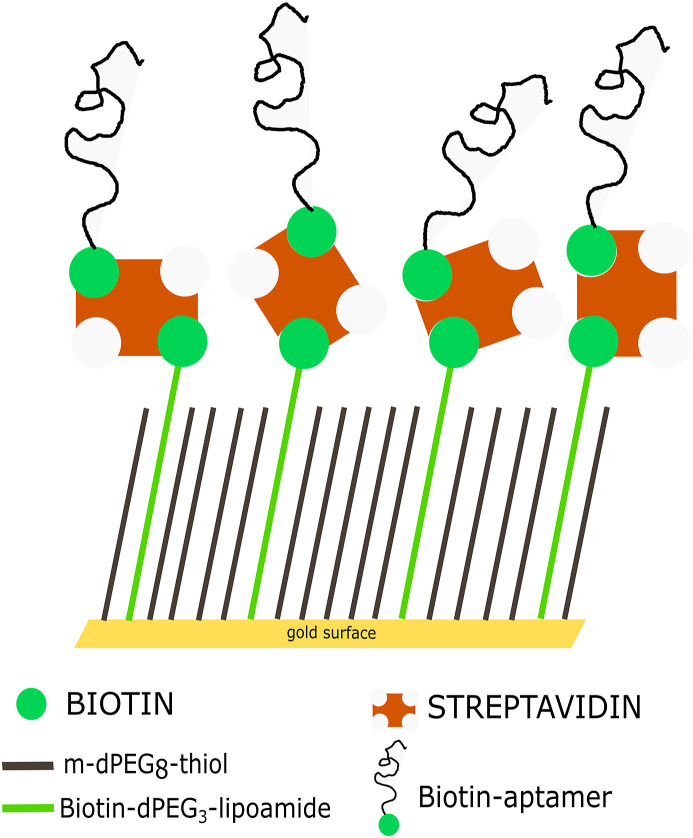
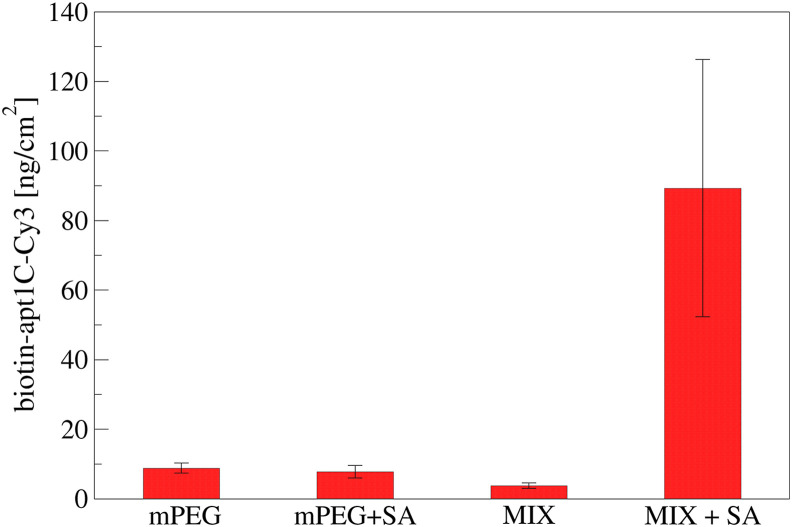
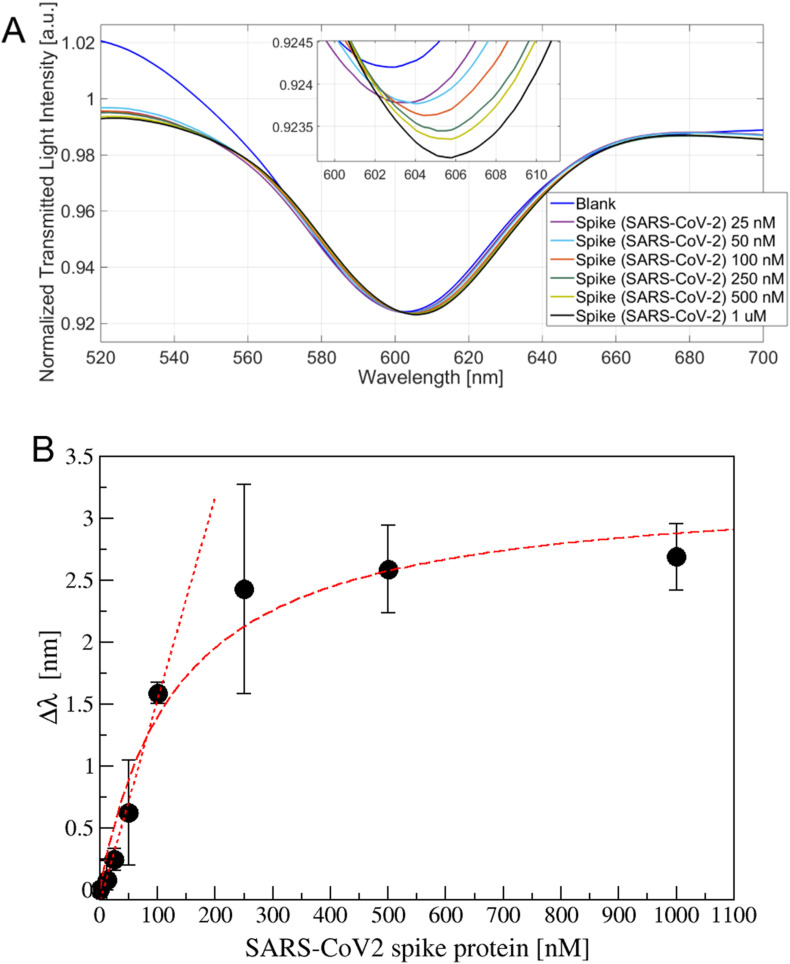
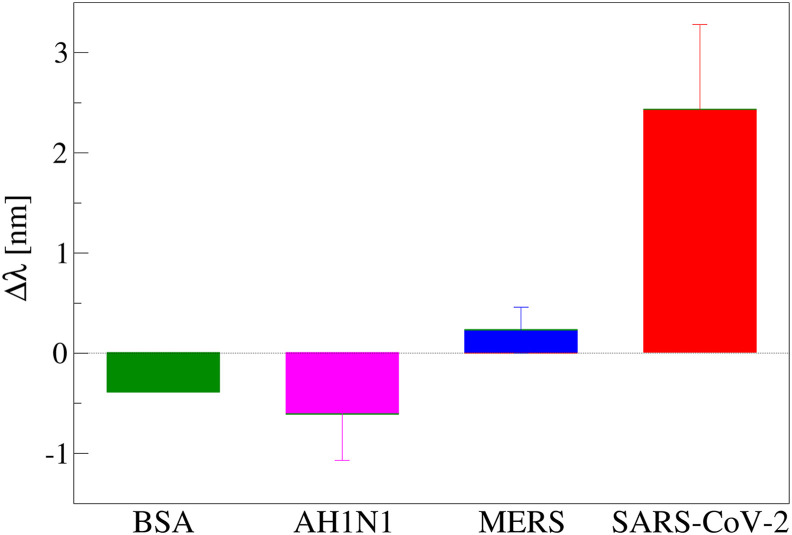
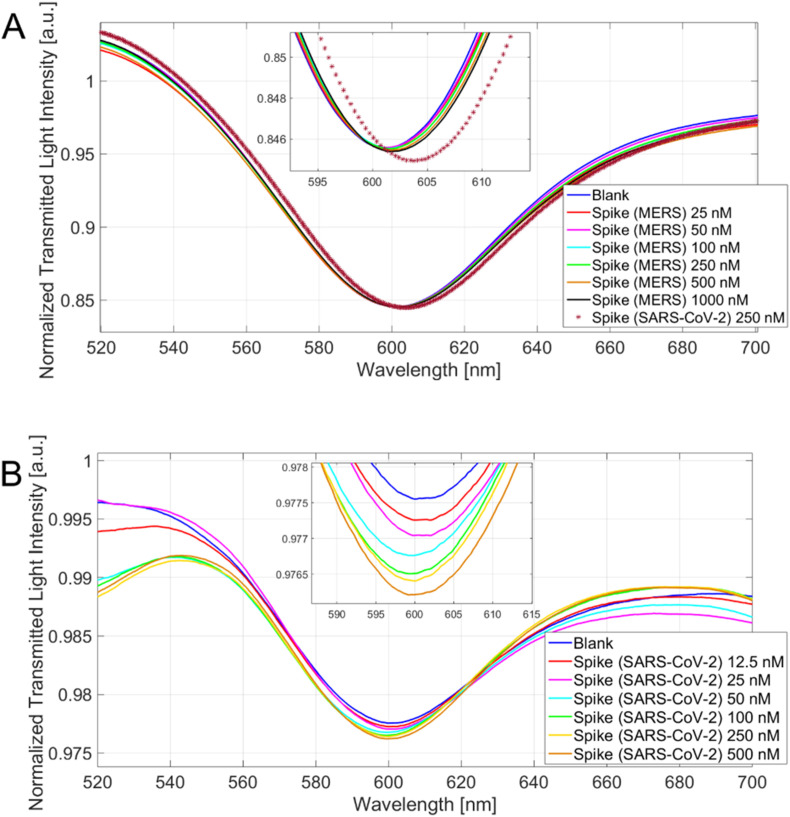
A specific aptameric sequence has been immobilized on short polyethyleneglycol (PEG) interface on gold nano-film deposited on a D-shaped plastic optical fiber (POFs) probe, and the protein binding has been monitored exploiting the very sensitive surface plasmon resonance (SPR) phenomenon. The receptor-binding domain (RBD) of the SARS-CoV-2 spike glycoprotein has been specifically used to develop an aptasensor. Surface analysis techniques coupled to fluorescence microscopy and plasmonic analysis have been utilized to characterize the biointerface. Spanning a wide protein range (25 ÷ 1000 nM), the SARS-Cov-2 spike protein was detected with a Limit of Detection (LoD) of about 37 nM. Different interferents (BSA, AH1N1 hemagglutinin protein and MERS spike protein) have been tested confirming the specificity of our aptasensor. Finally, a preliminary test in diluted human serum encouraged its application in a point-of-care device, since POF-based aptasensor represent a potentially low-cost compact biosensor, characterized by a rapid response, a small size and could be an ideal laboratory portable diagnostic tool.
一段特定的适体序列被固定在短的聚乙二醇(PEG)界面上,该界面位于沉积在 D 型塑料光纤(POF)探针上的金纳米薄膜上,并利用非常敏感的表面等离子体共振(SPR)现象来监测蛋白质结合。已专门使用 SARS-CoV-2 刺突糖蛋白的受体结合域(RBD)来开发适体传感器。已利用表面分析技术结合荧光显微镜和等离子体分析来表征生物界面。SARS-Cov-2 刺突蛋白的检测范围很宽(25÷1000 nM),检测限(LoD)约为 37 nM。已测试了不同的干扰物(BSA、AH1N1 血凝素蛋白和 MERS 刺突蛋白),证实了我们的适体传感器的特异性。最后,在稀释的人血清中的初步测试鼓励将其应用于即时检测设备,因为基于 POF 的适体传感器是一种潜在的低成本紧凑型生物传感器,具有快速响应、体积小的特点,并且可以成为理想的实验室便携式诊断工具。