Oxford Brookes Centre for Nutrition and Health, Faculty of Health and Life Sciences, Oxford Brookes University, Oxford OX3 0BP, UK.
Faculty of Sport, Health and Social Sciences, Solent University, Southampton SO14 0YN, UK.
Nutrients. 2021 Dec 16;13(12):4505. doi: 10.3390/nu13124505.
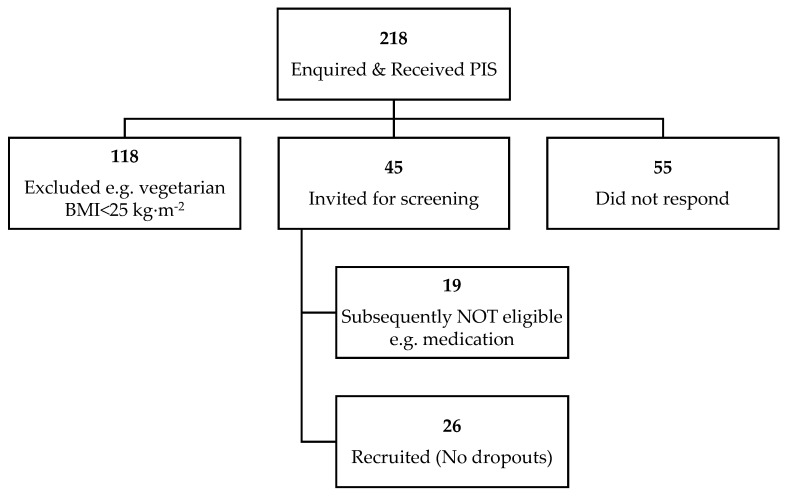
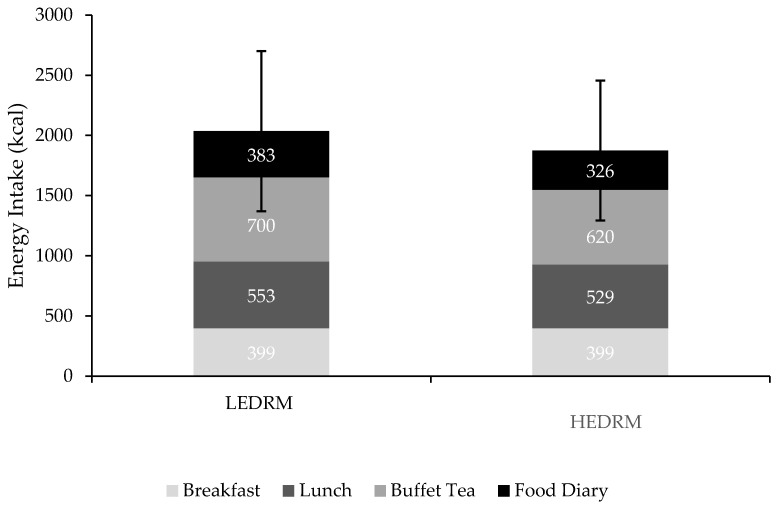
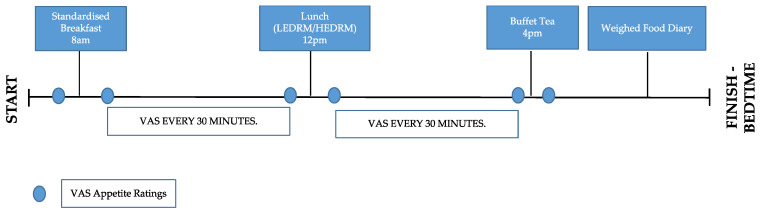
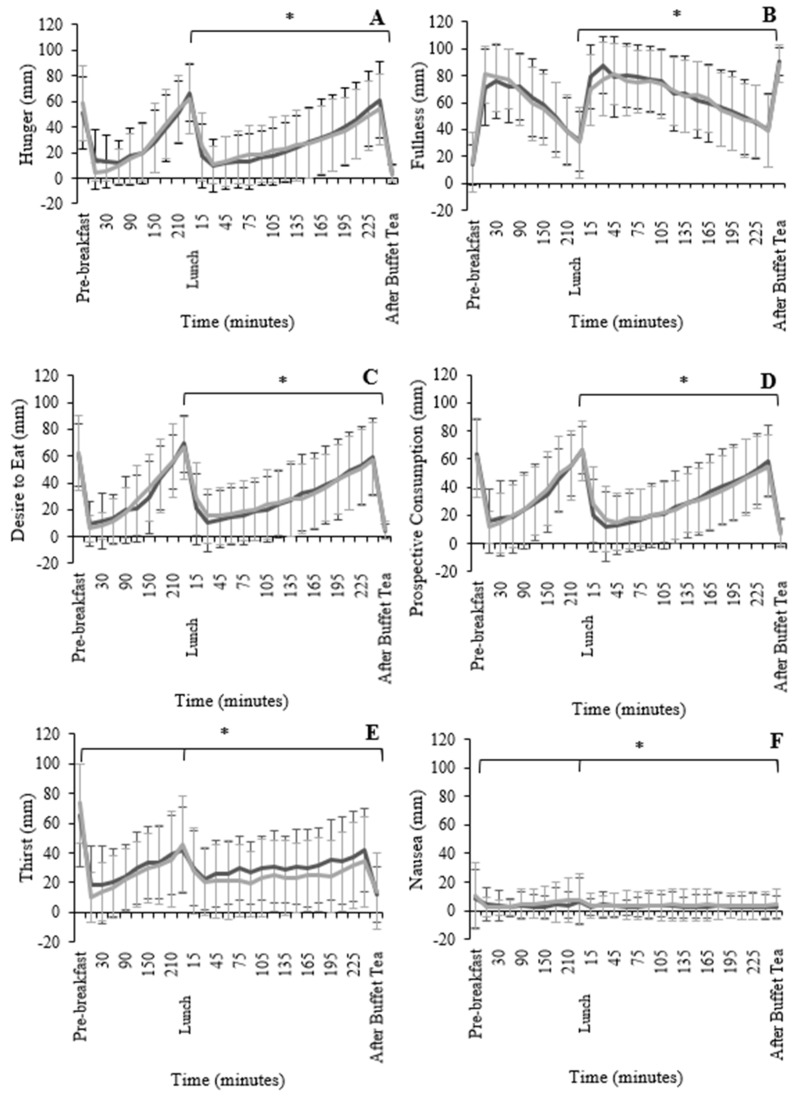
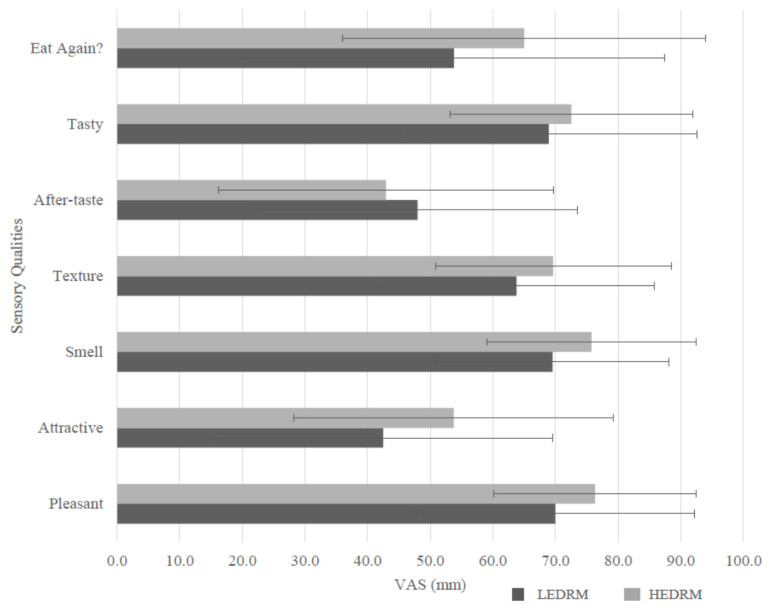
Slimming World (SW), a commercial weight management organisation, has designed a range of low energy-dense ready meals (LEDRMs) in line with their programme. This randomised crossover study compared commercially available equicaloric ready meals differing in energy density on satiety and food intake. It was hypothesised that the LEDRM would reduce energy intake (EI) whilst increasing fullness and reducing hunger compared to higher energy-dense ready meal (HEDRM, control). A total of 26 female participants (aged 18-65 years; body mass index of 28.8 ± 3.0 kg·m) attended two test days. The participants ate a standard breakfast, and four hours later, ate either a LEDRM or HEDRM at lunch. EI was measured four hours later at an tea. Satiety measurements were recorded throughout the day using visual analogue scales and a weighed food diary was completed for the remainder of the day. The results revealed that the LEDRM reduced hunger and increased fullness (both < 0.001). There was no difference in EI at the evening meal between the ready meals ( > 0.05), however, during the whole LEDRM testing day, the participants consumed significantly less fat (7.1%) and saturated fat (3.6%) (both < 0.01), but significantly more carbohydrates, sugars, fibre, protein, and salt (all < 0.01). The results indicate that the participants felt more satiated after consuming ready meals of the same energy content but larger portion size. Despite no significant difference in short-term EI between the ready meals, the results indicated that the LEDRM produced beneficial subjective satiety responses and, therefore, can help to improve the nutritional content of meals i.e., reduce saturated fat consumption.
瘦身世界(SW)是一家商业体重管理组织,根据其计划设计了一系列低能量密度的即食餐(LEDRM)。这项随机交叉研究比较了商业上可获得的能量密度不同的即食餐在饱腹感和食物摄入量上的差异。研究假设 LEDRM 与高能量密度即食餐(HEDRM,对照)相比,会减少能量摄入(EI),同时增加饱腹感,减少饥饿感。共有 26 名女性参与者(年龄 18-65 岁;体重指数 28.8 ± 3.0 kg·m)参加了两项测试日。参与者吃了标准早餐,四小时后,午餐时吃了 LEDRM 或 HEDRM。四小时后,在下午茶时间测量 EI。饱腹感测量全天通过视觉模拟量表记录,全天其余时间完成称重食物日记。结果表明,LEDRM 减少了饥饿感并增加了饱腹感(均 < 0.001)。两种即食餐在晚餐时的 EI 没有差异(> 0.05),然而,在整个 LEDRM 测试日,参与者摄入的脂肪(7.1%)和饱和脂肪(3.6%)明显减少(均 < 0.01),但碳水化合物、糖、纤维、蛋白质和盐的摄入量明显增加(均 < 0.01)。结果表明,参与者在食用相同能量但更大份量的即食餐时感觉更饱。尽管两种即食餐之间的短期 EI 没有显著差异,但结果表明,LEDRM 产生了有益的主观饱腹感反应,因此可以帮助改善餐食的营养成分,即减少饱和脂肪的摄入。