• 文献检索
  • 文档翻译
  • 深度研究
  • 学术资讯
  • Suppr Zotero 插件Zotero 插件
  • 邀请有礼
  • 套餐&价格
  • 历史记录
应用&插件
Suppr Zotero 插件Zotero 插件浏览器插件Mac 客户端Windows 客户端微信小程序
定价
高级版会员购买积分包购买API积分包
服务
文献检索文档翻译深度研究API 文档MCP 服务
关于我们
关于 Suppr公司介绍联系我们用户协议隐私条款
关注我们

Suppr 超能文献

核心技术专利:CN118964589B侵权必究
粤ICP备2023148730 号-1Suppr @ 2026

文献检索

告别复杂PubMed语法,用中文像聊天一样搜索,搜遍4000万医学文献。AI智能推荐,让科研检索更轻松。

立即免费搜索

文件翻译

保留排版,准确专业,支持PDF/Word/PPT等文件格式,支持 12+语言互译。

免费翻译文档

深度研究

AI帮你快速写综述,25分钟生成高质量综述,智能提取关键信息,辅助科研写作。

立即免费体验

评估一种新型人工智能系统,以监测和评估住院老年患者的能量和宏量营养素摄入。

Evaluation of a Novel Artificial Intelligence System to Monitor and Assess Energy and Macronutrient Intake in Hospitalised Older Patients.

机构信息

ARTORG Center for Biomedical Engineering Research, University of Bern, Murtenstrasse 50, 3008 Bern, Switzerland.

Geriatrische Klinik St. Gallen AG, Rorschacherstrasse 94, 9000 St. Gallen, Switzerland.

出版信息

Nutrients. 2021 Dec 17;13(12):4539. doi: 10.3390/nu13124539.

DOI:10.3390/nu13124539
PMID:34960091
原文链接:https://pmc.ncbi.nlm.nih.gov/articles/PMC8706142/
Abstract

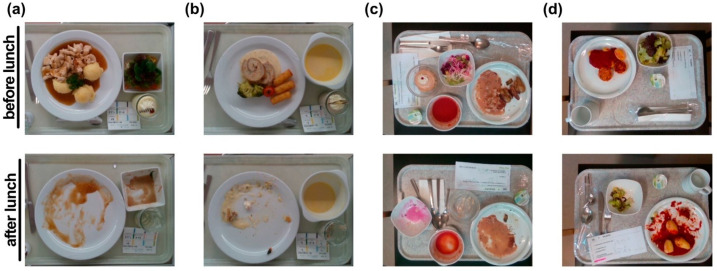
Malnutrition is common, especially among older, hospitalised patients, and is associated with higher mortality, longer hospitalisation stays, infections, and loss of muscle mass. It is therefore of utmost importance to employ a proper method for dietary assessment that can be used for the identification and management of malnourished hospitalised patients. In this study, we propose an automated Artificial Intelligence (AI)-based system that receives input images of the meals before and after their consumption and is able to estimate the patient's energy, carbohydrate, protein, fat, and fatty acids intake. The system jointly segments the images into the different food components and plate types, estimates the volume of each component before and after consumption, and calculates the energy and macronutrient intake for every meal, based on the kitchen's menu database. Data acquired from an acute geriatric hospital as well as from our previous study were used for the fine-tuning and evaluation of the system. The results from both our system and the hospital's standard procedure were compared to the estimations of experts. Agreement was better with the system, suggesting that it has the potential to replace standard clinical procedures with a positive impact on time spent directly with the patients.

摘要

营养不良很常见,尤其是在年老、住院的患者中,并且与更高的死亡率、更长的住院时间、感染和肌肉量损失有关。因此,采用适当的饮食评估方法来识别和管理营养不良的住院患者至关重要。在这项研究中,我们提出了一种基于人工智能 (AI) 的自动化系统,该系统接收患者进食前后的图像输入,并能够估计患者的能量、碳水化合物、蛋白质、脂肪和脂肪酸摄入量。该系统联合对图像进行分段,将不同的食物成分和餐盘类型分开,估计进食前后每个成分的体积,并根据厨房的菜单数据库计算每餐的能量和宏量营养素摄入量。从一家急性老年病医院和我们之前的研究中获取的数据用于系统的微调与评估。我们的系统和医院标准程序的结果与专家的估计进行了比较。我们的系统与专家的估计结果更为一致,这表明它有可能用积极的影响取代标准的临床程序,直接与患者进行接触。

https://cdn.ncbi.nlm.nih.gov/pmc/blobs/65fa/8706142/aa9b887b5344/nutrients-13-04539-g009.jpg
https://cdn.ncbi.nlm.nih.gov/pmc/blobs/65fa/8706142/b11f50eb4466/nutrients-13-04539-g001.jpg
https://cdn.ncbi.nlm.nih.gov/pmc/blobs/65fa/8706142/18df02a21685/nutrients-13-04539-g002.jpg
https://cdn.ncbi.nlm.nih.gov/pmc/blobs/65fa/8706142/ada60e31d52e/nutrients-13-04539-g003.jpg
https://cdn.ncbi.nlm.nih.gov/pmc/blobs/65fa/8706142/b64a5769487d/nutrients-13-04539-g004.jpg
https://cdn.ncbi.nlm.nih.gov/pmc/blobs/65fa/8706142/aa71168b1810/nutrients-13-04539-g005.jpg
https://cdn.ncbi.nlm.nih.gov/pmc/blobs/65fa/8706142/5688f7e64434/nutrients-13-04539-g006.jpg
https://cdn.ncbi.nlm.nih.gov/pmc/blobs/65fa/8706142/ef2dda23f612/nutrients-13-04539-g007.jpg
https://cdn.ncbi.nlm.nih.gov/pmc/blobs/65fa/8706142/e65dab3faac9/nutrients-13-04539-g008.jpg
https://cdn.ncbi.nlm.nih.gov/pmc/blobs/65fa/8706142/aa9b887b5344/nutrients-13-04539-g009.jpg
https://cdn.ncbi.nlm.nih.gov/pmc/blobs/65fa/8706142/b11f50eb4466/nutrients-13-04539-g001.jpg
https://cdn.ncbi.nlm.nih.gov/pmc/blobs/65fa/8706142/18df02a21685/nutrients-13-04539-g002.jpg
https://cdn.ncbi.nlm.nih.gov/pmc/blobs/65fa/8706142/ada60e31d52e/nutrients-13-04539-g003.jpg
https://cdn.ncbi.nlm.nih.gov/pmc/blobs/65fa/8706142/b64a5769487d/nutrients-13-04539-g004.jpg
https://cdn.ncbi.nlm.nih.gov/pmc/blobs/65fa/8706142/aa71168b1810/nutrients-13-04539-g005.jpg
https://cdn.ncbi.nlm.nih.gov/pmc/blobs/65fa/8706142/5688f7e64434/nutrients-13-04539-g006.jpg
https://cdn.ncbi.nlm.nih.gov/pmc/blobs/65fa/8706142/ef2dda23f612/nutrients-13-04539-g007.jpg
https://cdn.ncbi.nlm.nih.gov/pmc/blobs/65fa/8706142/e65dab3faac9/nutrients-13-04539-g008.jpg
https://cdn.ncbi.nlm.nih.gov/pmc/blobs/65fa/8706142/aa9b887b5344/nutrients-13-04539-g009.jpg

相似文献

1
Evaluation of a Novel Artificial Intelligence System to Monitor and Assess Energy and Macronutrient Intake in Hospitalised Older Patients.评估一种新型人工智能系统,以监测和评估住院老年患者的能量和宏量营养素摄入。
Nutrients. 2021 Dec 17;13(12):4539. doi: 10.3390/nu13124539.
2
An Artificial Intelligence-Based System for Nutrient Intake Assessment of Hospitalised Patients.一种基于人工智能的住院患者营养摄入评估系统。
Annu Int Conf IEEE Eng Med Biol Soc. 2019 Jul;2019:5696-5699. doi: 10.1109/EMBC.2019.8856889.
3
Evaluation of a pilot volunteer feeding assistance program: influences on the dietary intakes of elderly hospitalised patients and lessons learnt.试点志愿者喂养辅助计划评估:对住院老年患者饮食摄入的影响及经验教训。
J Nutr Health Aging. 2015 Feb;19(2):206-10. doi: 10.1007/s12603-014-0529-x.
4
goFOOD: An Artificial Intelligence System for Dietary Assessment.goFOOD:一个用于膳食评估的人工智能系统。
Sensors (Basel). 2020 Jul 31;20(15):4283. doi: 10.3390/s20154283.
5
During Hospitalization, Older Patients at Risk for Malnutrition Consume <0.65 Grams of Protein per Kilogram Body Weight per Day.住院期间,有营养不良风险的老年患者每天每公斤体重摄入的蛋白质<0.65 克。
Nutr Clin Pract. 2020 Aug;35(4):655-663. doi: 10.1002/ncp.10542. Epub 2020 Jun 24.
6
The Impact of Trained Volunteer Mealtime Assistants on the Dietary Intake of Older Female In-Patients: The Southampton Mealtime Assistance Study.训练有素的志愿者用餐助手对老年女性住院患者饮食摄入的影响:南安普顿用餐援助研究。
J Nutr Health Aging. 2017;21(3):320-328. doi: 10.1007/s12603-016-0791-1.
7
Validity of a questionnaire for the semi-quantitative evaluation of dietary intake of hospitalised patients compared to weighed records.用于半定量评估住院患者膳食摄入量的问卷与称重记录相比的有效性。
J Hum Nutr Diet. 2012 Dec;25(6):526-33. doi: 10.1111/j.1365-277X.2012.01285.x. Epub 2012 Aug 21.
8
Improving nutrition care and diet intake for hospitalised older people at risk of malnutrition through a nurse-driven mealtime assistance bundle.通过护士主导的用餐时间辅助套餐改善有营养不良风险的住院老年人的营养护理和饮食摄入。
Int J Older People Nurs. 2024 Jan;19(1):e12590. doi: 10.1111/opn.12590. Epub 2023 Nov 21.
9
Mealtime care and dietary intake in older psychiatric hospital inpatient: A multiple case study.老年精神科住院患者的进餐护理和饮食摄入:一项多案例研究。
J Adv Nurs. 2021 Mar;77(3):1490-1500. doi: 10.1111/jan.14728. Epub 2020 Dec 16.
10
Caloric intake and eating behavior in infants and toddlers with cystic fibrosis.患有囊性纤维化的婴幼儿的热量摄入与饮食行为
Pediatrics. 2002 May;109(5):E75-5. doi: 10.1542/peds.109.5.e75.

引用本文的文献

1
Mismatch Between Perceived and Actual Dietary Nutrition in Hospitalized Cardiovascular Patients and Clinicians: A Cross-Sectional Assessment and Recommendations for Improvement.住院心血管患者与临床医生对饮食营养的认知与实际情况的差异:一项横断面评估及改进建议
Nutrients. 2025 Aug 13;17(16):2624. doi: 10.3390/nu17162624.
2
Personalized Nutrition Strategies for Patients in the Intensive Care Unit: A Narrative Review on the Future of Critical Care Nutrition.重症监护病房患者的个性化营养策略:关于重症监护营养未来的叙述性综述
Nutrients. 2025 May 13;17(10):1659. doi: 10.3390/nu17101659.
3
Validity and accuracy of artificial intelligence-based dietary intake assessment methods: a systematic review.

本文引用的文献

1
Management of disease-related malnutrition for patients being treated in hospital.医院治疗患者疾病相关营养不良的管理。
Lancet. 2021 Nov 20;398(10314):1927-1938. doi: 10.1016/S0140-6736(21)01451-3. Epub 2021 Oct 14.
2
Malnutrition diagnoses and associated outcomes in hospitalized patients: United States, 2018.住院患者的营养不良诊断及相关结局:美国,2018 年。
Nutr Clin Pract. 2021 Oct;36(5):957-969. doi: 10.1002/ncp.10771. Epub 2021 Sep 6.
3
Nutritional risk at hospital admission is associated with prolonged length of hospital stay in old patients with COVID-19.
基于人工智能的膳食摄入量评估方法的有效性和准确性:一项系统综述。
Br J Nutr. 2025 May 14;133(9):1241-1253. doi: 10.1017/S0007114525000522. Epub 2025 Apr 10.
4
Navigating next-gen nutrition care using artificial intelligence-assisted dietary assessment tools-a scoping review of potential applications.使用人工智能辅助饮食评估工具引领下一代营养护理——潜在应用的范围综述
Front Nutr. 2025 Jan 23;12:1518466. doi: 10.3389/fnut.2025.1518466. eCollection 2025.
5
Artificial Intelligence Applications to Measure Food and Nutrient Intakes: Scoping Review.人工智能在测量食物和营养素摄入量中的应用:范围综述。
J Med Internet Res. 2024 Nov 28;26:e54557. doi: 10.2196/54557.
6
The Role of Artificial Intelligence in Nutrition Research: A Scoping Review.人工智能在营养研究中的作用:范围综述。
Nutrients. 2024 Jun 28;16(13):2066. doi: 10.3390/nu16132066.
7
Artificial Intelligence in the Intensive Care Unit: Current Evidence on an Inevitable Future Tool.重症监护病房中的人工智能:关于一种不可避免的未来工具的当前证据。
Cureus. 2024 May 7;16(5):e59797. doi: 10.7759/cureus.59797. eCollection 2024 May.
8
AI-based digital image dietary assessment methods compared to humans and ground truth: a systematic review.基于人工智能的数字图像膳食评估方法与人类和真实数据的比较:系统评价。
Ann Med. 2023;55(2):2273497. doi: 10.1080/07853890.2023.2273497. Epub 2023 Dec 7.
9
Technology to Automatically Record Eating Behavior in Real Life: A Systematic Review.技术自动记录现实生活中的饮食行为:系统评价。
Sensors (Basel). 2023 Sep 8;23(18):7757. doi: 10.3390/s23187757.
10
The Nutritional Content of Meal Images in Free-Living Conditions-Automatic Assessment with goFOOD.自由生活条件下膳食图像的营养成分——使用 goFOOD 进行自动评估。
Nutrients. 2023 Sep 2;15(17):3835. doi: 10.3390/nu15173835.
入院时的营养风险与 COVID-19 老年患者的住院时间延长有关。
Clin Nutr. 2022 Dec;41(12):3085-3088. doi: 10.1016/j.clnu.2021.03.017. Epub 2021 Mar 23.
4
DietSensor: Automatic Dietary Intake Measurement Using Mobile 3D Scanning Sensor for Diabetic Patients.DietSensor:使用移动 3D 扫描传感器自动测量饮食摄入量,适用于糖尿病患者。
Sensors (Basel). 2020 Jun 15;20(12):3380. doi: 10.3390/s20123380.
5
An Artificial Intelligence-Based System for Nutrient Intake Assessment of Hospitalised Patients.一种基于人工智能的住院患者营养摄入评估系统。
Annu Int Conf IEEE Eng Med Biol Soc. 2019 Jul;2019:5696-5699. doi: 10.1109/EMBC.2019.8856889.
6
Evidence-based nutrition for the malnourished, hospitalised patient: one bite at a time.循证营养治疗营养不良的住院患者:一口一口来。
Swiss Med Wkly. 2019 Aug 11;149:w20112. doi: 10.4414/smw.2019.20112. eCollection 2019 Jul 29.
7
Differences in the validity of a visual estimation method for determining patients' meal intake between various meal types and supplied food items.不同餐型和供餐食物中,视觉估计法评估患者进食量的有效性存在差异。
Clin Nutr. 2019 Feb;38(1):213-219. doi: 10.1016/j.clnu.2018.01.031. Epub 2018 Feb 15.
8
Malnutrition upon Hospital Admission in Geriatric Patients: Why Assess It?老年患者入院时的营养不良:为何要进行评估?
Front Nutr. 2017 Oct 30;4:50. doi: 10.3389/fnut.2017.00050. eCollection 2017.
9
ESPEN guidelines on nutritional support for polymorbid internal medicine patients.ESPEN 指南:内科多病共存患者的营养支持。
Clin Nutr. 2018 Feb;37(1):336-353. doi: 10.1016/j.clnu.2017.06.025. Epub 2017 Jul 24.
10
Validation of the Photography Method for Nutritional Intake Assessment in Hospitalized Elderly Subjects.住院老年患者营养摄入评估摄影方法的验证
J Nutr Health Aging. 2017;21(6):614-621. doi: 10.1007/s12603-016-0814-y.