• 文献检索
  • 文档翻译
  • 深度研究
  • 学术资讯
  • Suppr Zotero 插件Zotero 插件
  • 邀请有礼
  • 套餐&价格
  • 历史记录
应用&插件
Suppr Zotero 插件Zotero 插件浏览器插件Mac 客户端Windows 客户端微信小程序
定价
高级版会员购买积分包购买API积分包
服务
文献检索文档翻译深度研究API 文档MCP 服务
关于我们
关于 Suppr公司介绍联系我们用户协议隐私条款
关注我们

Suppr 超能文献

核心技术专利:CN118964589B侵权必究
粤ICP备2023148730 号-1Suppr @ 2026

文献检索

告别复杂PubMed语法,用中文像聊天一样搜索,搜遍4000万医学文献。AI智能推荐,让科研检索更轻松。

立即免费搜索

文件翻译

保留排版,准确专业,支持PDF/Word/PPT等文件格式,支持 12+语言互译。

免费翻译文档

深度研究

AI帮你快速写综述,25分钟生成高质量综述,智能提取关键信息,辅助科研写作。

立即免费体验

goFOOD:一个用于膳食评估的人工智能系统。

goFOOD: An Artificial Intelligence System for Dietary Assessment.

机构信息

ARTORG Center for Biomedical Engineering Research, University of Bern, 3008 Bern, Switzerland.

Division of Endocrinology, Baltimore Veterans Administration Medical Center, Baltimore, MD 21201, USA.

出版信息

Sensors (Basel). 2020 Jul 31;20(15):4283. doi: 10.3390/s20154283.

DOI:10.3390/s20154283
PMID:32752007
原文链接:https://pmc.ncbi.nlm.nih.gov/articles/PMC7436102/
Abstract

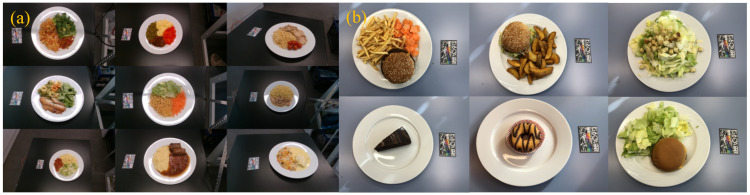
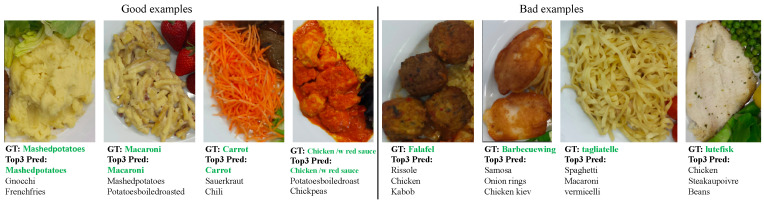
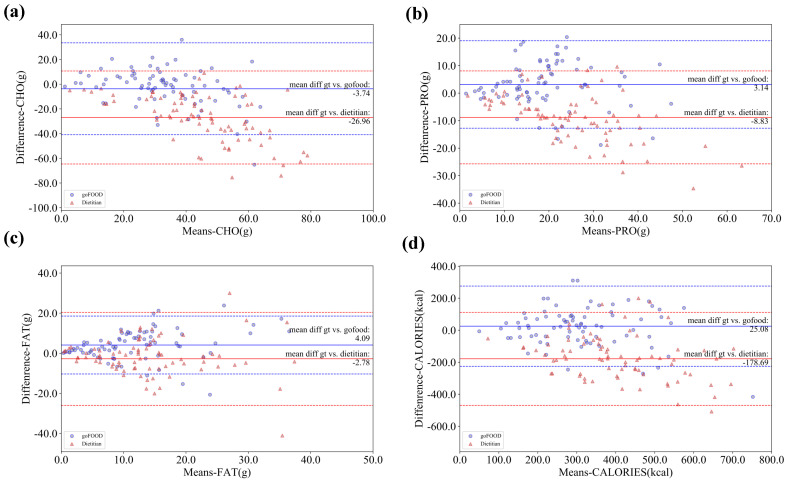
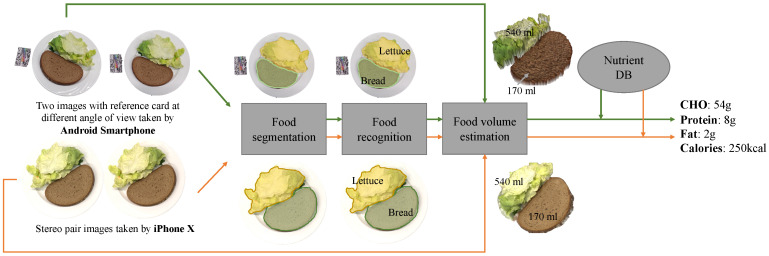
Accurate estimation of nutritional information may lead to healthier diets and better clinical outcomes. We propose a dietary assessment system based on artificial intelligence (AI), named goFOOD. The system can estimate the calorie and macronutrient content of a meal, on the sole basis of food images captured by a smartphone. goFOOD requires an input of two meal images or a short video. For conventional single-camera smartphones, the images must be captured from two different viewing angles; smartphones equipped with two rear cameras require only a single press of the shutter button. The deep neural networks are used to process the two images and implements food detection, segmentation and recognition, while a 3D reconstruction algorithm estimates the food's volume. Each meal's calorie and macronutrient content is calculated from the food category, volume and the nutrient database. goFOOD supports 319 fine-grained food categories, and has been validated on two multimedia databases that contain non-standardized and fast food meals. The experimental results demonstrate that goFOOD performed better than experienced dietitians on the non-standardized meal database, and was comparable to them on the fast food database. goFOOD provides a simple and efficient solution to the end-user for dietary assessment.

摘要

准确估计营养信息可能会导致更健康的饮食和更好的临床结果。我们提出了一种基于人工智能(AI)的饮食评估系统,名为 goFOOD。该系统可以仅根据智能手机拍摄的食物图像来估计膳食的卡路里和宏量营养素含量。goFOOD 需要输入两张膳食图像或短视频。对于传统的单摄像头智能手机,图像必须从两个不同的视角拍摄;配备两个后置摄像头的智能手机只需按下快门按钮一次。深度神经网络用于处理两张图像,并执行食物检测、分割和识别,而 3D 重建算法则估算食物的体积。根据食物类别、体积和营养数据库计算每顿饭的卡路里和宏量营养素含量。goFOOD 支持 319 个精细的食物类别,并已在包含非标准化和快餐的两个多媒体数据库上进行了验证。实验结果表明,goFOOD 在非标准化膳食数据库上的表现优于经验丰富的营养师,而在快餐数据库上的表现与营养师相当。goFOOD 为最终用户提供了一种简单高效的饮食评估解决方案。
https://cdn.ncbi.nlm.nih.gov/pmc/blobs/83c4/7436102/9a1af853115d/sensors-20-04283-g008.jpg
https://cdn.ncbi.nlm.nih.gov/pmc/blobs/83c4/7436102/cff5bd10b60a/sensors-20-04283-g001.jpg
https://cdn.ncbi.nlm.nih.gov/pmc/blobs/83c4/7436102/199f953bcdc6/sensors-20-04283-g002.jpg
https://cdn.ncbi.nlm.nih.gov/pmc/blobs/83c4/7436102/bd8874e5533a/sensors-20-04283-g003.jpg
https://cdn.ncbi.nlm.nih.gov/pmc/blobs/83c4/7436102/4bfb0db5054b/sensors-20-04283-g004.jpg
https://cdn.ncbi.nlm.nih.gov/pmc/blobs/83c4/7436102/47c7b1de690b/sensors-20-04283-g005.jpg
https://cdn.ncbi.nlm.nih.gov/pmc/blobs/83c4/7436102/c08f8d17d810/sensors-20-04283-g006.jpg
https://cdn.ncbi.nlm.nih.gov/pmc/blobs/83c4/7436102/81f44225e6f3/sensors-20-04283-g007.jpg
https://cdn.ncbi.nlm.nih.gov/pmc/blobs/83c4/7436102/9a1af853115d/sensors-20-04283-g008.jpg
https://cdn.ncbi.nlm.nih.gov/pmc/blobs/83c4/7436102/cff5bd10b60a/sensors-20-04283-g001.jpg
https://cdn.ncbi.nlm.nih.gov/pmc/blobs/83c4/7436102/199f953bcdc6/sensors-20-04283-g002.jpg
https://cdn.ncbi.nlm.nih.gov/pmc/blobs/83c4/7436102/bd8874e5533a/sensors-20-04283-g003.jpg
https://cdn.ncbi.nlm.nih.gov/pmc/blobs/83c4/7436102/4bfb0db5054b/sensors-20-04283-g004.jpg
https://cdn.ncbi.nlm.nih.gov/pmc/blobs/83c4/7436102/47c7b1de690b/sensors-20-04283-g005.jpg
https://cdn.ncbi.nlm.nih.gov/pmc/blobs/83c4/7436102/c08f8d17d810/sensors-20-04283-g006.jpg
https://cdn.ncbi.nlm.nih.gov/pmc/blobs/83c4/7436102/81f44225e6f3/sensors-20-04283-g007.jpg
https://cdn.ncbi.nlm.nih.gov/pmc/blobs/83c4/7436102/9a1af853115d/sensors-20-04283-g008.jpg

相似文献

1
goFOOD: An Artificial Intelligence System for Dietary Assessment.goFOOD:一个用于膳食评估的人工智能系统。
Sensors (Basel). 2020 Jul 31;20(15):4283. doi: 10.3390/s20154283.
2
The Nutritional Content of Meal Images in Free-Living Conditions-Automatic Assessment with goFOOD.自由生活条件下膳食图像的营养成分——使用 goFOOD 进行自动评估。
Nutrients. 2023 Sep 2;15(17):3835. doi: 10.3390/nu15173835.
3
The Human Factor in Automated Image-Based Nutrition Apps: Analysis of Common Mistakes Using the goFOOD Lite App.基于图像的自动化营养应用程序中的人为因素:使用 goFOOD Lite 应用程序分析常见错误
JMIR Mhealth Uhealth. 2021 Jan 13;9(1):e24467. doi: 10.2196/24467.
4
Volumetric Food Quantification Using Computer Vision on a Depth-Sensing Smartphone: Preclinical Study.使用深度感应智能手机上的计算机视觉进行容积式食物定量:临床前研究。
JMIR Mhealth Uhealth. 2020 Mar 25;8(3):e15294. doi: 10.2196/15294.
5
An Artificial Intelligence-Based System for Nutrient Intake Assessment of Hospitalised Patients.一种基于人工智能的住院患者营养摄入评估系统。
Annu Int Conf IEEE Eng Med Biol Soc. 2019 Jul;2019:5696-5699. doi: 10.1109/EMBC.2019.8856889.
6
AI-based digital image dietary assessment methods compared to humans and ground truth: a systematic review.基于人工智能的数字图像膳食评估方法与人类和真实数据的比较:系统评价。
Ann Med. 2023;55(2):2273497. doi: 10.1080/07853890.2023.2273497. Epub 2023 Dec 7.
7
Evaluation of a Novel Artificial Intelligence System to Monitor and Assess Energy and Macronutrient Intake in Hospitalised Older Patients.评估一种新型人工智能系统,以监测和评估住院老年患者的能量和宏量营养素摄入。
Nutrients. 2021 Dec 17;13(12):4539. doi: 10.3390/nu13124539.
8
A Review of Image-Based Food Recognition and Volume Estimation Artificial Intelligence Systems.基于图像的食物识别和体积估计人工智能系统综述。
IEEE Rev Biomed Eng. 2024;17:136-152. doi: 10.1109/RBME.2023.3283149. Epub 2024 Jan 12.
9
Validity and Usability of a Smartphone Image-Based Dietary Assessment App Compared to 3-Day Food Diaries in Assessing Dietary Intake Among Canadian Adults: Randomized Controlled Trial.智能手机图像膳食评估应用与 3 天食物日记评估加拿大成年人膳食摄入量的有效性和可用性:随机对照试验。
JMIR Mhealth Uhealth. 2020 Sep 9;8(9):e16953. doi: 10.2196/16953.
10
A Cross-Sectional Reproducibility Study of a Standard Camera Sensor Using Artificial Intelligence to Assess Food Items: The FoodIntech Project.基于人工智能的标准相机传感器评估食物项目的横截面可重复性研究:FoodIntech 项目。
Nutrients. 2022 Jan 5;14(1):221. doi: 10.3390/nu14010221.

引用本文的文献

1
Improving Personalized Meal Planning with Large Language Models: Identifying and Decomposing Compound Ingredients.利用大语言模型改进个性化饮食计划:识别与分解复合食材
Nutrients. 2025 Apr 29;17(9):1492. doi: 10.3390/nu17091492.
2
Image-based food monitoring and dietary management for patients living with diabetes: a scoping review of calorie counting applications.基于图像的糖尿病患者食物监测与饮食管理:卡路里计算应用的范围综述
Front Nutr. 2025 Mar 27;12:1501946. doi: 10.3389/fnut.2025.1501946. eCollection 2025.
3
An Evaluation of ChatGPT for Nutrient Content Estimation from Meal Photographs.

本文引用的文献

1
10. Cardiovascular Disease and Risk Management: .10. 心血管疾病与风险管理: 。
Diabetes Care. 2020 Jan;43(Suppl 1):S111-S134. doi: 10.2337/dc20-S010.
2
Multi-Scale Multi-View Deep Feature Aggregation for Food Recognition.多尺度多视角深度特征聚合的食物识别方法。
IEEE Trans Image Process. 2020;29:265-276. doi: 10.1109/TIP.2019.2929447. Epub 2019 Jul 29.
3
A Comparative Study on Carbohydrate Estimation: GoCARB vs. Dietitians.碳水化合物估算的比较研究:GoCARB 与营养师。
ChatGPT用于根据餐食照片估算营养成分的评估
Nutrients. 2025 Feb 7;17(4):607. doi: 10.3390/nu17040607.
4
Investigation and Assessment of AI's Role in Nutrition-An Updated Narrative Review of the Evidence.人工智能在营养领域的作用调查与评估——证据的最新叙述性综述
Nutrients. 2025 Jan 5;17(1):190. doi: 10.3390/nu17010190.
5
Innovative food supply chain through spatial computing technologies: A review.创新的食品供应链通过空间计算技术:综述。
Compr Rev Food Sci Food Saf. 2024 Nov;23(6):e70055. doi: 10.1111/1541-4337.70055.
6
Advancements in Using AI for Dietary Assessment Based on Food Images: Scoping Review.基于食物图像的人工智能在膳食评估中的应用进展:范围综述。
J Med Internet Res. 2024 Nov 15;26:e51432. doi: 10.2196/51432.
7
Health Locus of Control and Medical Behavioral Interventions: Systematic Review and Recommendations.健康控制点与医学行为干预:系统评价与建议
Interact J Med Res. 2024 Oct 10;13:e52287. doi: 10.2196/52287.
8
Applications of Artificial Intelligence, Machine Learning, and Deep Learning in Nutrition: A Systematic Review.人工智能、机器学习和深度学习在营养领域的应用:系统评价。
Nutrients. 2024 Apr 6;16(7):1073. doi: 10.3390/nu16071073.
9
The Use of Three-Dimensional Images and Food Descriptions from a Smartphone Device Is Feasible and Accurate for Dietary Assessment.使用智能手机设备的三维图像和食物描述进行饮食评估是可行和准确的。
Nutrients. 2024 Mar 14;16(6):828. doi: 10.3390/nu16060828.
10
mid-DeepLabv3+: A Novel Approach for Image Semantic Segmentation Applied to African Food Dietary Assessments.中深达实验室 v3+:一种应用于非洲食物膳食评估的图像语义分割新方法。
Sensors (Basel). 2023 Dec 29;24(1):209. doi: 10.3390/s24010209.
Nutrients. 2018 Jun 7;10(6):741. doi: 10.3390/nu10060741.
4
Economic Costs of Diabetes in the U.S. in 2017.2017 年美国糖尿病的经济成本。
Diabetes Care. 2018 May;41(5):917-928. doi: 10.2337/dci18-0007. Epub 2018 Mar 22.
5
Deep Learning for Computer Vision: A Brief Review.深度学习在计算机视觉中的应用综述
Comput Intell Neurosci. 2018 Feb 1;2018:7068349. doi: 10.1155/2018/7068349. eCollection 2018.
6
Food Recognition: A New Dataset, Experiments, and Results.食物识别:新数据集、实验与结果。
IEEE J Biomed Health Inform. 2017 May;21(3):588-598. doi: 10.1109/JBHI.2016.2636441. Epub 2016 Dec 7.
7
Carbohydrate Estimation Supported by the GoCARB System in Individuals With Type 1 Diabetes: A Randomized Prospective Pilot Study.GoCARB系统支持的1型糖尿病患者碳水化合物估算:一项随机前瞻性试点研究。
Diabetes Care. 2017 Feb;40(2):e6-e7. doi: 10.2337/dc16-2173. Epub 2016 Nov 29.
8
Carbohydrate Estimation by a Mobile Phone-Based System Versus Self-Estimations of Individuals With Type 1 Diabetes Mellitus: A Comparative Study.基于手机系统的碳水化合物估算与1型糖尿病患者的自我估算:一项对比研究。
J Med Internet Res. 2016 May 11;18(5):e101. doi: 10.2196/jmir.5567.
9
Computer vision-based carbohydrate estimation for type 1 patients with diabetes using smartphones.使用智能手机对1型糖尿病患者进行基于计算机视觉的碳水化合物估计。
J Diabetes Sci Technol. 2015 May;9(3):507-15. doi: 10.1177/1932296815580159. Epub 2015 Apr 16.
10
A food recognition system for diabetic patients based on an optimized bag-of-features model.基于优化特征袋模型的糖尿病患者食物识别系统。
IEEE J Biomed Health Inform. 2014 Jul;18(4):1261-71. doi: 10.1109/JBHI.2014.2308928.