Faraji Sahar, Heidari Parviz, Amouei Hoorieh, Filiz Ertugrul, Poczai Peter
Department of Plant Breeding, Faculty of Crop Science, Sari Agricultural Sciences and Natural Resources University (SANRU), Sari 4818166996, Iran.
Faculty of Agriculture, Shahrood University of Technology, Shahrood 3619995161, Iran.
Plants (Basel). 2021 Nov 26;10(12):2597. doi: 10.3390/plants10122597.
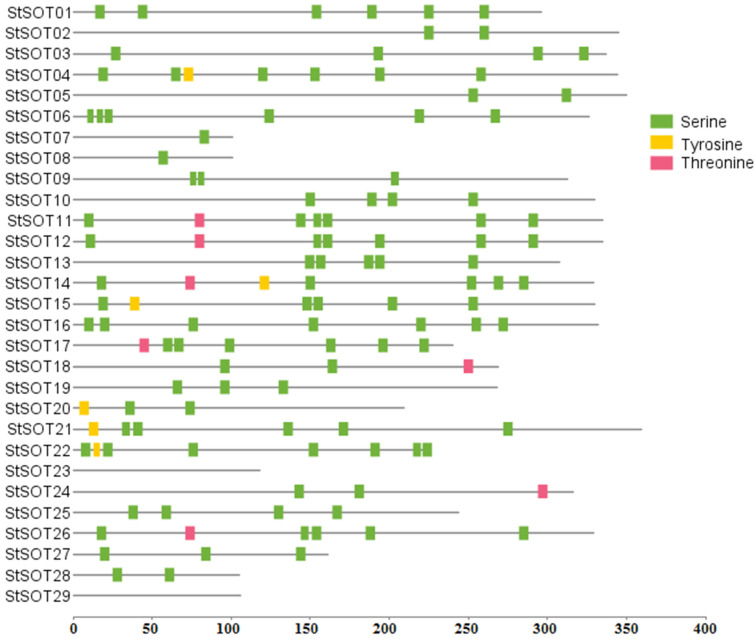
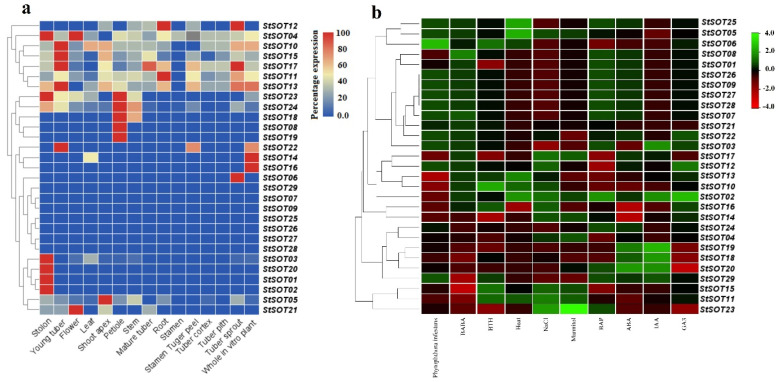
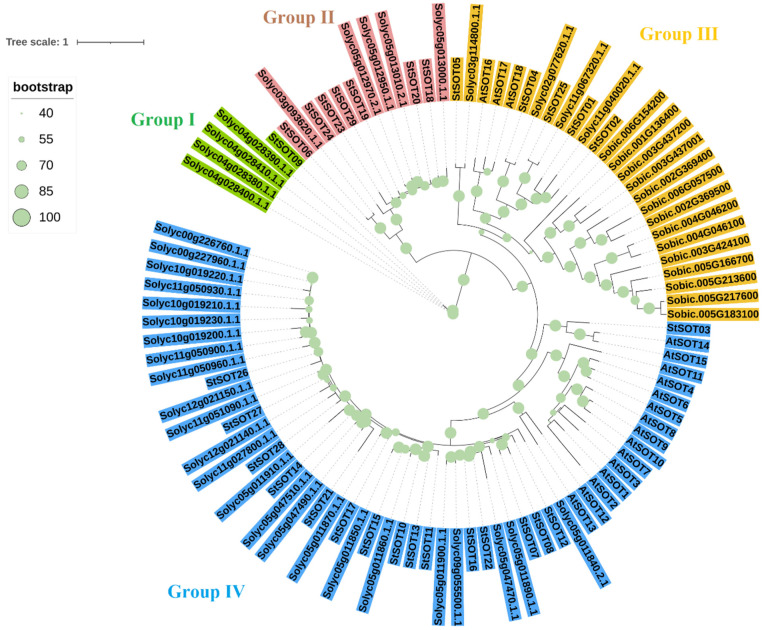
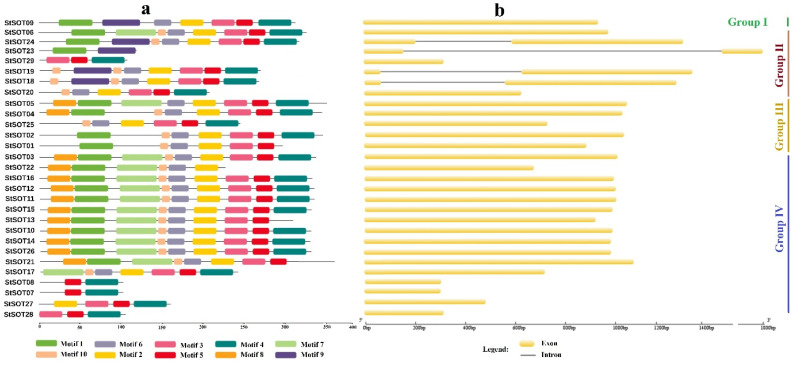
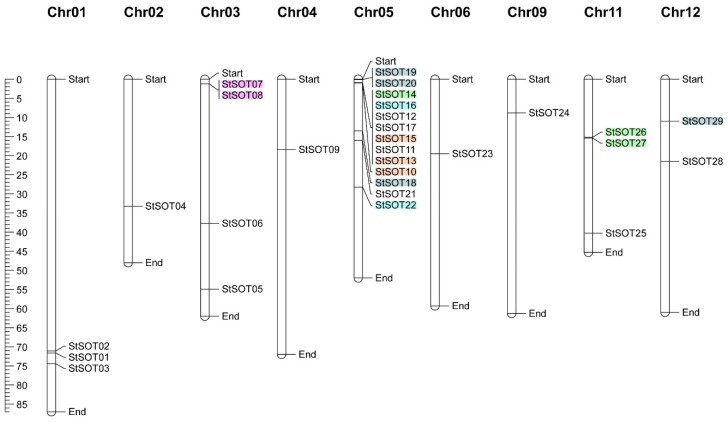
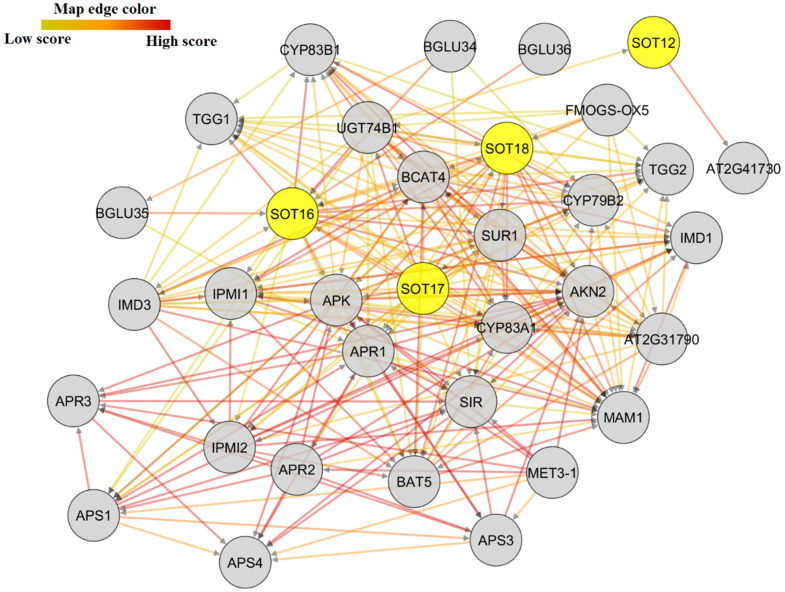
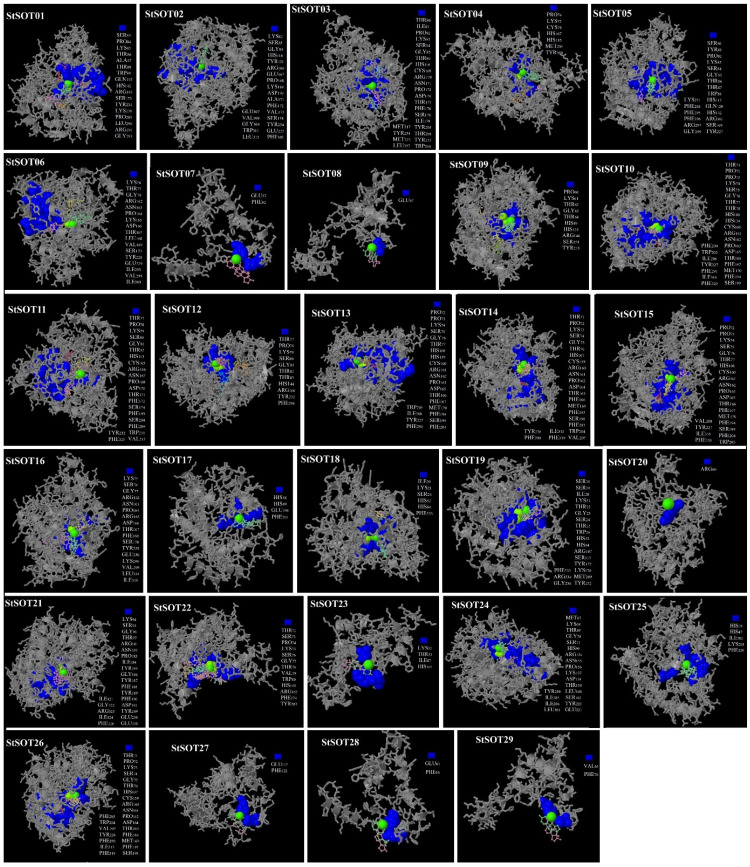
Various kinds of primary metabolisms in plants are modulated through sulfate metabolism, and sulfotransferases (SOTs), which are engaged in sulfur metabolism, catalyze sulfonation reactions. In this study, a genome-wide approach was utilized for the recognition and characterization of SOT family genes in the significant nutritional crop potato ( L.). Twenty-nine putative genes were identified in the potato genome and were mapped onto the nine chromosomes. The protein motifs structure revealed two highly conserved 5'-phosphosulfate-binding (5' PSB) regions and a 3'-phosphate-binding (3' PB) motif that are essential for sulfotransferase activities. The protein-protein interaction networks also revealed an interesting interaction between SOTs and other proteins, such as PRTase, APS-kinase, protein phosphatase, and APRs, involved in sulfur compound biosynthesis and the regulation of flavonoid and brassinosteroid metabolic processes. This suggests the importance of sulfotransferases for proper potato growth and development and stress responses. Notably, homology modeling of StSOT proteins and docking analysis of their ligand-binding sites revealed the presence of proline, glycine, serine, and lysine in their active sites. An expression essay of genes via potato RNA-Seq data suggested engagement of these gene family members in plants' growth and extension and responses to various hormones and biotic or abiotic stimuli. Our predictions may be informative for the functional characterization of the genes in potato and other nutritional crops.
植物中的各种初级代谢通过硫酸盐代谢进行调节,而参与硫代谢的磺基转移酶(SOTs)催化磺化反应。在本研究中,采用全基因组方法对重要的营养作物马铃薯(Solanum tuberosum L.)中的SOT家族基因进行识别和表征。在马铃薯基因组中鉴定出29个推定基因,并将其定位到9条染色体上。蛋白质基序结构显示出两个高度保守的5'-磷酸硫酸结合(5' PSB)区域和一个3'-磷酸结合(3' PB)基序,它们对磺基转移酶活性至关重要。蛋白质-蛋白质相互作用网络还揭示了SOTs与其他蛋白质之间有趣的相互作用,例如参与硫化合物生物合成以及类黄酮和油菜素内酯代谢过程调节的PRTase、APS激酶、蛋白磷酸酶和APRs。这表明磺基转移酶对马铃薯的正常生长发育和应激反应具有重要意义。值得注意的是,StSOT蛋白的同源建模及其配体结合位点的对接分析显示其活性位点存在脯氨酸、甘氨酸、丝氨酸和赖氨酸。通过马铃薯RNA-Seq数据对这些基因进行的表达分析表明,这些基因家族成员参与了植物的生长和延伸以及对各种激素和生物或非生物刺激的反应。我们的预测可能有助于对马铃薯和其他营养作物中这些基因的功能进行表征。