Instituto de Biotecnologia, Universidade Federal de Uberlândia, Uberlândia, MG, Brazil.
Instituto de Química, Universidade Federal de Uberlândia, Uberlândia, MG, Brazil.
Sci Rep. 2021 Dec 27;11(1):24450. doi: 10.1038/s41598-021-03909-1.
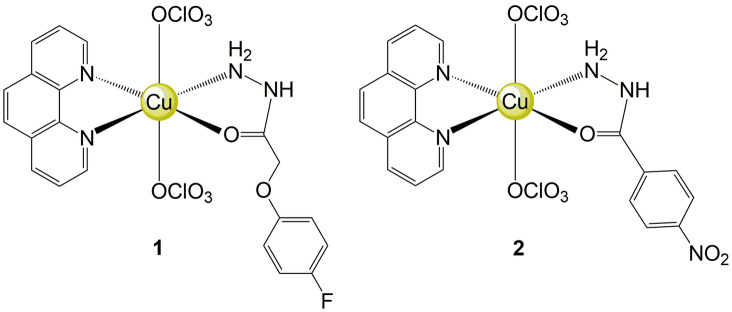
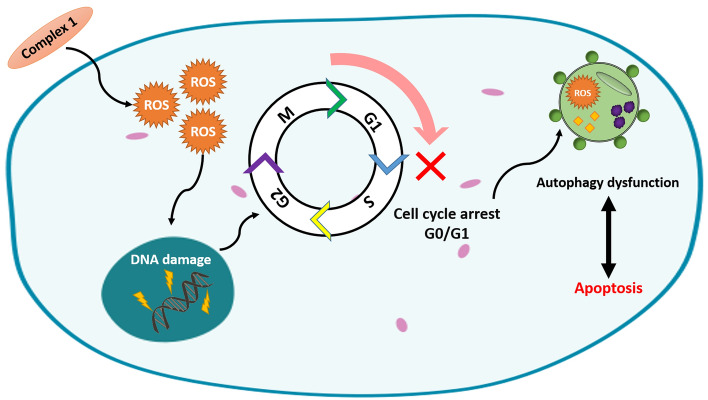
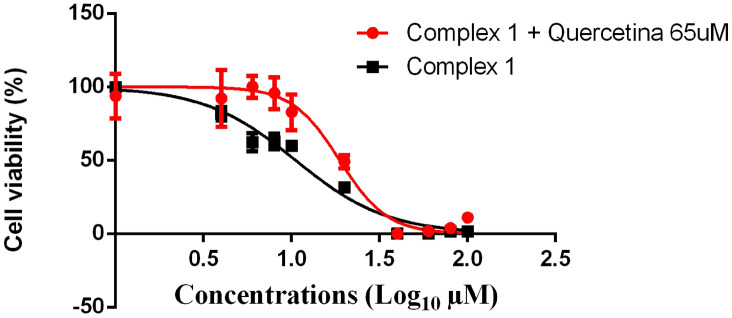
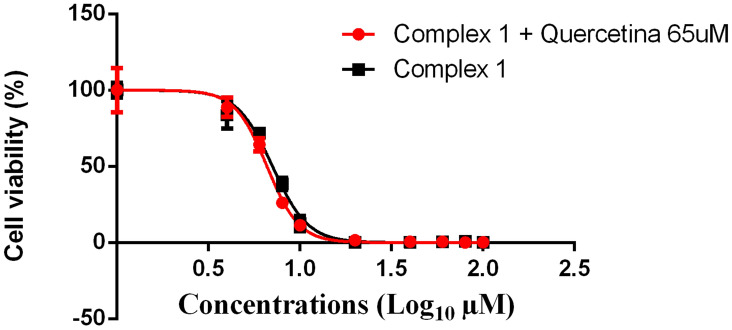
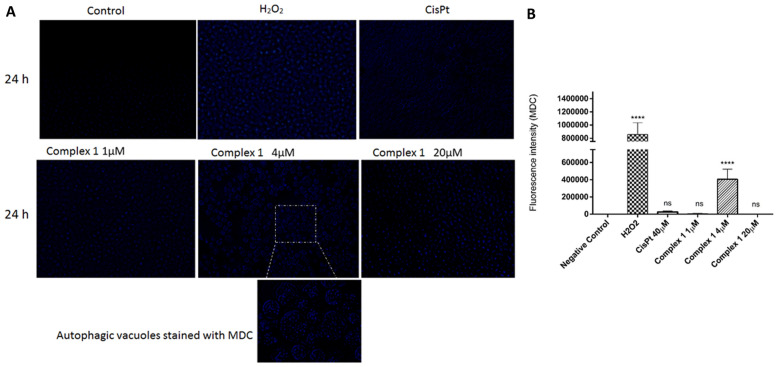
The thin line between efficacy and toxicity has challenged cancer therapy. As copper is an essential micronutrient and is important to tumor biology, Cu complexes emerged as an alternative to chemotherapy; however, its biological properties need to be better understood. Thus, we report in vitro the antitumor effects of two Cu complexes named [Cu(4-fh)(phen)(ClO)] (complex 1) and [Cu(4-nh)(phen)(ClO)]·HO (complex 2), in which 4-fh = 4-fluorophenoxyacetic acid hydrazide; 4-nh = 4-nitrobenzoic hydrazide and phen = 1,10-phenanthroline. Both complexes presented cytotoxic activity against tumor cells, but only complex 1 showed significant selectivity. Complex 1 also induced DNA-damage, led to G0/G1 arrest and triggered apoptosis, which was initiated by an autophagy dysfunction. The significant in vitro selectivity and the action mechanism of complex 1 are noteworthy and reveal this prodrug as promising for anticancer therapy.
疗效与毒性之间的细微界限一直是癌症治疗的挑战。由于铜是一种必需的微量元素,对肿瘤生物学也很重要,因此 Cu 配合物作为化疗的替代品而出现;然而,其生物学特性仍需要更好地理解。因此,我们报告了两种名为 [Cu(4-fh)(phen)(ClO)](配合物 1)和 [Cu(4-nh)(phen)(ClO)]·HO(配合物 2)的 Cu 配合物的体外抗肿瘤作用,其中 4-fh=4-氟苯氧基乙酸酰肼;4-nh=4-硝基苯甲酰肼和 phen=1,10-菲啰啉。这两种配合物都对肿瘤细胞表现出细胞毒性,但只有配合物 1表现出显著的选择性。配合物 1 还诱导了 DNA 损伤,导致 G0/G1 期阻滞并引发凋亡,这是由自噬功能障碍引发的。配合物 1 的体外显著选择性和作用机制值得关注,表明该前药具有用于癌症治疗的潜力。