Department of Agriculture Biotechnology, College of Agriculture and Life Sciences, Seoul National University, Seoul, Republic of Korea.
Plant Genomics and Breeding Institute, Seoul National University, Seoul, Republic of Korea.
Mol Plant Pathol. 2022 Apr;23(4):543-560. doi: 10.1111/mpp.13177. Epub 2021 Dec 28.
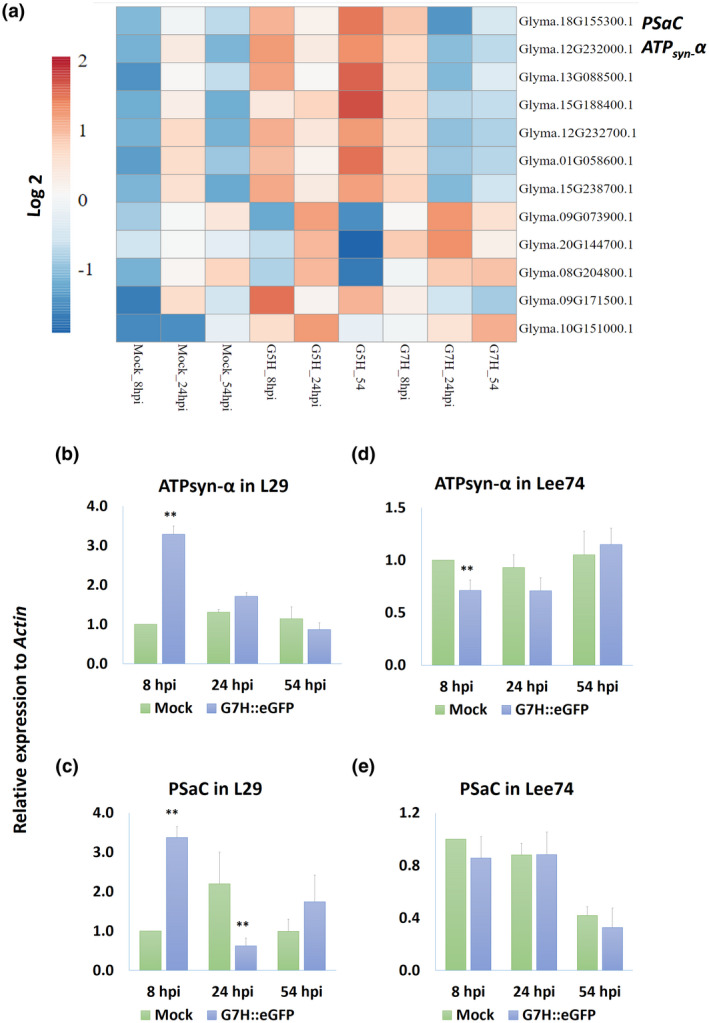
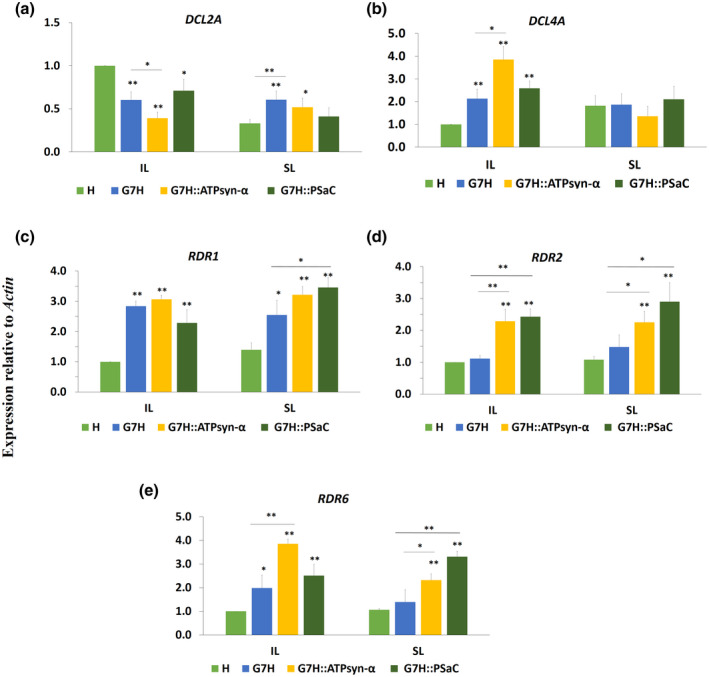
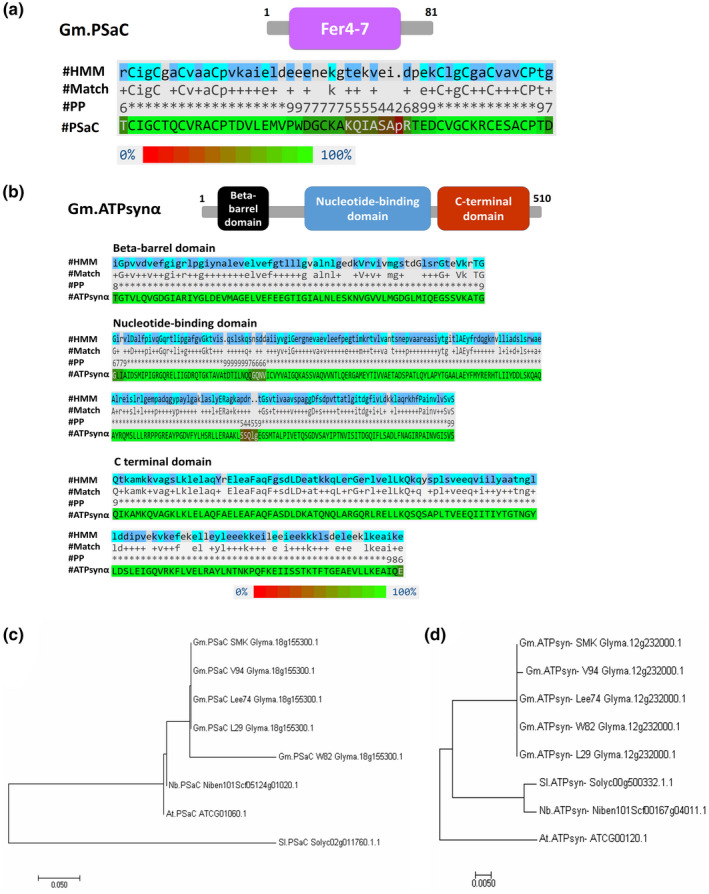
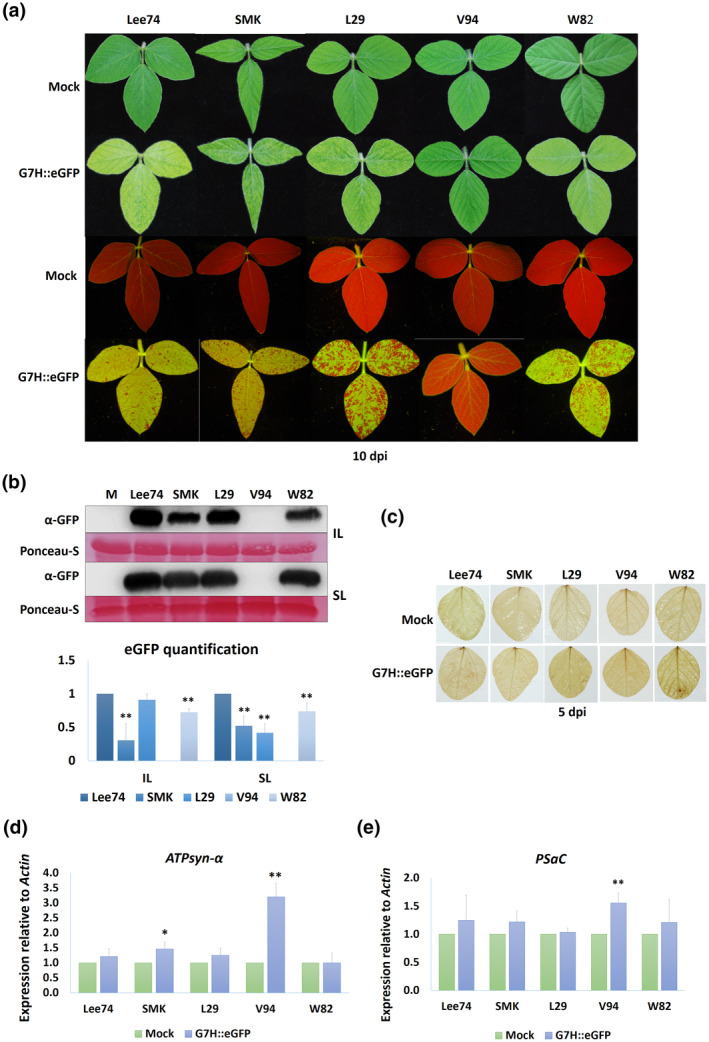
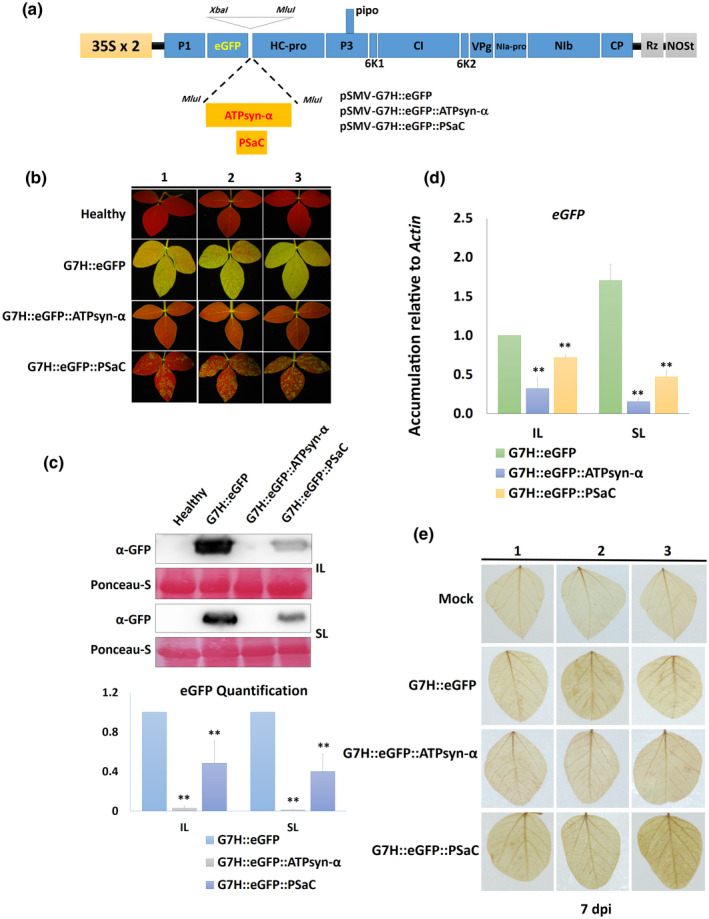
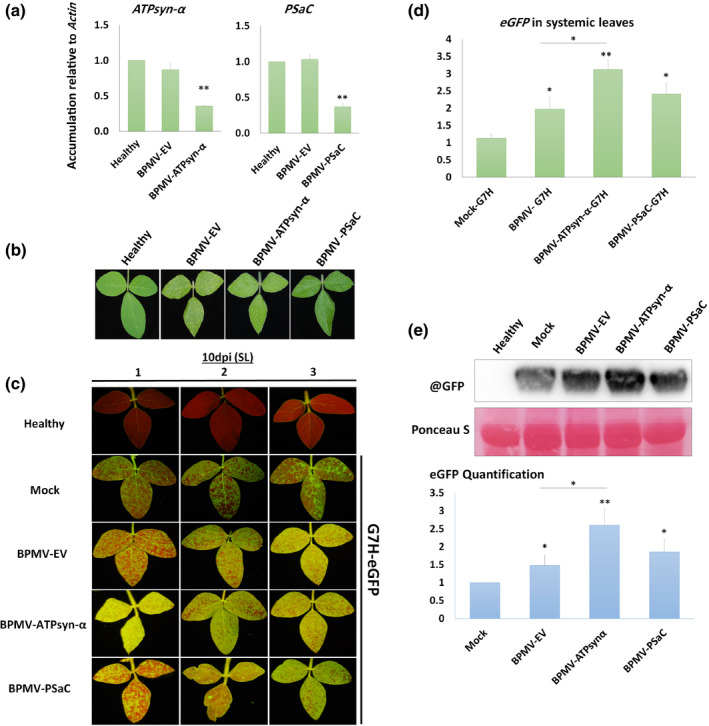
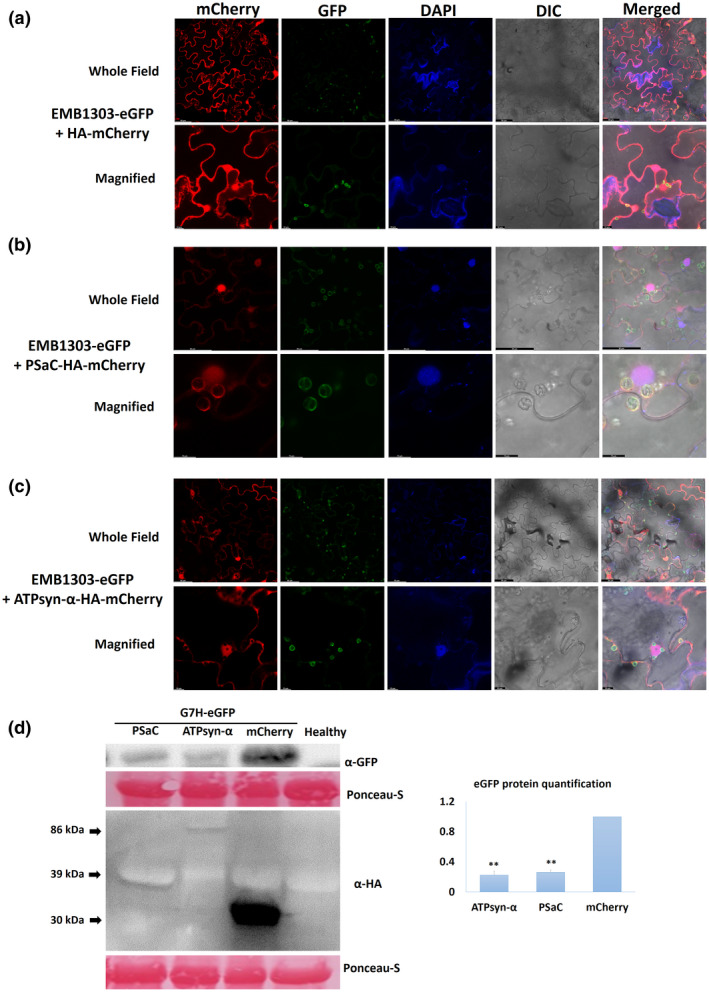
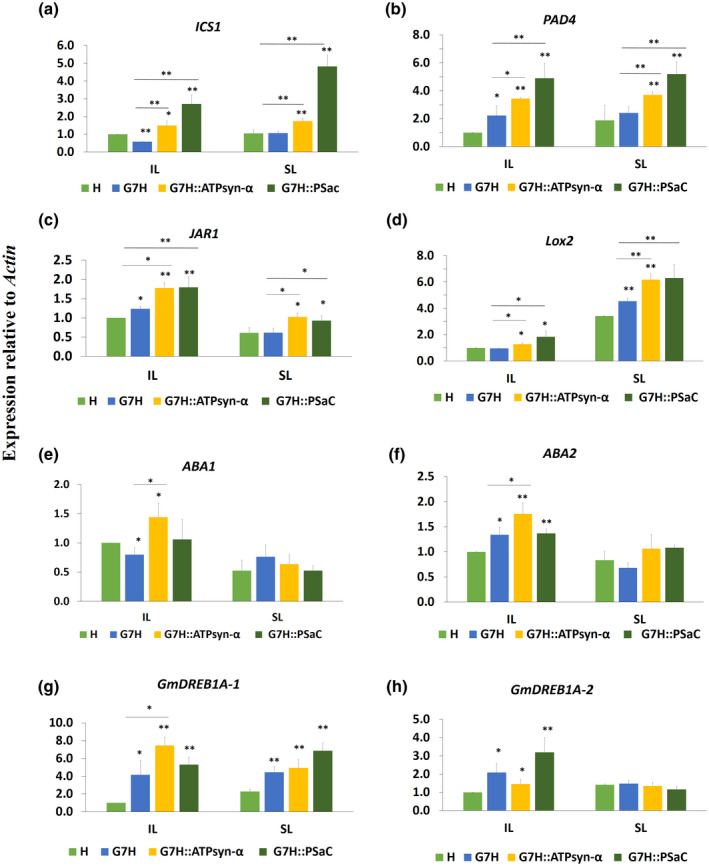
Increasing lines of evidence indicate that chloroplast-related genes are involved in plant-virus interactions. However, the involvement of photosynthesis-related genes in plant immunity is largely unexplored. Analysis of RNA-Seq data from the soybean cultivar L29, which carries the Rsv3 resistance gene, showed that several chloroplast-related genes were strongly induced in response to infection with an avirulent strain of soybean mosaic virus (SMV), G5H, but were weakly induced in response to a virulent strain, G7H. For further analysis, we selected the PSaC gene from the photosystem I and the ATP-synthase α-subunit (ATPsyn-α) gene whose encoded protein is part of the ATP-synthase complex. Overexpression of either gene within the G7H genome reduced virus levels in the susceptible cultivar Lee74 (rsv3-null). This result was confirmed by transiently expressing both genes in Nicotiana benthamiana followed by G7H infection. Both proteins localized in the chloroplast envelope as well as in the nucleus and cytoplasm. Because the chloroplast is the initial biosynthesis site of defence-related hormones, we determined whether hormone-related genes are involved in the ATPsyn-α- and PSaC-mediated defence. Interestingly, genes involved in the biosynthesis of several hormones were up-regulated in plants infected with SMV-G7H expressing ATPsyn-α. However, only jasmonic and salicylic acid biosynthesis genes were up-regulated following infection with the SMV-G7H expressing PSaC. Both chimeras induced the expression of several antiviral RNA silencing genes, which indicate that such resistance may be partially achieved through the RNA silencing pathway. These findings highlight the role of photosynthesis-related genes in regulating resistance to viruses.
越来越多的证据表明,与叶绿体相关的基因参与了植物-病毒的相互作用。然而,光合作用相关基因在植物免疫中的作用在很大程度上还未被探索。对携带 Rsv3 抗性基因的大豆品种 L29 的 RNA-Seq 数据进行分析表明,几种与叶绿体相关的基因在感染弱毒大豆花叶病毒(SMV)G5H 时强烈诱导,但在感染强毒 G7H 时诱导较弱。为了进一步分析,我们从光合作用系统 I 中选择 PSaC 基因和 ATP 合酶α亚基(ATPsyn-α)基因,其编码的蛋白质是 ATP 合酶复合物的一部分。在 G7H 基因组中过表达这两个基因中的任何一个,都能降低感病品种 Lee74(rsv3-缺失)中的病毒水平。这一结果在瞬时表达这两个基因在本氏烟中并随后感染 G7H 后得到了证实。这两种蛋白都定位于叶绿体被膜以及细胞核和细胞质中。由于叶绿体是防御相关激素的初始生物合成部位,我们确定激素相关基因是否参与了 ATPsyn-α 和 PSaC 介导的防御。有趣的是,在感染表达 ATPsyn-α 的 G7H SMV 的植株中,几种激素生物合成基因上调。然而,只有在感染表达 PSaC 的 G7H SMV 后,茉莉酸和水杨酸生物合成基因才上调。这两种嵌合体都诱导了几种抗病毒 RNA 沉默基因的表达,这表明这种抗性可能部分是通过 RNA 沉默途径实现的。这些发现强调了光合作用相关基因在调节抗病毒中的作用。