Department of Biological Chemistry, John Innes Centre, Norwich, United Kingdom.
Department of Biological Chemistry, John Innes Centre, Norwich, United Kingdom.
J Biol Chem. 2020 Oct 30;295(44):14916-14935. doi: 10.1074/jbc.REV120.010852. Epub 2020 Aug 17.
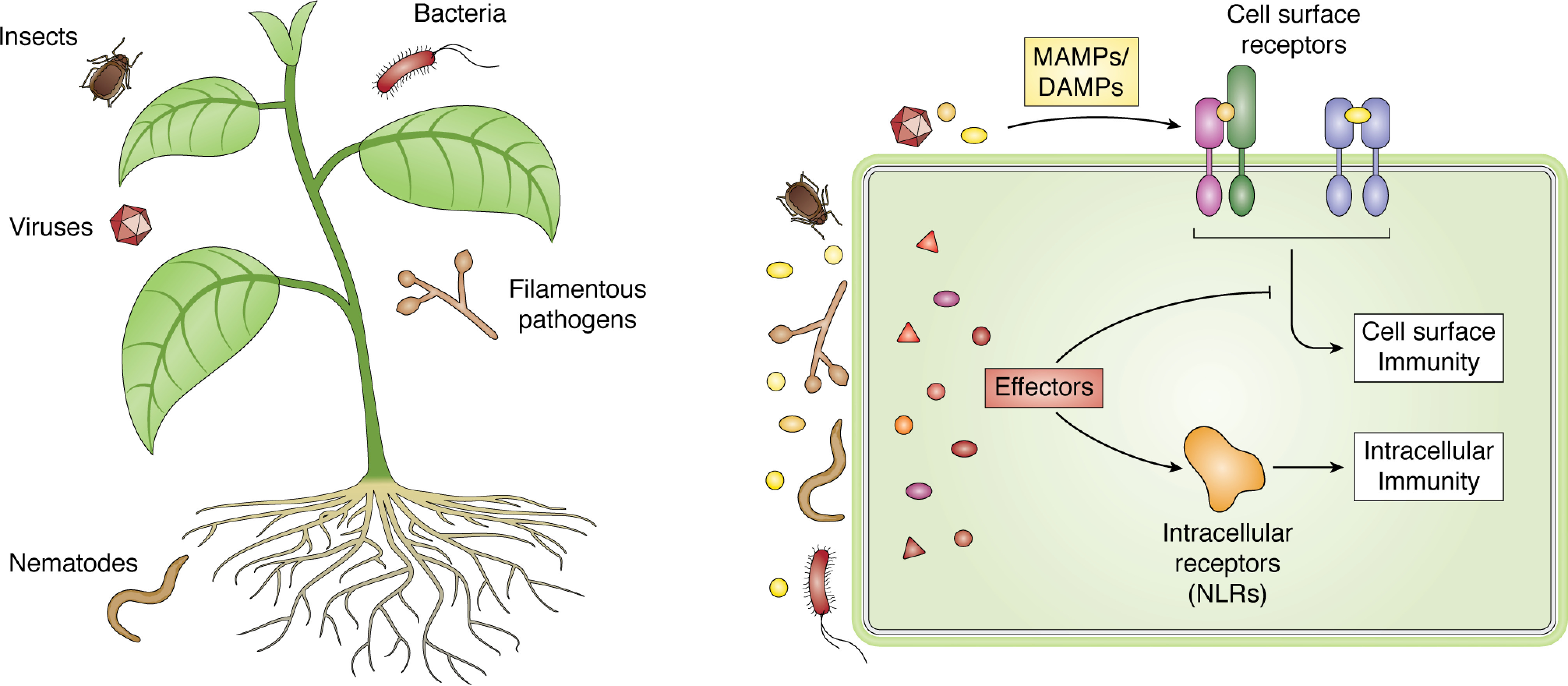
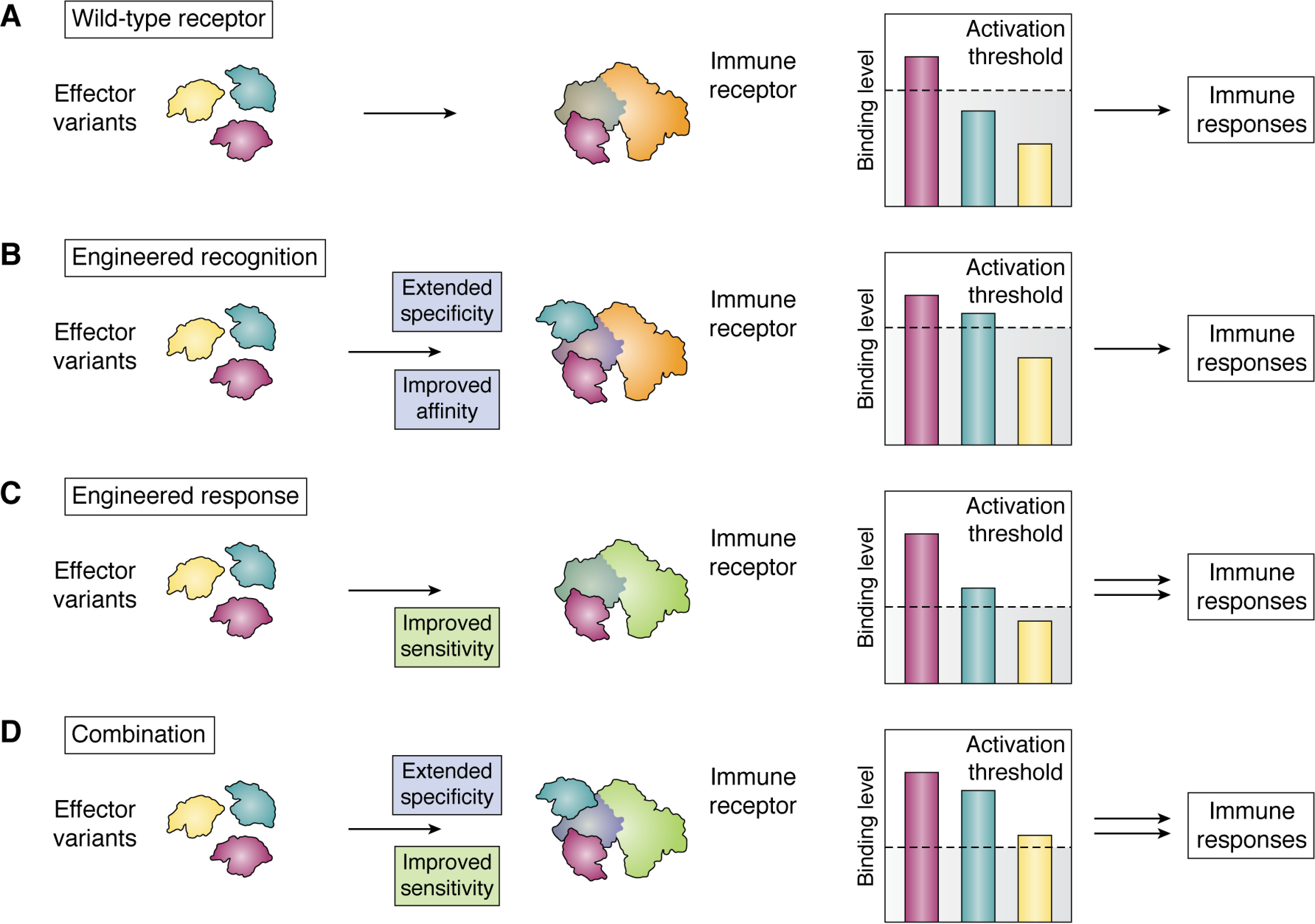
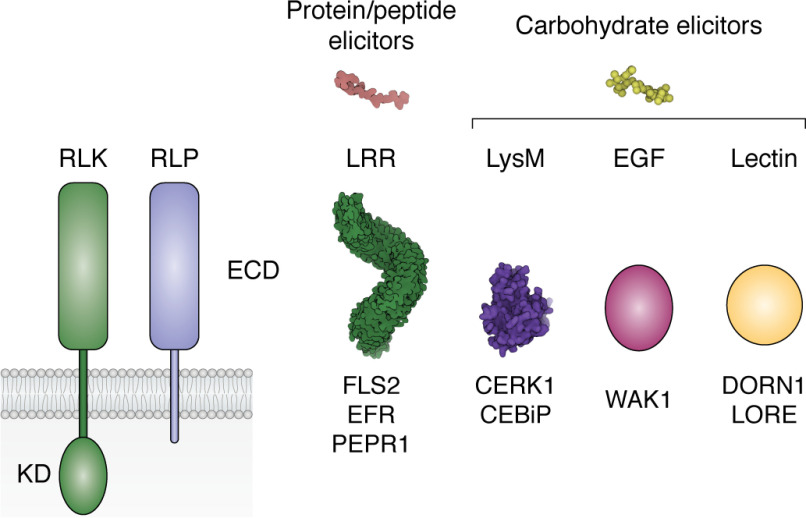
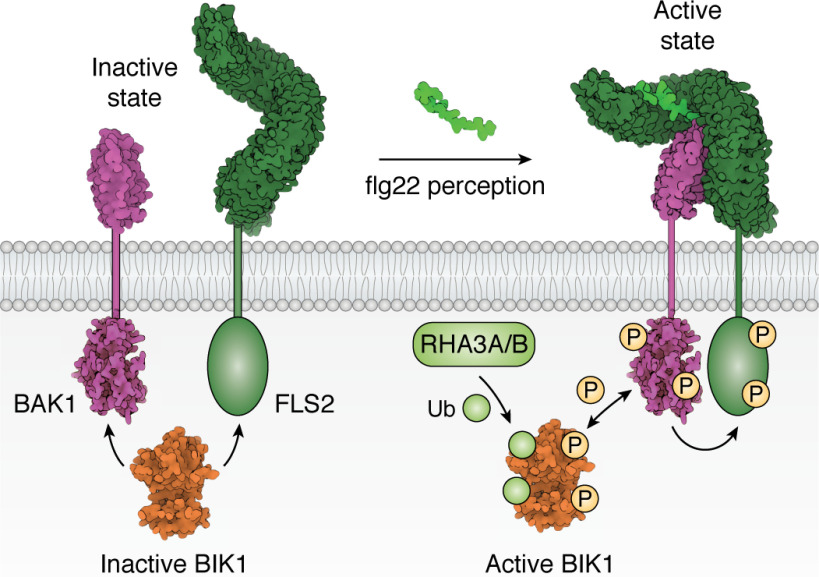
Plant diseases caused by pathogens and pests are a constant threat to global food security. Direct crop losses and the measures used to control disease ( application of pesticides) have significant agricultural, economic, and societal impacts. Therefore, it is essential that we understand the molecular mechanisms of the plant immune system, a system that allows plants to resist attack from a wide variety of organisms ranging from viruses to insects. Here, we provide a roadmap to plant immunity, with a focus on cell-surface and intracellular immune receptors. We describe how these receptors perceive signatures of pathogens and pests and initiate immune pathways. We merge existing concepts with new insights gained from recent breakthroughs on the structure and function of plant immune receptors, which have generated a shift in our understanding of cell-surface and intracellular immunity and the interplay between the two. Finally, we use our current understanding of plant immunity as context to discuss the potential of engineering the plant immune system with the aim of bolstering plant defenses against disease.
病原体和害虫引起的植物病害是全球粮食安全的持续威胁。直接的作物损失和用于控制疾病(使用农药)的措施对农业、经济和社会都有重大影响。因此,了解植物免疫系统的分子机制至关重要,该系统使植物能够抵抗来自各种生物体的攻击,包括病毒和昆虫。在这里,我们提供了植物免疫的路线图,重点介绍了细胞表面和细胞内免疫受体。我们描述了这些受体如何感知病原体和害虫的特征并启动免疫途径。我们将现有概念与最近在植物免疫受体结构和功能方面取得的新见解相结合,这些新见解改变了我们对细胞表面和细胞内免疫以及两者之间相互作用的理解。最后,我们利用我们对植物免疫的现有理解作为背景,讨论了利用工程手段增强植物免疫系统以抵御疾病的潜力。