Zhejiang Key Laboratory of Biology and Ecological Regulation of Crop Pathogens and Insects, Zhejiang A&F University, Hangzhou, 311300, China.
Hangzhou Agricultural Technology Extension Center, Hangzhou, 310058, China.
BMC Genomics. 2024 Sep 18;25(1):876. doi: 10.1186/s12864-024-10781-6.
Begomoviruses are major constraint in the production of many crops. Upon infection, begomoviruses may substantially modulate plant biological processes. While how monopartite begomoviruses interact with their plant hosts has been investigated extensively, bipartite begomoviruses-plant interactions are understudied. Moreover, as one of the major groups of hosts, cucurbitaceous plants have been seldom examined in the interaction with begomoviruses.
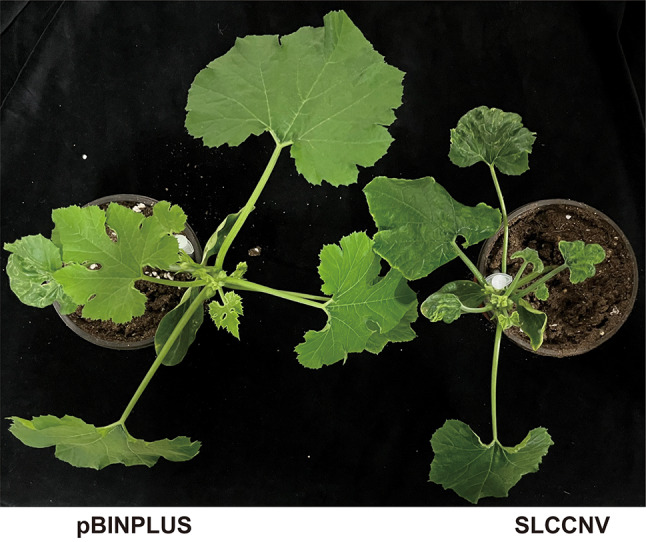
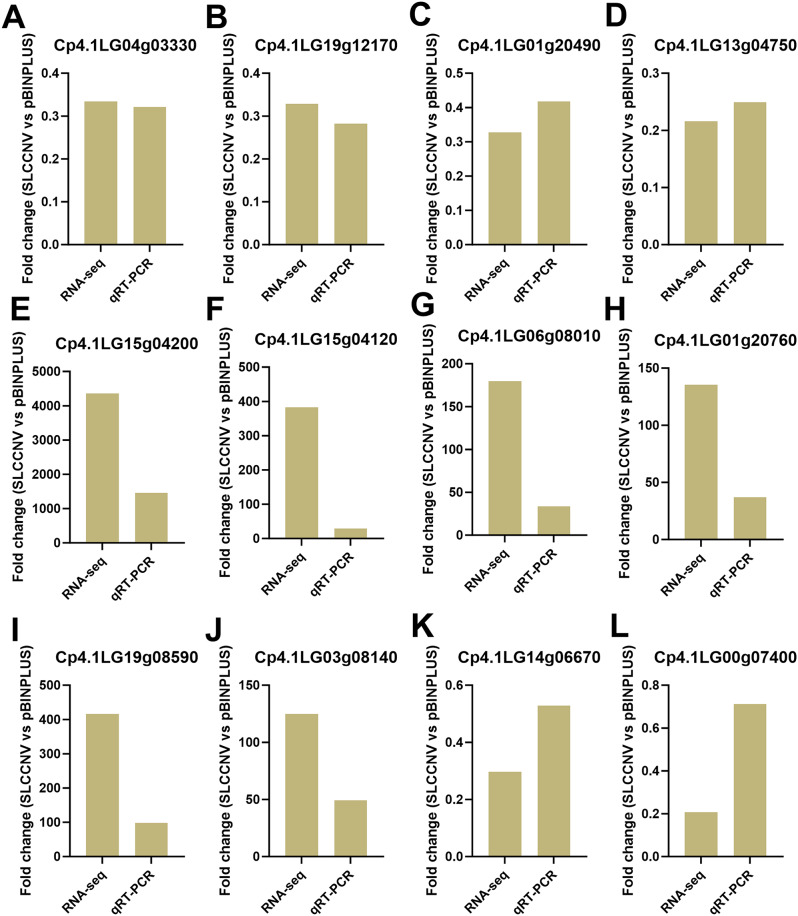
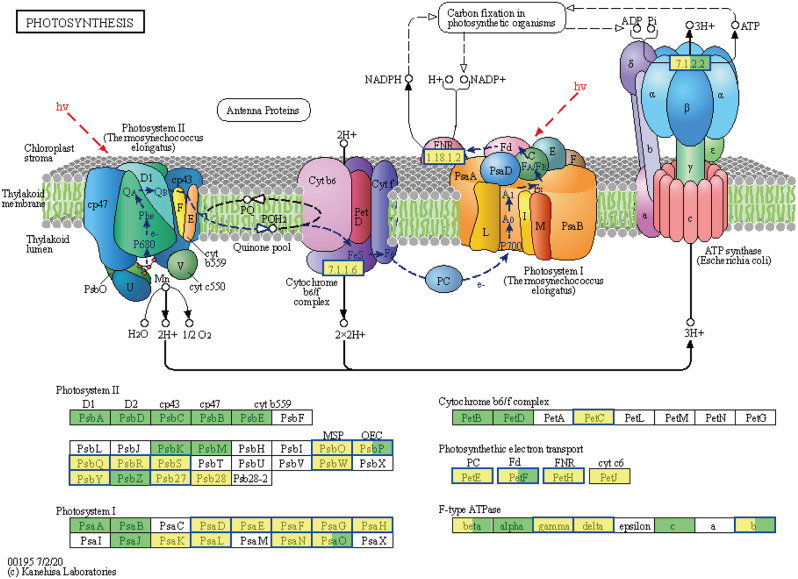
We profiled the zucchini transcriptomic changes induced by a bipartite begomovirus squash leaf curl China virus (SLCCNV). We identified 2275 differentially-expressed genes (DEGs), of which 1310 were upregulated and 965 were downregulated. KEGG enrichment analysis of the DEGs revealed that many pathways related to primary and secondary metabolisms were enriched. qRT-PCR verified the transcriptional changes of twelve selected DEGs induced by SLCCNV infection. Close examination revealed that the expression levels of all the DEGs of the pathway Photosynthesis were downregulated upon SLCCNV infection. Most DEGs in the pathway Plant-pathogen interaction were upregulated, including some positive regulators of plant defenses. Moreover, the majority of DEGs in the MAPK signaling pathway-plant were upregulated.
Our findings indicates that SLCCNV actively interact with its cucurbitaceous plant host by suppressing the conversion of light energy to chemical energy and inducing immune responses. Our study not only provides new insights into the interactions between begomoviruses and host plants, but also adds to our knowledge on virus-plant interactions in general.
双生病毒是许多作物生产的主要限制因素。感染后,双生病毒可能会极大地调节植物的生物过程。虽然单分体双生病毒与植物宿主的相互作用已经被广泛研究,但双分体双生病毒-植物的相互作用还没有得到充分研究。此外,作为主要宿主群体之一,葫芦科植物在与双生病毒的相互作用中很少被研究。
我们分析了双分体南瓜曲叶中国病毒(SLCCNV)诱导的西葫芦转录组变化。我们鉴定了 2275 个差异表达基因(DEGs),其中 1310 个上调,965 个下调。KEGG 富集分析显示,许多与初级和次级代谢相关的途径都被富集。qRT-PCR 验证了 SLCCNV 感染诱导的 12 个选定 DEGs 的转录变化。仔细检查发现,SLCCNV 感染后,光合作用途径的所有 DEGs 的表达水平都下调。植物-病原体相互作用途径中的大多数 DEGs 上调,包括一些植物防御的正调节剂。此外,MAPK 信号通路-植物中的大多数 DEGs 上调。
我们的研究结果表明,SLCCNV 通过抑制光能向化学能的转化和诱导免疫反应,与葫芦科植物宿主积极相互作用。我们的研究不仅为双生病毒与宿主植物的相互作用提供了新的见解,而且为我们对病毒-植物相互作用的认识增添了新的内容。