Department of Biostatistics and Computational Biology, University of Rochester Medical Center, Rochester New York, United States of America.
Department of Biomedical Genetics, University of Rochester Medical Center, Rochester New York, United States of America.
PLoS Comput Biol. 2021 Dec 28;17(12):e1009617. doi: 10.1371/journal.pcbi.1009617. eCollection 2021 Dec.
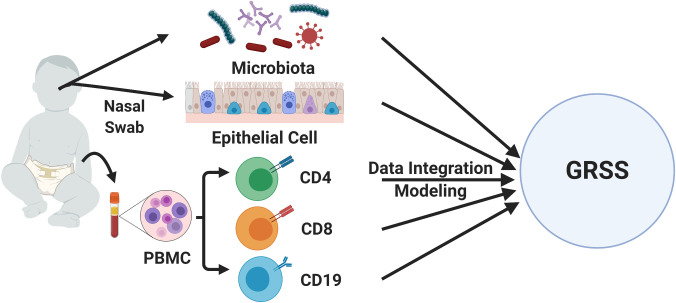
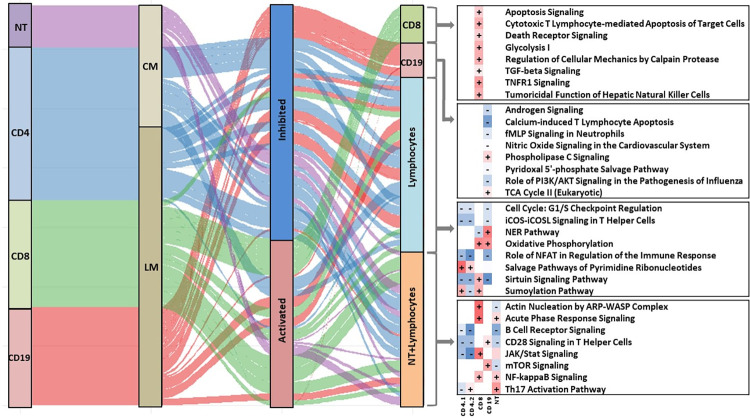
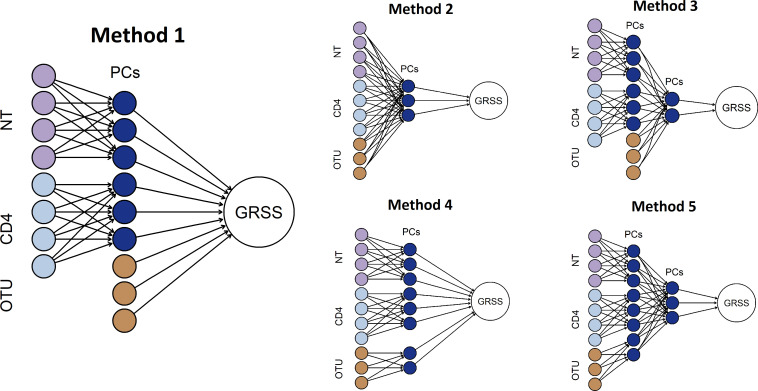
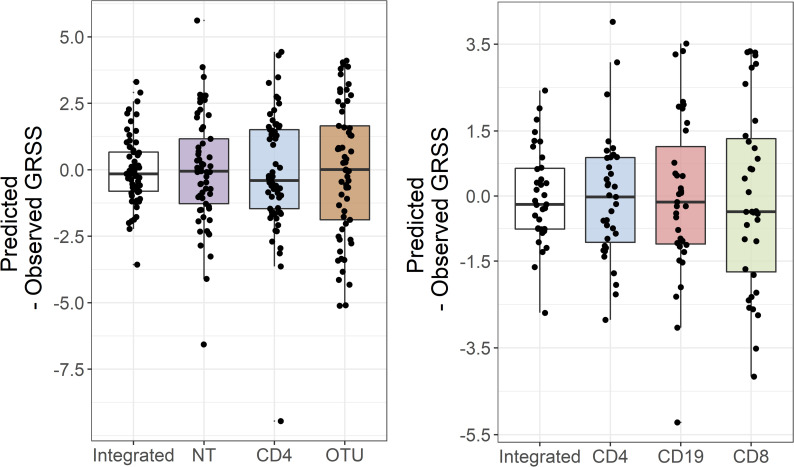
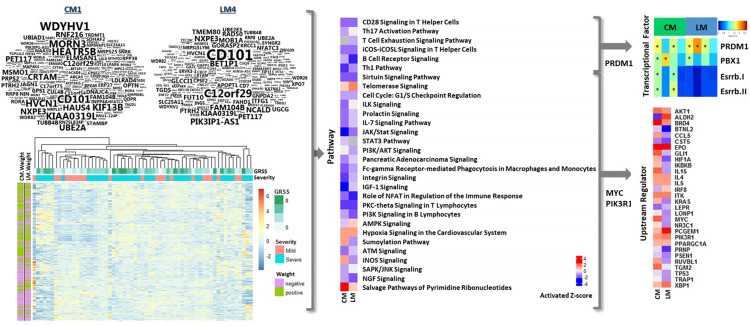
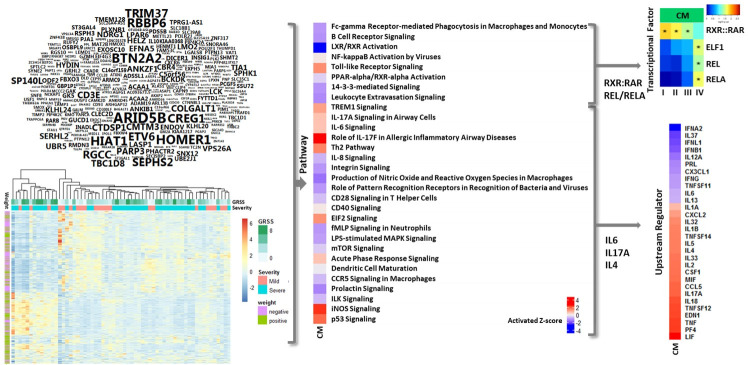
Respiratory syncytial virus (RSV) infection results in millions of hospitalizations and thousands of deaths each year. Variations in the adaptive and innate immune response appear to be associated with RSV severity. To investigate the host response to RSV infection in infants, we performed a systems-level study of RSV pathophysiology, incorporating high-throughput measurements of the peripheral innate and adaptive immune systems and the airway epithelium and microbiota. We implemented a novel multi-omic data integration method based on multilayered principal component analysis, penalized regression, and feature weight back-propagation, which enabled us to identify cellular pathways associated with RSV severity. In both airway and immune cells, we found an association between RSV severity and activation of pathways controlling Th17 and acute phase response signaling, as well as inhibition of B cell receptor signaling. Dysregulation of both the humoral and mucosal response to RSV may play a critical role in determining illness severity.
呼吸道合胞病毒 (RSV) 感染每年导致数百万人住院和数千人死亡。适应性和先天免疫反应的变化似乎与 RSV 的严重程度有关。为了研究婴儿对 RSV 感染的宿主反应,我们对 RSV 病理生理学进行了系统水平的研究,包括对周围先天和适应性免疫系统以及气道上皮和微生物群进行高通量测量。我们实施了一种新颖的基于多层次主成分分析、惩罚回归和特征权重反向传播的多组学数据整合方法,使我们能够识别与 RSV 严重程度相关的细胞途径。在气道和免疫细胞中,我们发现 RSV 严重程度与控制 Th17 和急性期反应信号的途径的激活以及 B 细胞受体信号的抑制之间存在关联。对 RSV 的体液和黏膜反应的失调可能在决定疾病严重程度方面起着关键作用。