Nielsen Søren Saxmose, Alvarez Julio, Bicout Dominique Joseph, Calistri Paolo, Canali Elisabetta, Drewe Julian Ashley, Garin-Bastuji Bruno, Gonzales Rojas José Luis, Gortázar Christian, Herskin Mette, Michel Virginie, Miranda Chueca Miguel Ángel, Padalino Barbara, Pasquali Paolo, Sihvonen Liisa Helena, Spoolder Hans, Ståhl Karl, Velarde Antonio, Viltrop Arvo, Winckler Christoph, De Clercq Kris, Gubbins Simon, Aznar Inma, Broglia Alessandro
EFSA J. 2021 Dec 27;19(12):e06933. doi: 10.2903/j.efsa.2021.6933. eCollection 2021 Dec.
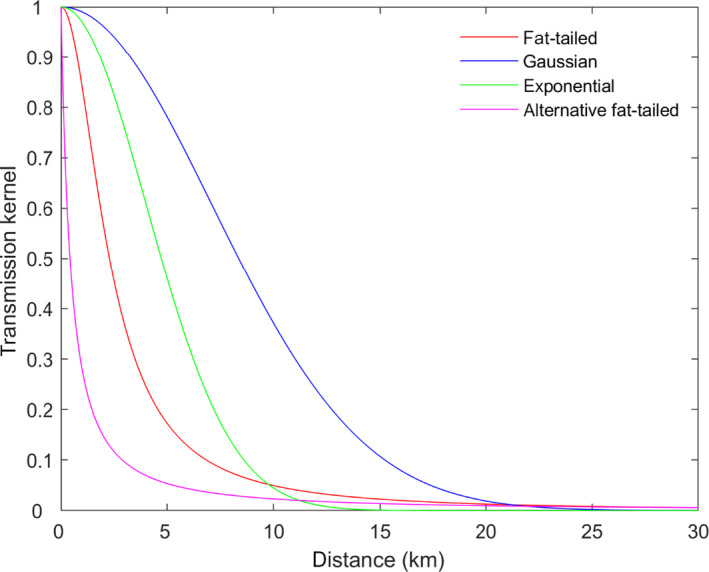
EFSA received a mandate from the European Commission to assess the effectiveness of some of the control measures against diseases included in the Category A list according to Regulation (EU) 2016/429 on transmissible animal diseases ('Animal Health Law'). This opinion belongs to a series of opinions where these control measures will be assessed, with this opinion covering the assessment of control measures for sheep and goat pox. In this opinion, EFSA and the AHAW Panel of experts review the effectiveness of: (i) clinical and laboratory sampling procedures, (ii) monitoring period and (iii) the minimum radii of the protection and surveillance zones, and the minimum length of time the measures should be applied in these zones. The general methodology used for this series of opinions has been published elsewhere; nonetheless, the transmission kernels used for the assessment of the minimum radii of the protection and surveillance zones are shown. Several scenarios for which these control measures had to be assessed were designed and agreed prior to the start of the assessment. Different risk-based sampling procedures based on clinical visits and laboratory testing are assessed in case of outbreak suspicion, granting animal movements and for repopulation purposes. The monitoring period of 21 days was assessed as effective. The estimated probability of transmission beyond the protection zone of 3 km radius from an infectious establishment is 9.6% (95% CI: 3.1-25.8%) and 2.3% (95% CI: 1-5.5%) for the surveillance zone of 10 km radius. This may be considered sufficient to contain the disease spread (95% probability of containing transmission corresponds to 5.3 Km). To contain 99% of the spread, the radius should be increased to 19.4 km (95% CI: 9.8-26.8). This may increase the number of farms in the surveillance zone, since the area would increase fourfold.
欧洲食品安全局(EFSA)收到欧盟委员会的一项任务授权,要求根据关于可传播动物疾病的(欧盟)2016/429号条例(《动物卫生法》),评估针对A类清单中所列疾病的一些控制措施的有效性。本意见属于将对这些控制措施进行评估的一系列意见之一,本意见涵盖对绵羊痘和山羊痘控制措施的评估。在本意见中,EFSA和动物健康与福利专家小组审查了以下方面的有效性:(i)临床和实验室采样程序;(ii)监测期;(iii)保护和监测区的最小半径,以及这些措施在这些区域应实施的最短时间。用于这一系列意见的一般方法已在其他地方发表;尽管如此,仍展示了用于评估保护和监测区最小半径的传播核心。在评估开始之前,设计并商定了必须对这些控制措施进行评估的几种情形。在怀疑爆发疫情、批准动物移动和重新种群化的情况下,评估了基于临床检查和实验室检测的不同风险抽样程序。21天的监测期被评估为有效。对于半径为3公里的感染场所,估计其保护区域之外的传播概率为9.6%(95%置信区间:3.1-25.8%),对于半径为10公里的监测区域,传播概率为2.3%(95%置信区间:1-5.5%)。这可能被认为足以遏制疾病传播(95%的传播遏制概率对应于5.3公里)。为了遏制99%的传播,半径应增加到19.4公里(95%置信区间:9.8-26.8)。这可能会增加监测区域内的农场数量,因为面积将增加四倍。