Department of Neuroscience, Baylor College of Medicine, One Baylor Plaza, Houston, TX 77030, USA.
Department of Neuroscience, Baylor College of Medicine, One Baylor Plaza, Houston, TX 77030, USA.
Neuron. 2022 Mar 2;110(5):891-902.e7. doi: 10.1016/j.neuron.2021.12.005. Epub 2021 Dec 28.
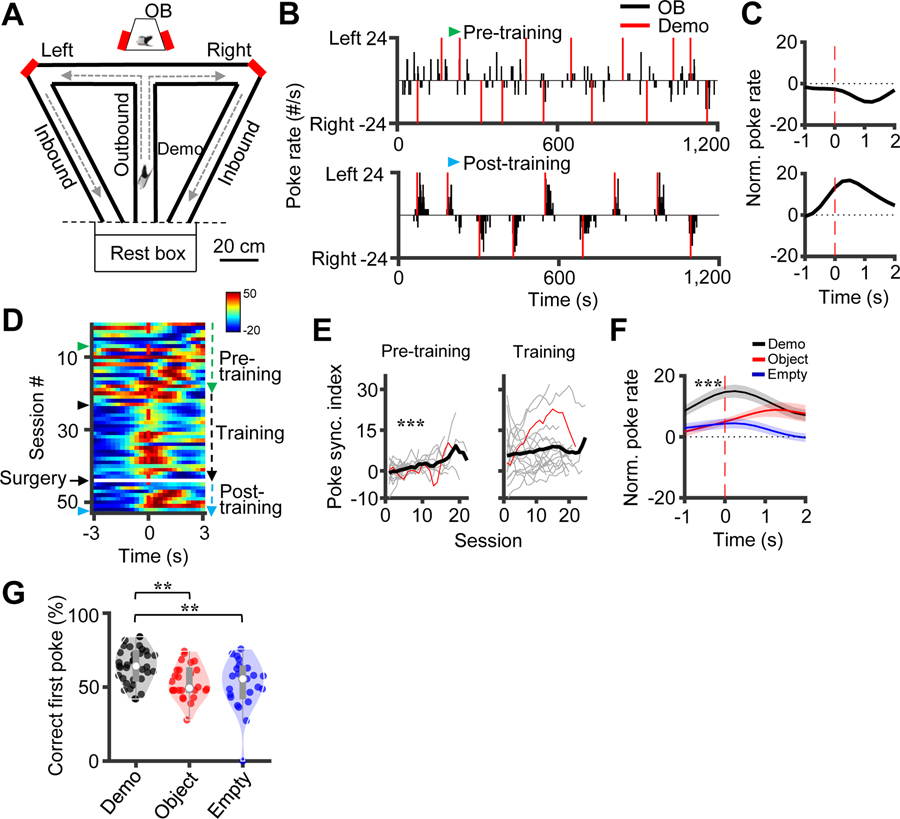
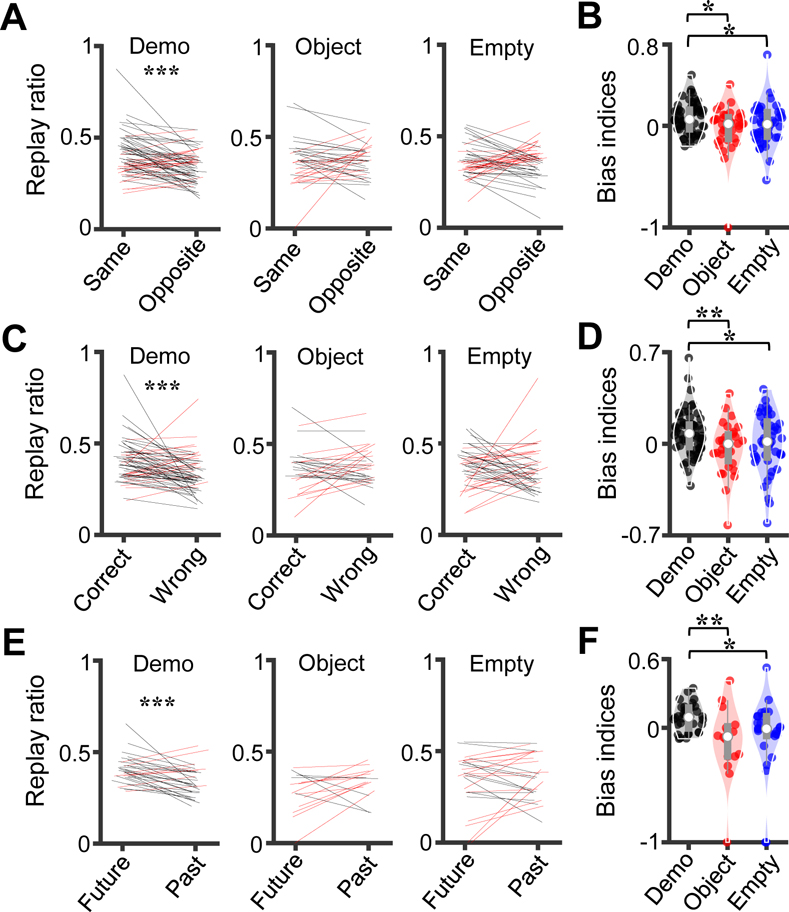
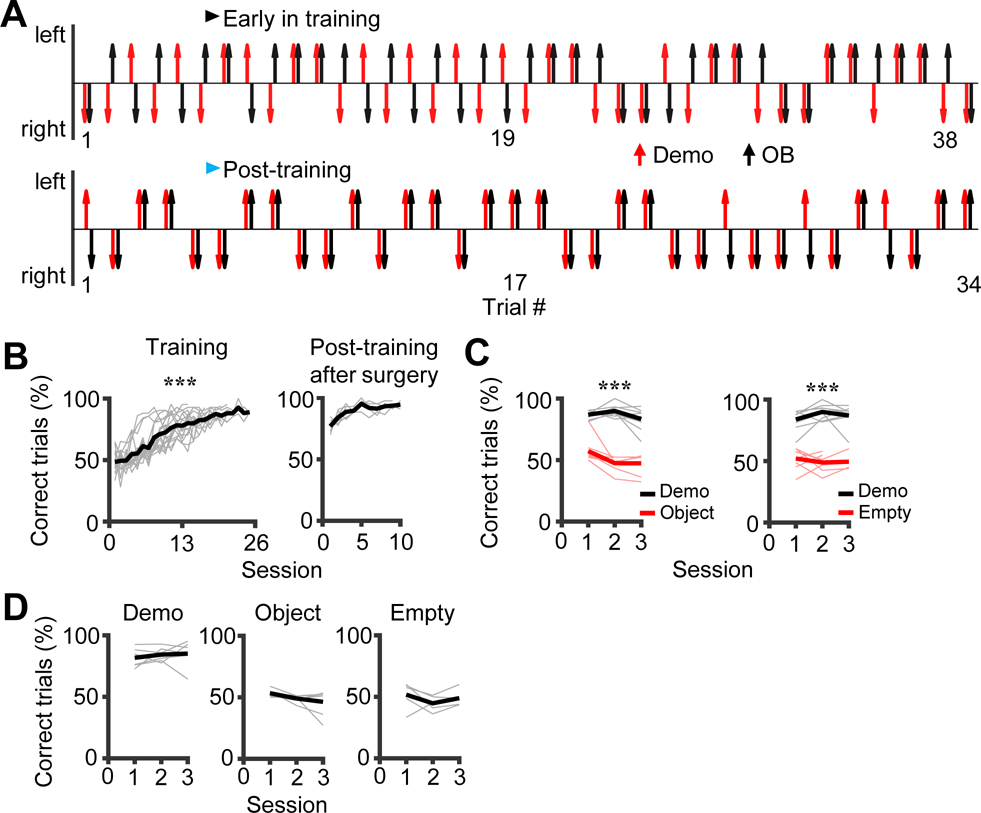
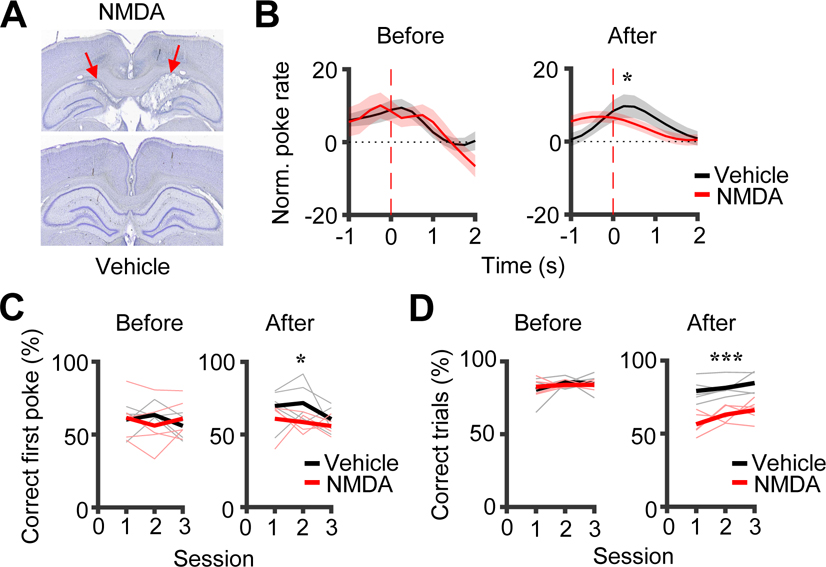
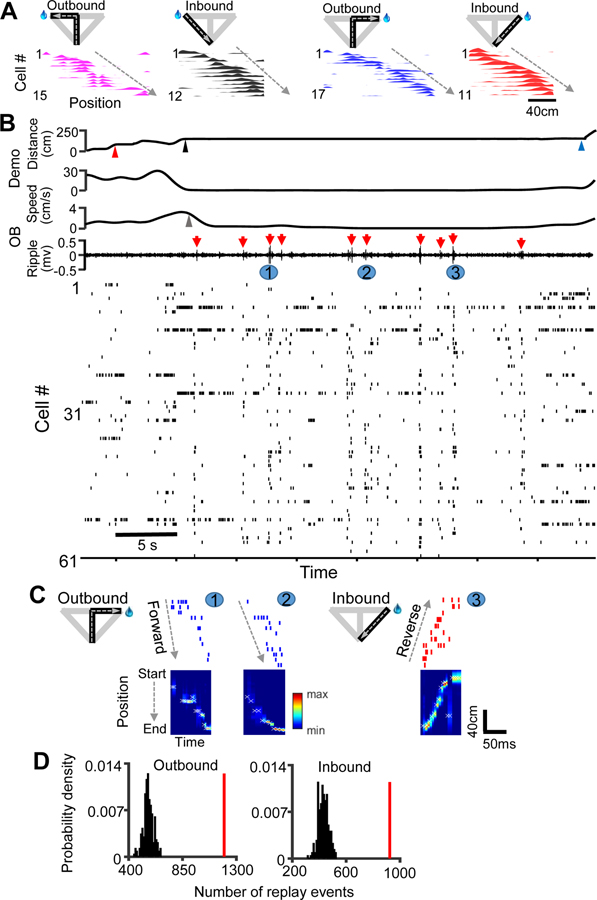
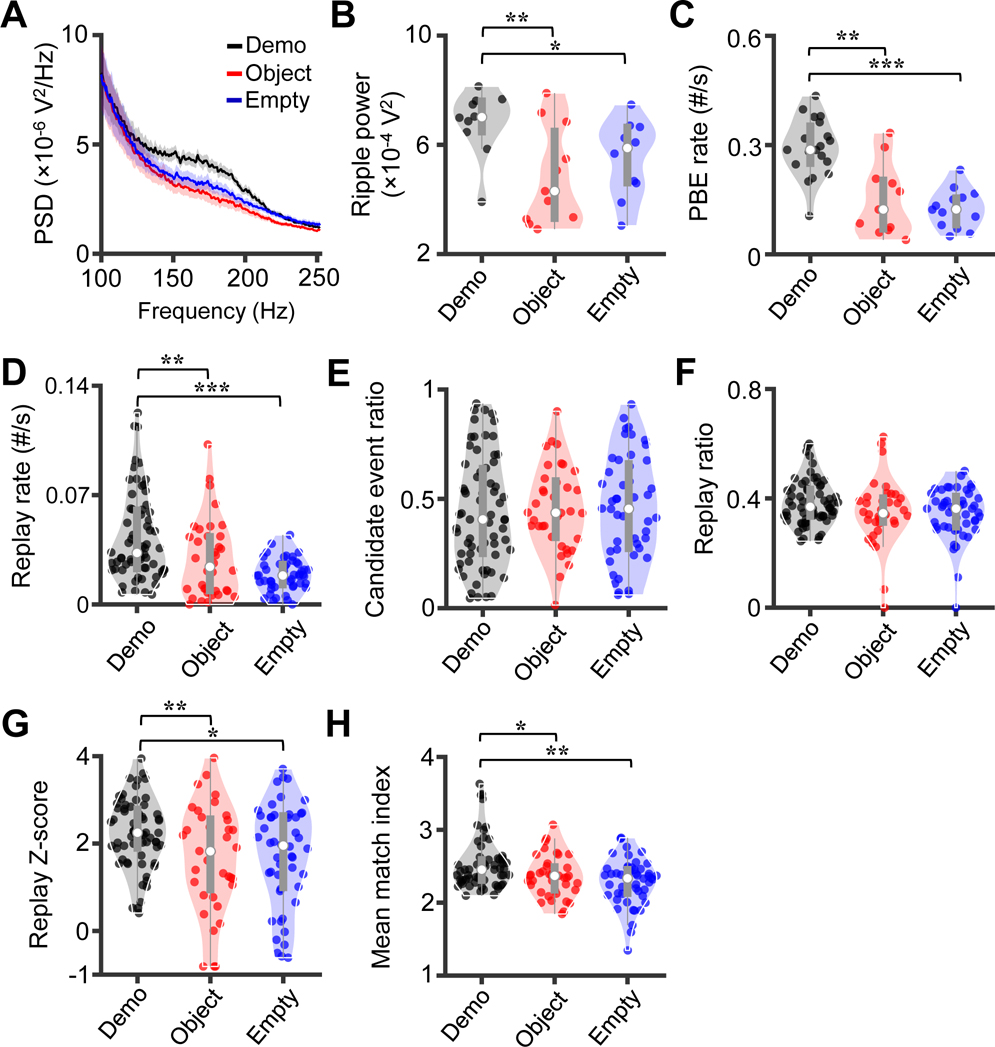
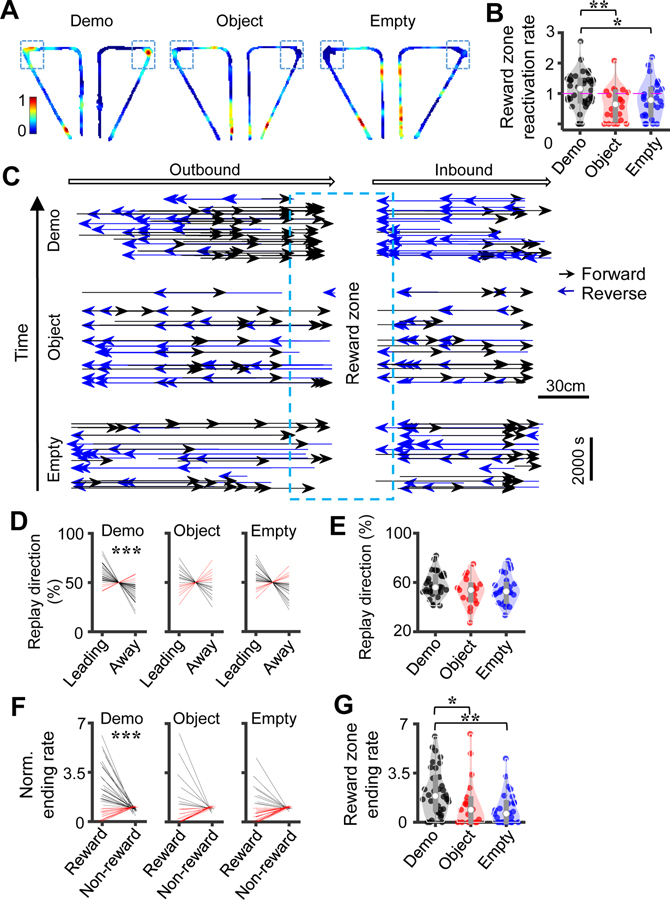
The neural circuit mechanisms underlying observational learning, learning through observing the behavior of others, are poorly understood. Hippocampal place cells are important for spatial learning, and awake replay of place cell patterns is involved in spatial decisions. Here we show that, in observer rats learning to run a maze by watching a demonstrator's spatial trajectories from a separate nearby observation box, place cell patterns during self-running in the maze are replayed remotely in the box. The contents of the remote awake replay preferentially target the maze's reward sites from both forward and reverse replay directions and reflect the observer's future correct trajectories in the maze. In contrast, under control conditions without a demonstrator, the remote replay is significantly reduced, and the preferences for reward sites and future trajectories disappear. Our results suggest that social observation directs the contents of remote awake replay to guide spatial decisions in observational learning.
观察学习(通过观察他人的行为来学习)的神经回路机制尚未完全阐明。海马体位置细胞对空间学习很重要,而位置细胞模式的清醒回放则与空间决策有关。在这里,我们发现,在观察者大鼠通过从附近的单独观察箱观察演示者的空间轨迹来学习跑迷宫时,在迷宫内自我奔跑过程中的位置细胞模式会在箱内远程回放。远程清醒回放的内容优先从正反两个方向针对迷宫的奖励地点,并反映了观察者在迷宫内未来的正确轨迹。相比之下,在没有演示者的对照条件下,远程回放显著减少,并且对奖励地点和未来轨迹的偏好消失了。我们的研究结果表明,社会观察指导远程清醒回放的内容,以指导观察学习中的空间决策。