Department of Cardiology, Daqing Oilfield General Hospital, Daqing, Heilongjiang Province, China.
Cardiac Intensive Care Center, Daqing Oilfield General Hospital, Daqing, Heilongjiang Province, China.
Organogenesis. 2021 Oct 2;17(3-4):27-39. doi: 10.1080/15476278.2021.2020018. Epub 2021 Dec 29.
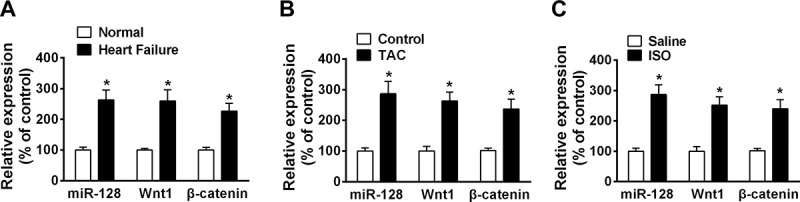
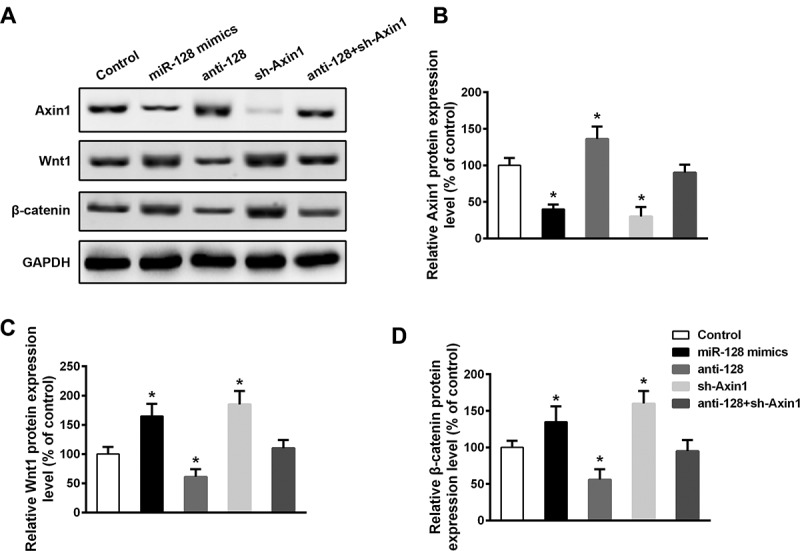
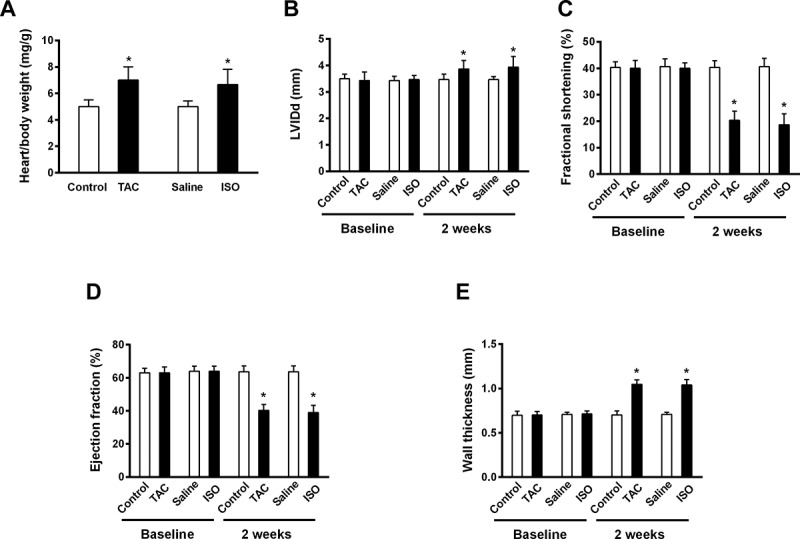
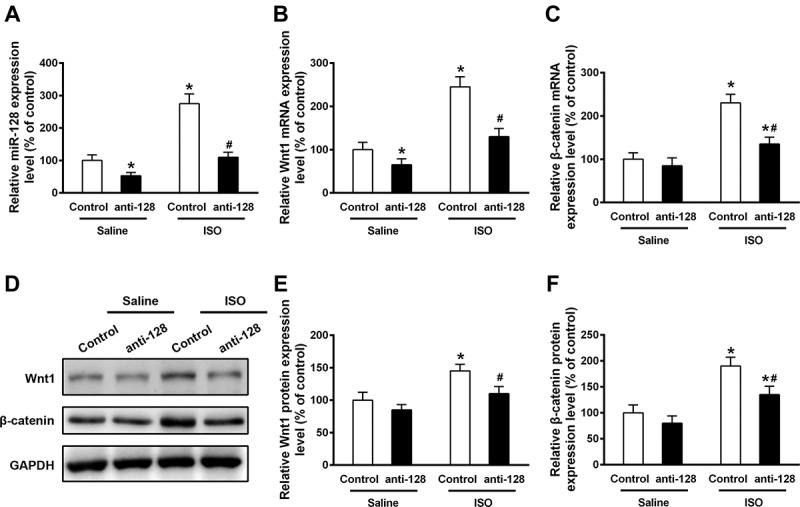
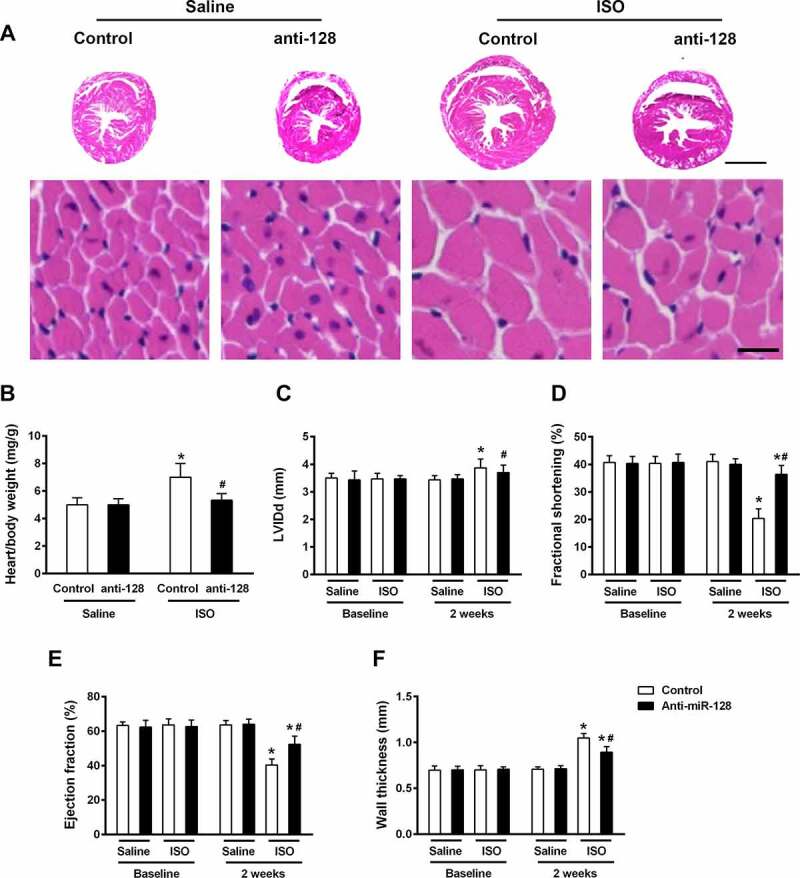
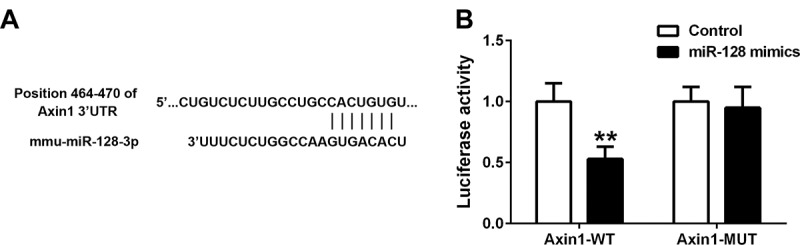
Cardiac hypertrophy contributes to heart failure and is pathogenically modulated by a network of signaling cascades including Wnt/β-catenin signaling pathway. miRNAs have been widely demonstrated to regulate gene expression in heart development. miR-128 was routinely found as a brain-enriched gene and has been functionally associated with regulation of cardiac function. However, its role and molecular mechanisms that regulate cardiac hypertrophy remain largely unclear. Adeno-associated virus serotype 9 (AAV9)-mediated constructs with miR-128 or anti-miR-128 were generated and delivered to overexpression or blockade of miR-128 followed by HF induction with isoproterenol (ISO) or transverse aortic constriction (TAC). Cardiac dysfunction and hypertrophy, coupled with involved gene and protein level, were then assessed. Our data found that miR-128, Wnt1, and β-catenin expressions were upregulated in both patients and mice model with HF. Interference with miR-128 reduces Wnt1/β-catenin expression in mouse failing hearts and ameliorates heart dysfunctional properties. We identified miR-128 directly targets to Axin1, an inhibitor of Wnt/β-catenin signaling, and suppresses its inhibition on Wnt1/β-catenin. Our study provides evidence indicating miR-128 as an inducer of HF and cardiac hypertrophy by enhancing Wnt1/β-catenin in an Axin1-dependent nature. We thus suggest miR-128 has potential value in the treatment of heart failure.
心肌肥厚导致心力衰竭,并通过包括 Wnt/β-连环蛋白信号通路在内的信号级联网络进行病理调节。miRNA 已被广泛证明可调节心脏发育过程中的基因表达。miR-128 通常被认为是一种大脑特异性基因,并与心脏功能的调节功能相关。然而,其调节心肌肥厚的作用和分子机制仍很大程度上不清楚。构建了携带 miR-128 或抗 miR-128 的腺相关病毒血清型 9 (AAV9) 载体,并将其转染至过表达或阻断 miR-128 的细胞中,随后用异丙肾上腺素 (ISO) 或主动脉缩窄 (TAC) 诱导心力衰竭。然后评估心脏功能障碍和肥厚以及相关基因和蛋白水平。我们的数据发现,miR-128、Wnt1 和 β-连环蛋白在心力衰竭的患者和小鼠模型中均上调。干扰 miR-128 可降低小鼠衰竭心脏中的 Wnt1/β-连环蛋白表达,并改善心脏功能障碍。我们确定 miR-128 可直接靶向 Wnt/β-连环蛋白信号的抑制剂 Axin1,并抑制其对 Wnt1/β-连环蛋白的抑制作用。我们的研究提供了证据表明,miR-128 通过增强 Axin1 依赖性 Wnt1/β-连环蛋白来诱导心力衰竭和心肌肥厚。因此,我们认为 miR-128 在心力衰竭的治疗中有潜在价值。