Behera Jiban Kumar, Bhattacharya Manojit, Mishra Pabitra, Mishra Akansha, Dash Adya Anindita, Kar Niladri Bhusan, Behera Bhaskar, Patra Bidhan Chandra
Department of Zoology, Fakir Mohan University, Vyasa Vihar, Balasore, 756089, Odisha, India.
Department of Biosciences and Biotechnology, Fakir Mohan University, Vyasa Vihar, Balasore, 756089, Odisha, India.
Curr Res Pharmacol Drug Discov. 2022 Oct 1;3:100133. doi: 10.1016/j.crphar.2022.100133. eCollection 2022.
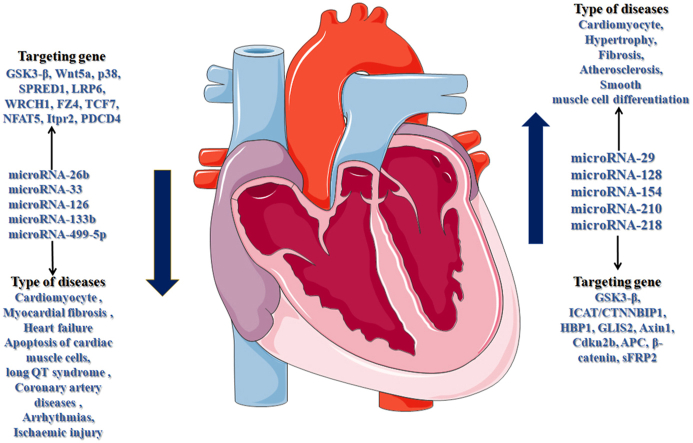
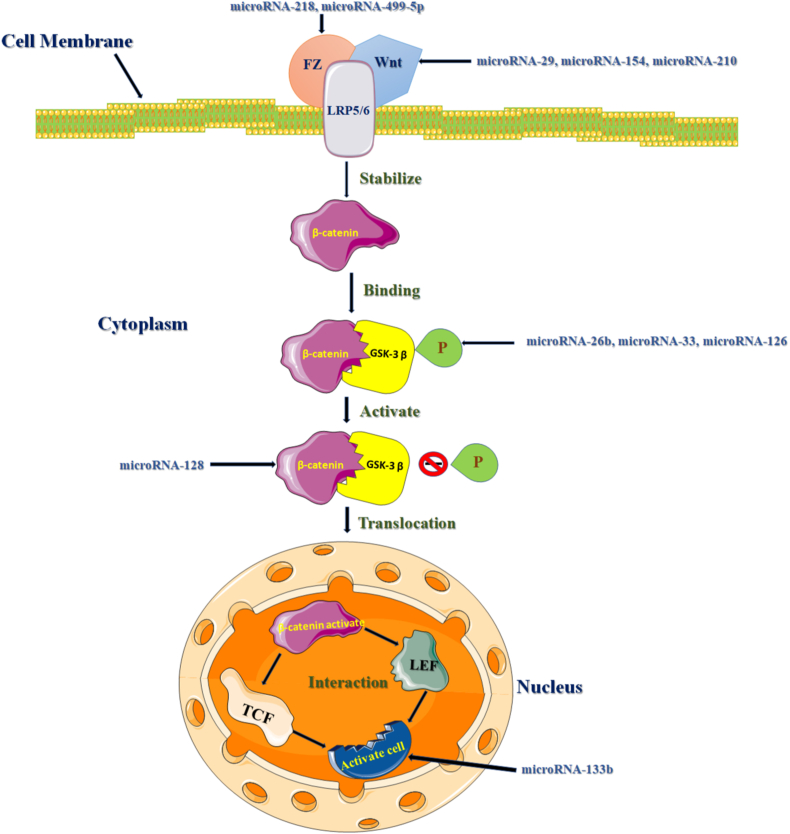
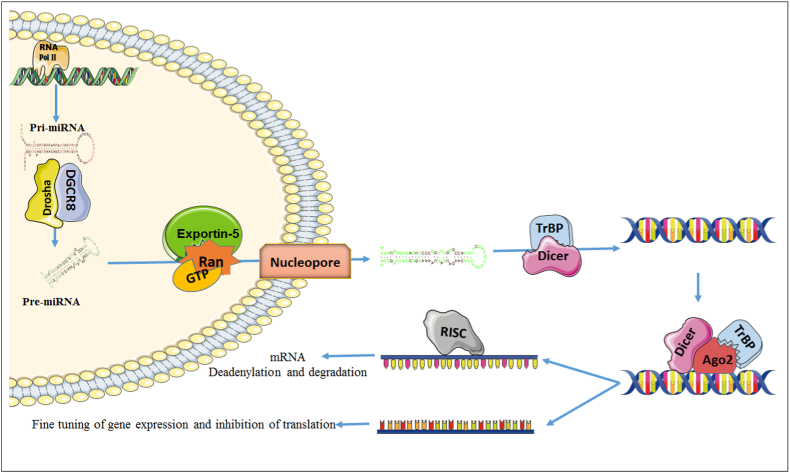
MicroRNAs (miRNAs) are discovered in science about 23 years ago. These are short, a series of non-coding, single-stranded and evolutionary conserved RNA molecules found in eukaryotic cells. It involved post-transcriptional fine-tune protein expression and repressing the target of mRNA in different biological processes. These miRNAs binds with the 3'-UTR region of specific mRNAs to phosphorylate the mRNA degradation and inhibit the translation process in various tissues. Therefore, aberrant expression in miRNAs induces numerous cardiovascular diseases and developmental defects. Subsequently, the miRNAs and Wnt singling pathway are regulating a cellular process in cardiac development and regeneration, maintain the homeostasis and associated heart diseases. In Wnt signaling pathway majority of the signaling components are expressed and regulated by miRNAs, whereas the inhibition or dysfunction of the Wnt signaling pathway induces cardiovascular diseases. Moreover, inadequate studies about the important role of miRNAs in heart development and diseases through Wnt signaling pathway has been exist still now. For this reason in present review we summarize and update the involvement of miRNAs and the role of Wnt signaling in cardiovascular diseases. We have discussed the mechanism of miRNA functions which regulates the Wnt components in cellular signaling pathway. The fundamental understanding of Wnt signaling regulation and mechanisms of miRNAs is quite essential for study of heart development and related diseases. This approach definitely enlighten the future research to provide a new strategy for formulation of novel therapeutic approaches against cardiovascular diseases.
微小RNA(miRNA)大约在23年前被科学界发现。它们是在真核细胞中发现的短的、一系列非编码的、单链且进化保守的RNA分子。它参与转录后对蛋白质表达的微调,并在不同生物过程中抑制mRNA的靶标。这些miRNA与特定mRNA的3'-UTR区域结合,使mRNA降解磷酸化并抑制各种组织中的翻译过程。因此,miRNA的异常表达会诱发多种心血管疾病和发育缺陷。随后,miRNA和Wnt信号通路在心脏发育和再生中调节细胞过程,维持体内平衡并与相关心脏病有关。在Wnt信号通路中,大多数信号成分由miRNA表达和调节,而Wnt信号通路的抑制或功能障碍会诱发心血管疾病。此外,到目前为止,关于miRNA通过Wnt信号通路在心脏发育和疾病中的重要作用的研究仍然不足。因此,在本综述中,我们总结并更新了miRNA的参与情况以及Wnt信号在心血管疾病中的作用。我们讨论了miRNA在细胞信号通路中调节Wnt成分的功能机制。对Wnt信号调节和miRNA机制的基本理解对于研究心脏发育和相关疾病至关重要。这种方法肯定会启发未来的研究,为制定针对心血管疾病的新型治疗方法提供新策略。