Center for Demography & Ecology, Department of Sociology, University of Wisconsin-Madison, Madison, WI 53706;
Center for Demography & Ecology, Department of Sociology, University of Wisconsin-Madison, Madison, WI 53706.
Proc Natl Acad Sci U S A. 2022 Jan 4;119(1). doi: 10.1073/pnas.2113762118.
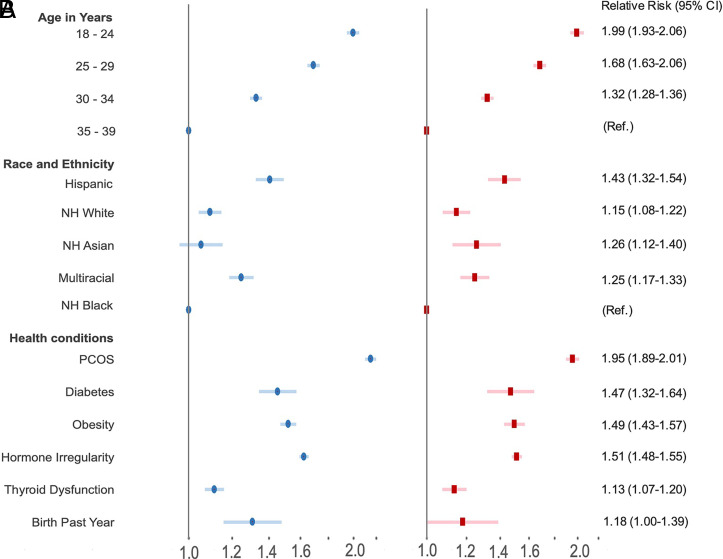
US state legislatures have proposed laws to prohibit abortion once the earliest embryonic electrical activity is detectable (fetal "heartbeat"). On average, this occurs roughly 6 wk after the last menstrual period. To be eligible for abortion, people must recognize pregnancy very early in gestation. The earliest symptom of pregnancy is a missed period, and irregular menstrual cycles-which occur frequently-can delay pregnancy detection past the point of fetal cardiac activity. In our analysis of 1.6 million prospectively recorded menstrual cycles, cycle irregularity was more common among young women, Hispanic women, and women with common health conditions, such as diabetes and polycystic ovary syndrome. These groups face physiological limitations in detecting pregnancy before fetal cardiac activity. Restriction of abortion this early in gestation differentially affects specific population subgroups, for reasons outside of individual control.
美国各州立法机构提出了一项法律,规定一旦检测到最早的胚胎电活动(胎儿“心跳”),就禁止堕胎。平均而言,这大约发生在上次月经周期后的 6 周。为了有资格堕胎,人们必须在妊娠早期就确认怀孕。怀孕的最早症状是错过经期,而不规则的月经周期——经常发生——可能会使妊娠检测延迟到胎儿心脏活动之后。在我们对 160 万例前瞻性记录的月经周期的分析中,月经不规律在年轻女性、西班牙裔女性以及患有糖尿病和多囊卵巢综合征等常见健康状况的女性中更为常见。这些群体在检测到胎儿心脏活动之前,在妊娠检测方面存在生理限制。在妊娠早期限制堕胎会因个人无法控制的原因而对特定人群亚组产生不同的影响。