Cao Xiaocui, Wu Jiaqi, Gu Yuqin, Liu Xuemei, Deng Yaping, Ma Chunhua
Department of Cardiovascular Medicine, The Second Affiliated Hospital of Guangzhou Medical University, Guangzhou, China.
School of Nursing, Guangzhou Medical University, Guangzhou, China.
Front Psychol. 2021 Dec 14;12:694974. doi: 10.3389/fpsyg.2021.694974. eCollection 2021.
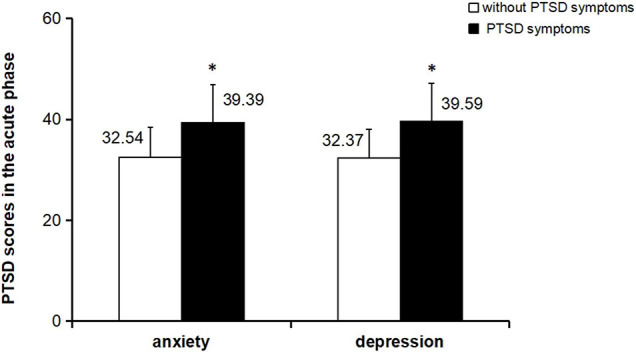
This study aimed to investigate the status and risk factors of post-traumatic stress disorder (PTSD) in patients with acute myocardial infarction (AMI) after emergency percutaneous coronary intervention (PCI) in acute and convalescence phases. A longitudinal study design was used. Two questionnaire surveys were conducted in the acute stage of hospitalization, and 3 months after onset in patients. Logistic regression was used to analyze the risk factors for PTSD in AMI patients. The incidence of PTSD was 33.1 and 20.4% in acute and convalescent patients, respectively. The risk factors related to PTSD were door-to-balloon time (DTB) (≥92.6 min), left ventricular ejection fraction (LVEF) (<50%), smoking, anxiety, and depression. AMI patients after PCI had PTSD in the acute and convalescent stage. The findings indicate that tailored measures should be developed and carried out to prevent PTSD and improve the mental health of patients with AMI after undergoing PCI.
本研究旨在调查急性心肌梗死(AMI)患者在急诊经皮冠状动脉介入治疗(PCI)后急性期和恢复期创伤后应激障碍(PTSD)的状况及危险因素。采用纵向研究设计。在患者住院急性期及发病3个月后进行了两次问卷调查。采用逻辑回归分析AMI患者PTSD的危险因素。急性期和恢复期患者PTSD的发生率分别为33.1%和20.4%。与PTSD相关的危险因素为门球时间(DTB)(≥92.6分钟)、左心室射血分数(LVEF)(<50%)、吸烟、焦虑和抑郁。PCI术后的AMI患者在急性期和恢复期存在PTSD。研究结果表明,应制定并实施针对性措施以预防PTSD,改善PCI术后AMI患者的心理健康。