University of Oxford, Oxford, UK.
The Alan Turing Institute and Royal Statistical Society Statistical Modelling and Machine Learning Laboratory, London, UK.
Nat Microbiol. 2022 Jan;7(1):97-107. doi: 10.1038/s41564-021-01029-0. Epub 2021 Dec 31.
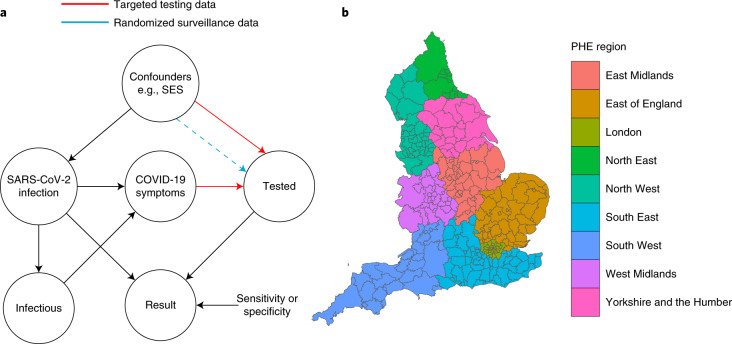
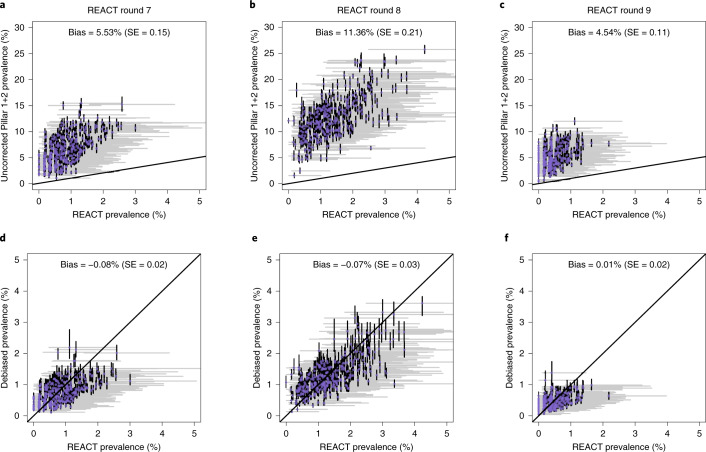
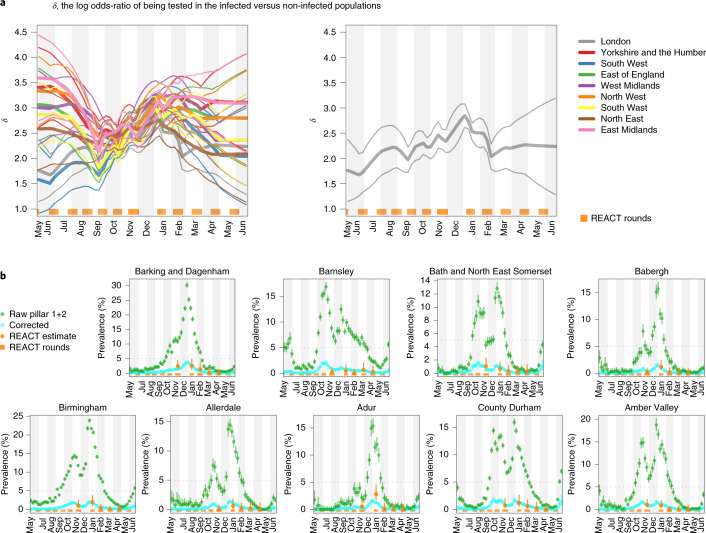
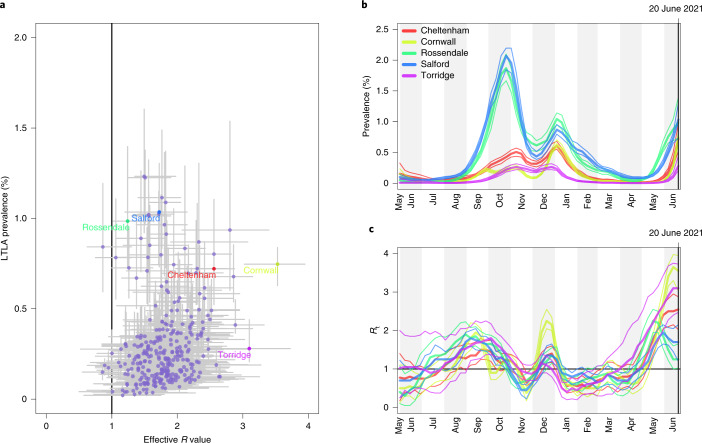
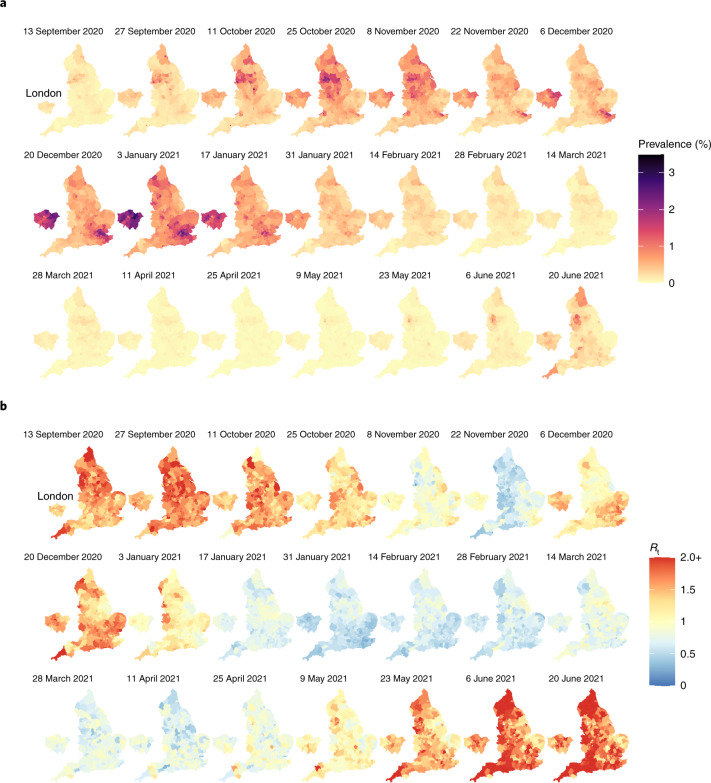
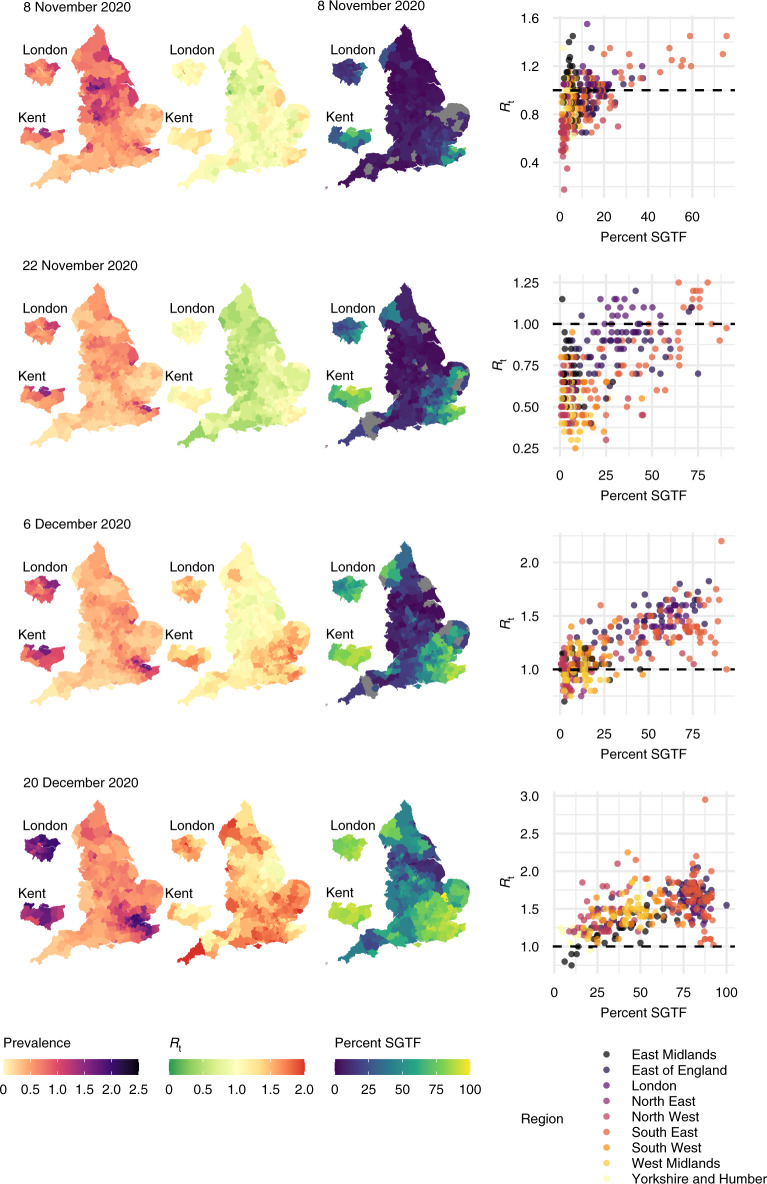
Global and national surveillance of SARS-CoV-2 epidemiology is mostly based on targeted schemes focused on testing individuals with symptoms. These tested groups are often unrepresentative of the wider population and exhibit test positivity rates that are biased upwards compared with the true population prevalence. Such data are routinely used to infer infection prevalence and the effective reproduction number, R, which affects public health policy. Here, we describe a causal framework that provides debiased fine-scale spatiotemporal estimates by combining targeted test counts with data from a randomized surveillance study in the United Kingdom called REACT. Our probabilistic model includes a bias parameter that captures the increased probability of an infected individual being tested, relative to a non-infected individual, and transforms observed test counts to debiased estimates of the true underlying local prevalence and R. We validated our approach on held-out REACT data over a 7-month period. Furthermore, our local estimates of R are indicative of 1-week- and 2-week-ahead changes in SARS-CoV-2-positive case numbers. We also observed increases in estimated local prevalence and R that reflect the spread of the Alpha and Delta variants. Our results illustrate how randomized surveys can augment targeted testing to improve statistical accuracy in monitoring the spread of emerging and ongoing infectious disease.
全球和国家层面的 SARS-CoV-2 流行病学监测主要基于针对有症状个体的目标检测方案。这些受检人群往往不能代表更广泛的人群,与真实人群的流行率相比,其检测阳性率存在向上的偏差。这些数据通常被用于推断感染流行率和有效繁殖数 R,R 会影响公共卫生政策。在这里,我们描述了一种因果框架,该框架通过将目标检测计数与英国名为 REACT 的随机监测研究的数据相结合,提供了无偏差的精细时空估计。我们的概率模型包含一个偏差参数,该参数捕获了相对于未感染个体,感染个体接受检测的概率增加,并将观察到的检测计数转换为真实基础局部流行率和 R 的无偏差估计值。我们在 7 个月的时间里对预留的 REACT 数据进行了验证。此外,我们对 R 的局部估计值可以预测 SARS-CoV-2 阳性病例数量在未来一周和两周的变化。我们还观察到,估计的局部流行率和 R 的增加反映了 Alpha 和 Delta 变体的传播。我们的研究结果说明了随机调查如何增强目标检测,以提高监测新发和持续传染病传播的统计准确性。