Fetta Anna, Di Pisa Veronica, Ruscelli Martina, Soliani Luca, Sperti Giacomo, Ubertiello Sara, Ricci Emilia, Mainieri Greta, Rocca Alessandro, Mancardi Maria Margherita, Giordano Lucio, Pruna Dario, Vignoli Aglaia, Provini Federica, Cordelli Duccio Maria
IRCCS Istituto delle Scienze Neurologiche di Bologna, UOC di Neuropsichiatria dell'Età Pediatrica, Bologna, Italy.
Dipartimento di Scienze Mediche e Chirurgiche (DIMEC), Università di Bologna, Bologna, Italy.
Front Neurol. 2021 Dec 16;12:796828. doi: 10.3389/fneur.2021.796828. eCollection 2021.
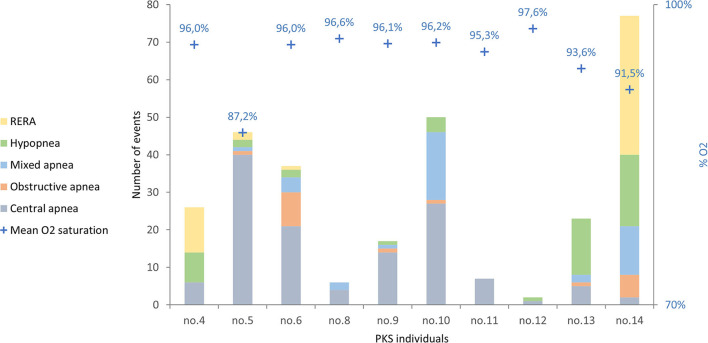
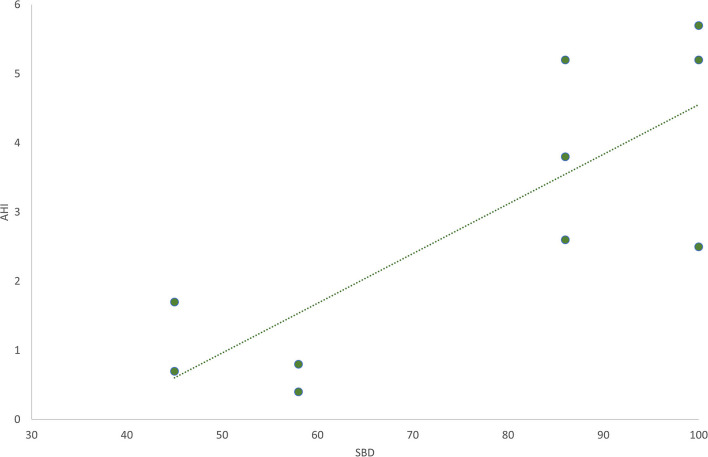
Pallister-Killian syndrome (PKS) is a rare genetic disorder with multi-organ involvement caused by mosaic tetrasomy of chromosome 12p. Although many caregivers report the presence of impaired sleep in their children, there are no clear data in the literature on this issue and no systematic study has ever been performed. With this study, we aimed to characterize the features of sleep in Pallister-Killian syndrome and identify the possible influence of clinical and demographic features. Moreover, our aim was to verify the effectiveness of conventional screening questionnaires in this particular group of patients. We prospectively enrolled 14 patients aged 1-17 years in collaboration with PKS Kids Italia ONLUS. The Sleep Disturbance Scale for Children (SDSC) questionnaire was administered to caregivers. Then, video polysomnography (VPSG) of at least 24 h was performed and results were compared with a same-aged control group. A total of 92% of patients had abnormal SDSC scores, extremely high in the "disorder of initiating and maintaining sleep" (DIMS) and "sleep breathing disorders" (SBD) subscales. VPSG showed a significantly impaired macrostructure in PKS patients, with a higher Arousal Index ( < 0.00001) and percentage of time spent in N3 ( < 0.00001), and reduced Sleep Efficiency ( = 0.0006). After dividing both PKS and controls into two groups based on median age, some peculiarities emerged: the younger group had higher Awakenings Index ( = 0.0207) and percentage of time spent in N1 ( = 0.015) while the older group showed higher time in bed (TIB) ( = 0.0485), compared with controls. Due to poor compliance, the Apnea-Hypopnea Index (AHI) was evaluated only for 10 PKS children, being significantly increased ( = 0.0427) compared with controls. SBD subscale scores in SDSC were significantly related to AHI values in VPSG ( = 0.0099). This study constitutes the first attempt to describe the sleep pattern in PKS. Despite small numbers due to the rarity of the syndrome, our VPSG results confirm the high prevalence of sleep disorders (SDs) in these patients. It is therefore essential to investigate and treat them. The SDSC scale is a good screening tool for early detection also in these patients, with particular sensitivity in detecting breathing disorders.
帕利斯特-基利安综合征(PKS)是一种罕见的遗传性疾病,由12号染色体短臂的嵌合四体性引起,可累及多个器官。尽管许多照料者报告他们的孩子存在睡眠障碍,但文献中没有关于这个问题的明确数据,也从未进行过系统研究。通过这项研究,我们旨在描述帕利斯特-基利安综合征患者的睡眠特征,并确定临床和人口统计学特征可能产生的影响。此外,我们的目的是验证传统筛查问卷在这一特定患者群体中的有效性。我们与意大利PKS儿童协会合作,前瞻性地招募了14名年龄在1至17岁之间的患者。我们向照料者发放了儿童睡眠障碍量表(SDSC)问卷。然后,进行了至少24小时的视频多导睡眠图(VPSG)检查,并将结果与同龄对照组进行比较。共有92%的患者SDSC评分异常,在“入睡和维持睡眠障碍”(DIMS)和“睡眠呼吸障碍”(SBD)子量表中得分极高。VPSG显示PKS患者的睡眠宏观结构明显受损,觉醒指数更高(<0.00001),N3期睡眠时间百分比更低(<0.00001),睡眠效率降低(=0.0006)。在根据年龄中位数将PKS患者和对照组都分为两组后,出现了一些特点:较年轻的组觉醒指数更高(=0.0207),N1期睡眠时间百分比更高(=0.015),而较年长的组与对照组相比卧床时间更长(TIB)(=0.0485)。由于依从性差,仅对10名PKS儿童评估了呼吸暂停低通气指数(AHI),与对照组相比显著升高(=0.0427)。SDSC中的SBD子量表评分与VPSG中的AHI值显著相关(=0.0099)。这项研究是首次尝试描述PKS患者的睡眠模式。尽管由于该综合征罕见导致样本量较小,但我们的VPSG结果证实了这些患者中睡眠障碍(SDs)的高患病率。因此,对其进行调查和治疗至关重要。SDSC量表也是这些患者早期检测的良好筛查工具,在检测呼吸障碍方面具有特别的敏感性。