Aix-Marseille Université UM105, Centre National de la Recherche Scientifique (CNRS) UMR7258, Inserm UMR1068, Institut Paoli-Calmettes, Cancer Research Center of Marseille (CRCM), Marseille, France.
IBiSA Immunomonitoring Platform, Institut Paoli-Calmettes, Cancer Research Center of Marseille (CRCM), Marseille, France.
Front Immunol. 2021 Dec 17;12:730970. doi: 10.3389/fimmu.2021.730970. eCollection 2021.
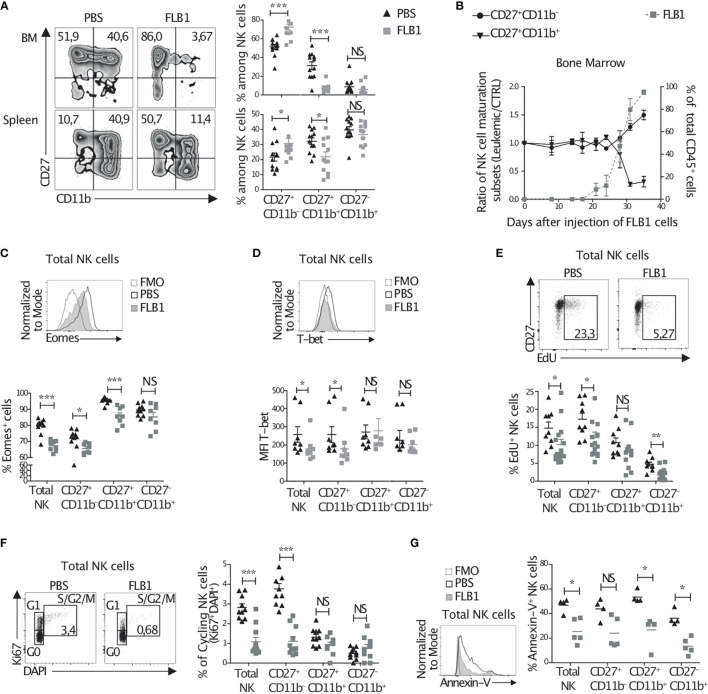
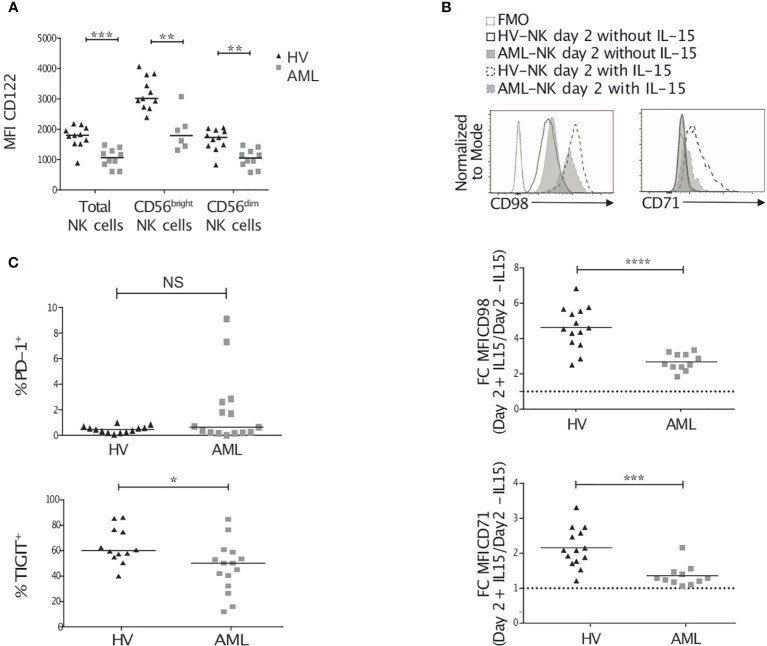
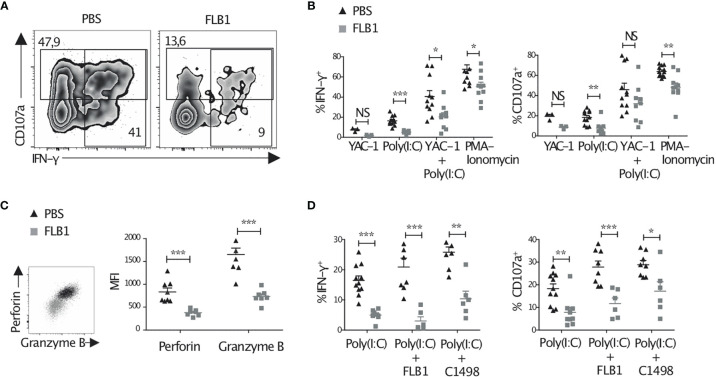
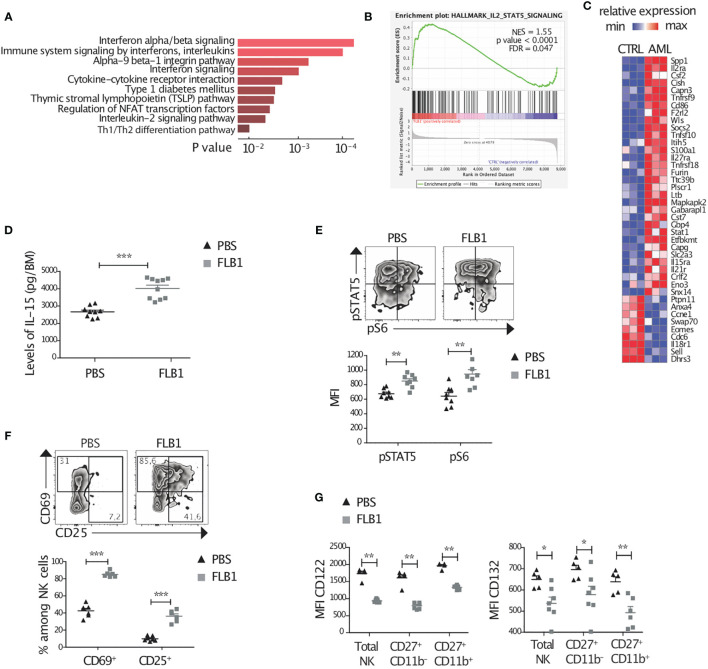
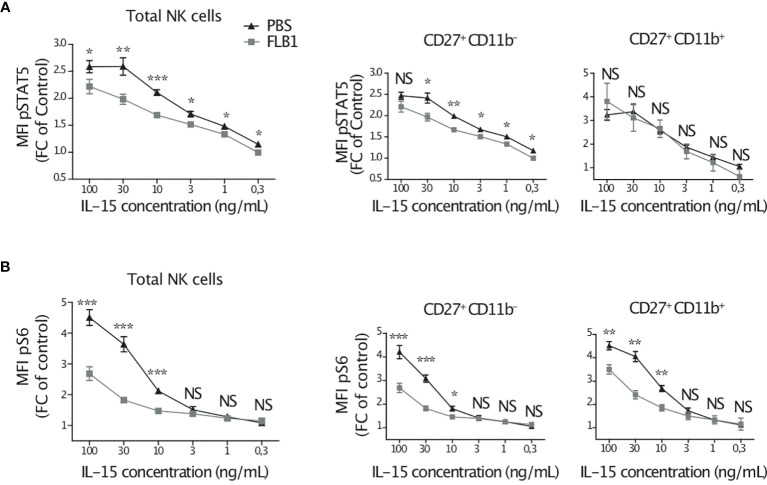
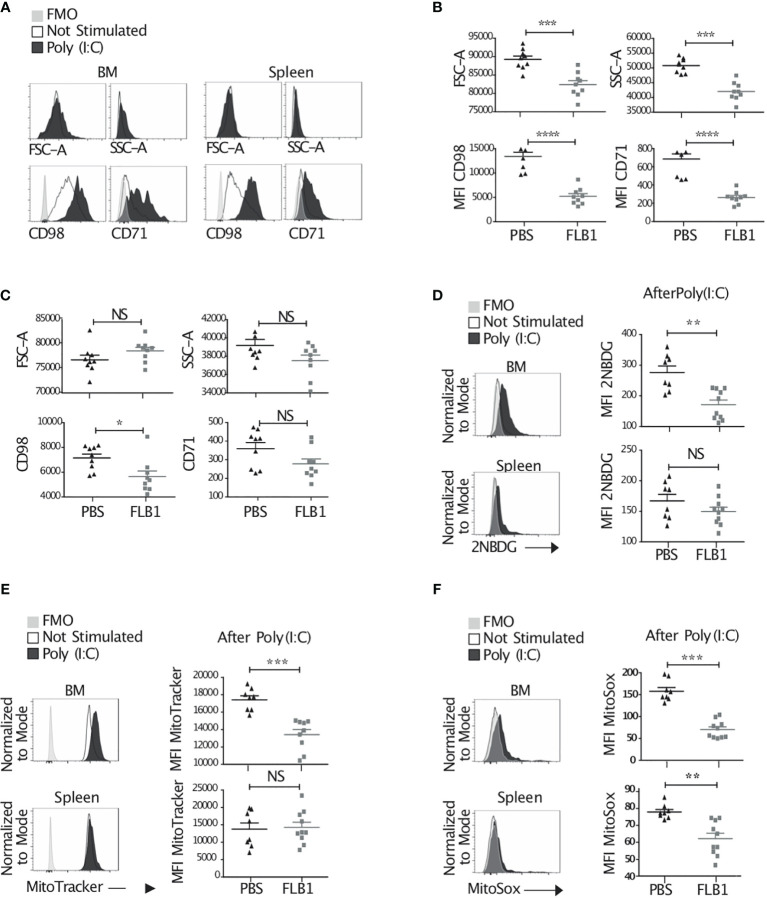
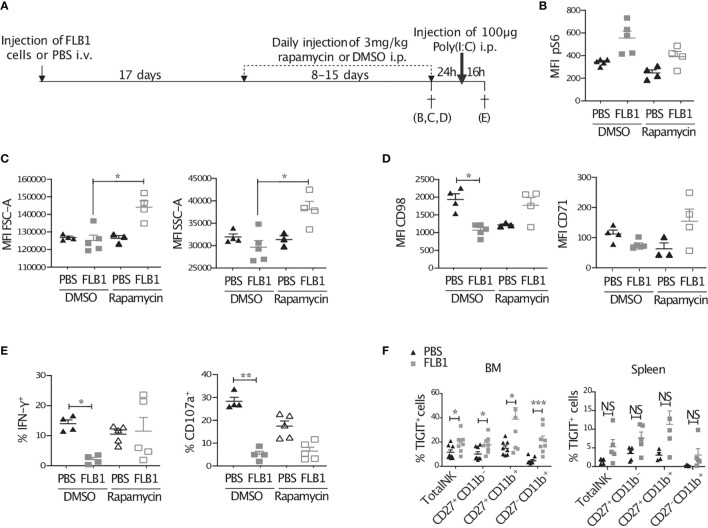
Natural Killer (NK) cells are potent anti-leukemic immune effectors. However, they display multiple defects in acute myeloid leukemia (AML) patients leading to reduced anti-tumor potential. Our limited understanding of the mechanisms underlying these defects hampers the development of strategies to restore NK cell potential. Here, we have used a mouse model of AML to gain insight into these mechanisms. We found that leukemia progression resulted in NK cell maturation defects and functional alterations. Next, we assessed NK cell cytokine signaling governing their behavior. We showed that NK cells from leukemic mice exhibit constitutive IL-15/mTOR signaling and type I IFN signaling. However, these cells failed to respond to IL-15 stimulation as illustrated by reduced activation of the mTOR pathway. Moreover, our data suggest that mTOR-mediated metabolic responses were reduced in NK cells from AML-bearing mice. Noteworthy, the reduction of mTOR-mediated activation of NK cells during AML development partially rescued NK cell metabolic and functional defects. Altogether, our data strongly suggest that NK cells from leukemic mice are metabolically and functionally exhausted as a result of a chronic cytokine activation, at least partially IL-15/mTOR signaling. NK cells from AML patients also displayed reduced IL-2/15Rβ expression and showed cues of reduced metabolic response to IL-15 stimulation , suggesting that a similar mechanism might occur in AML patients. Our study pinpoints the dysregulation of cytokine stimulation pathways as a new mechanism leading to NK cell defects in AML.
自然杀伤 (NK) 细胞是强有力的抗白血病免疫效应细胞。然而,它们在急性髓系白血病 (AML) 患者中表现出多种缺陷,导致其抗肿瘤潜能降低。我们对这些缺陷背后的机制的理解有限,这阻碍了恢复 NK 细胞潜能的策略的发展。在这里,我们使用 AML 的小鼠模型来深入了解这些机制。我们发现白血病的进展导致 NK 细胞成熟缺陷和功能改变。接下来,我们评估了控制 NK 细胞行为的细胞因子信号。我们表明,白血病小鼠的 NK 细胞表现出组成型的 IL-15/mTOR 信号和 I 型 IFN 信号。然而,这些细胞对 IL-15 的刺激没有反应,如图所示,mTOR 通路的激活减少。此外,我们的数据表明,AML 小鼠来源的 NK 细胞中的 mTOR 介导的代谢反应减少。值得注意的是,在 AML 发展过程中,减少 mTOR 介导的 NK 细胞激活部分挽救了 NK 细胞的代谢和功能缺陷。总的来说,我们的数据强烈表明,由于慢性细胞因子激活,白血病小鼠的 NK 细胞在代谢和功能上处于衰竭状态,至少部分是由于 IL-15/mTOR 信号。AML 患者的 NK 细胞也表现出降低的 IL-2/15Rβ 表达,并显示出对 IL-15 刺激的代谢反应减少的迹象,这表明类似的机制可能发生在 AML 患者中。我们的研究指出,细胞因子刺激途径的失调是导致 AML 中 NK 细胞缺陷的新机制。