Jiang Wenru, Song Yingtao, Zhong Zhaowei, Gao Jili, Meng Xiaofei
Department of Implant and Prosthodontics, The First Affiliated Hospital of Harbin Medical University, Harbin, China.
Donglai Road Stomatological Clinic, Laizhou, China.
Front Genet. 2021 Dec 17;12:785839. doi: 10.3389/fgene.2021.785839. eCollection 2021.
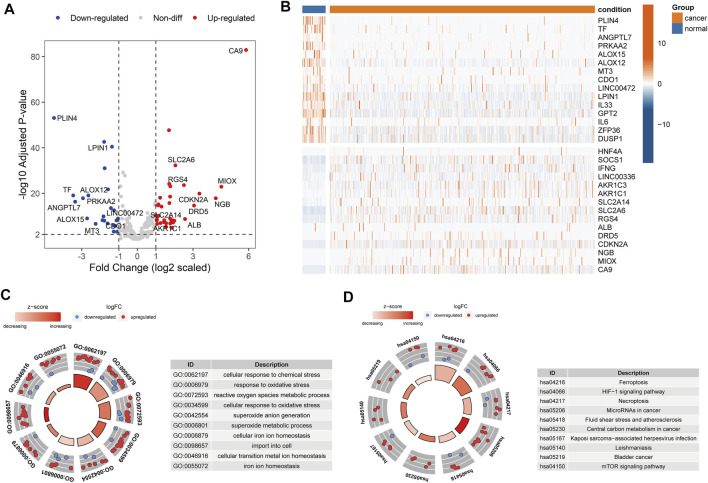
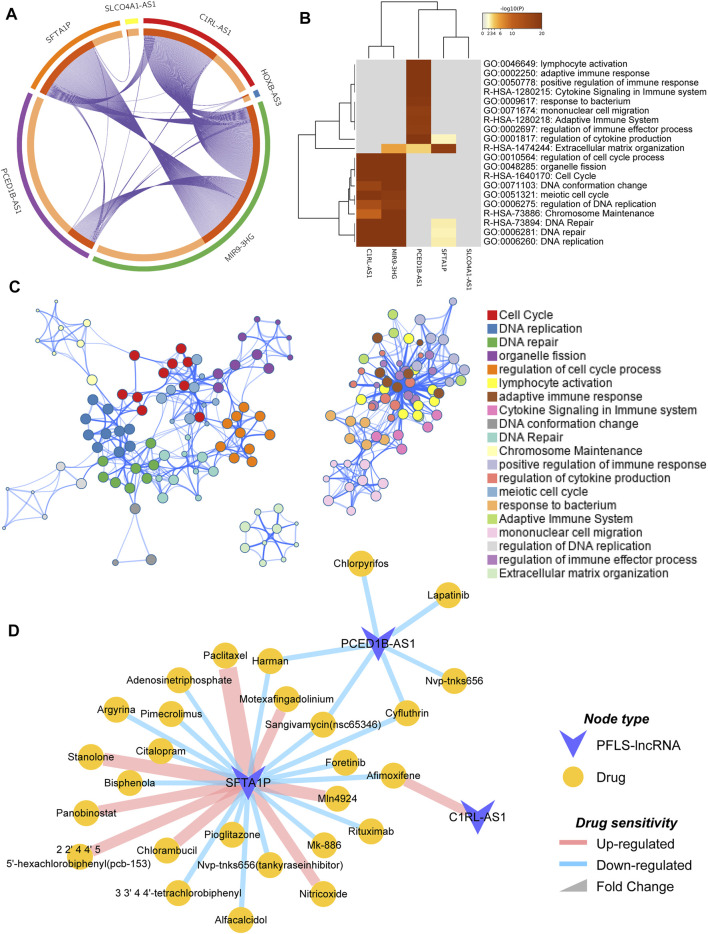
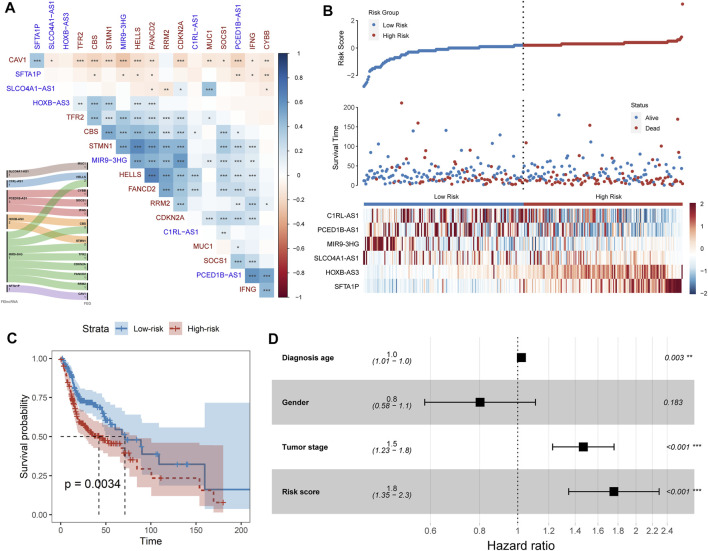
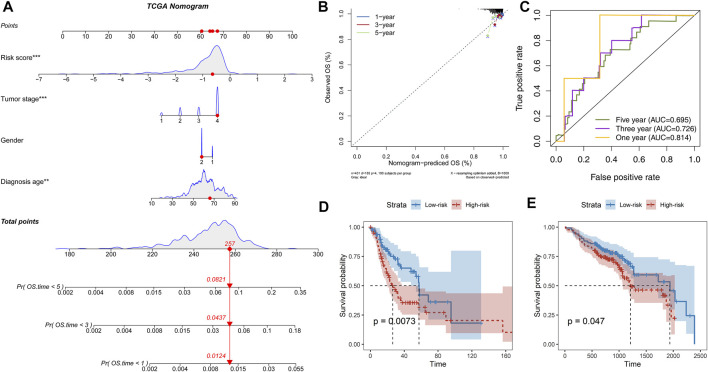
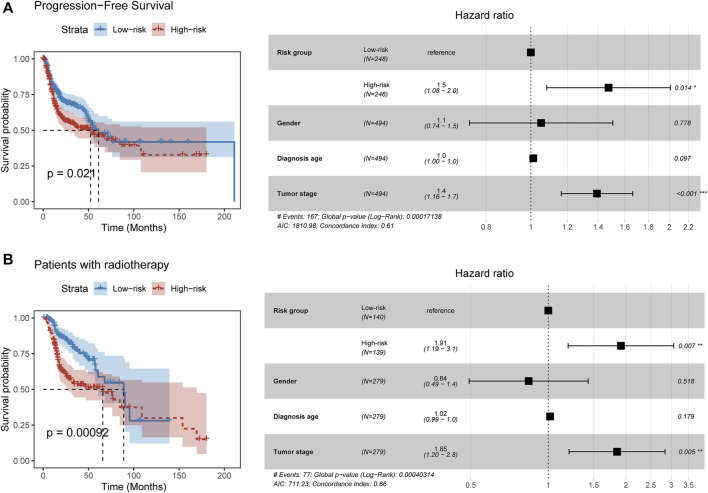
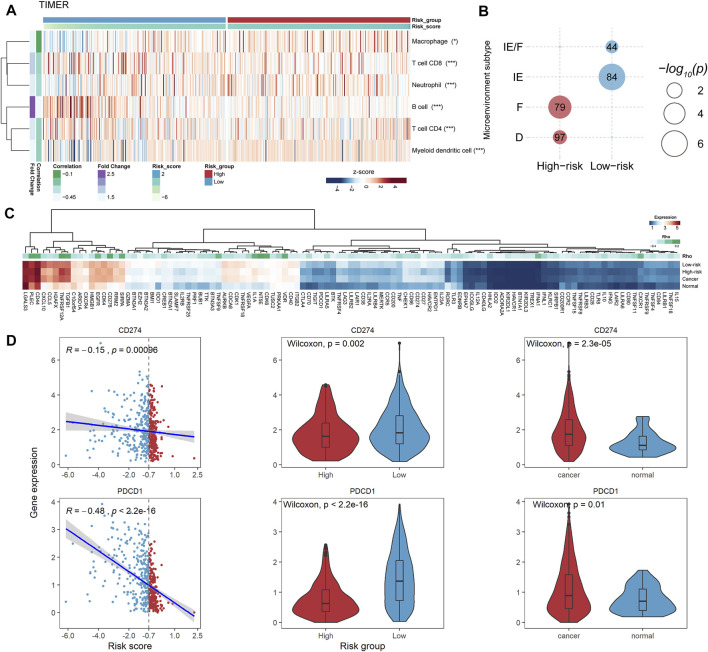
Head and neck squamous cell carcinoma (HNSCC) is a malignant tumor, which makes the prognosis prediction challenging. Ferroptosis is an iron-dependent form of non-apoptotic regulated cell death, which could affect cancer development. However, the prognostic value of ferroptosis-related long non-coding RNA (lncRNA) in HNSCC is still limited. In the current study, we employed the DESeq2 method to characterize the differentially expressed ferroptosis-related genes (FEGs) between cancer and normal samples. Next, the FEG-related lncRNAs (FElncRNAs) were identified using Spearman's correlation analysis and multiple permutation hypotheses. Subsequently, LASSO and stepwise multivariate Cox regression analyses were undertaken to recognize the prognosis-related FElncRNA signature (PFLS) and risk scores. Herein, we first identified 60 dysregulated FEGs and their co-expressed FElncRNAs in HNSCC. Then, we recognized a set of six FElncRNAs PFLS (, , , , , and ) for predicting patients' prognostic risks and survival outcomes. We also assessed the efficiency of PFLS in the test set and an external validation cohort. Further parsing of the tumor immune microenvironment showed the PFLS was closely associated with immune cell infiltration abundances. Notably, the low-risk group of the PFLS showed a higher MHC score and cytolytic activity (CYT) score than the high-risk group, implying the low-risk group may have greater tumor surveillance and killing ability. In addition, we observed that the expression levels of two immune checkpoints (ICPs), i.e., programmed cell death protein 1 () and programmed cell death 1 ligand 1 (, showed significant associations with patients' risk score, prompting the role of the PFLS in ICP blockade therapy. Finally, we also constructed a drug-PFLS network to reinforce the clinical utilities of the PFLS. In summary, our study indicated that FElncRNAs played an important role in HNSCC survival prediction. Identification of PFLS will contribute to the development of novel anticancer therapeutic strategies.
头颈部鳞状细胞癌(HNSCC)是一种恶性肿瘤,这使得预后预测具有挑战性。铁死亡是一种铁依赖性的非凋亡性调节细胞死亡形式,它可能会影响癌症的发展。然而,铁死亡相关长链非编码RNA(lncRNA)在HNSCC中的预后价值仍然有限。在本研究中,我们采用DESeq2方法来表征癌症样本与正常样本之间差异表达的铁死亡相关基因(FEG)。接下来,使用斯皮尔曼相关性分析和多重排列假设来鉴定与FEG相关的lncRNA(FElncRNA)。随后,进行LASSO和逐步多变量Cox回归分析,以识别与预后相关的FElncRNA特征(PFLS)和风险评分。在此,我们首先在HNSCC中鉴定出60个失调的FEG及其共表达的FElncRNA。然后,我们识别出一组六个FElncRNA的PFLS(, , , , ,和 ),用于预测患者的预后风险和生存结果。我们还在测试集和外部验证队列中评估了PFLS的有效性。对肿瘤免疫微环境的进一步分析表明,PFLS与免疫细胞浸润丰度密切相关。值得注意的是,PFLS的低风险组比高风险组表现出更高的MHC评分和细胞溶解活性(CYT)评分,这意味着低风险组可能具有更强的肿瘤监测和杀伤能力。此外,我们观察到两个免疫检查点(ICP),即程序性细胞死亡蛋白1( )和程序性细胞死亡1配体1( )的表达水平与患者的风险评分显著相关,这提示了PFLS在ICP阻断治疗中的作用。最后,我们还构建了一个药物 - PFLS网络,以加强PFLS的临床应用。总之,我们的研究表明,FElncRNA在HNSCC生存预测中发挥着重要作用。PFLS的鉴定将有助于开发新的抗癌治疗策略。